
Radial Mix 2:1 2-channel Passive Mixer
4.8Editor score
Passive Mono Summing
2 Inputs 1 Output
Compact Rugged Design
This guide compares the top analog summing mixers for studio production and live sound, helping you find the perfect hardware to enhance your mix.
Analog summing mixers bring warmth and depth to digital audio by combining signals through analog circuitry. They are essential tools for producers seeking a richer sound beyond the limitations of purely in-the-box workflows.
We evaluated ten top-rated units based on channel count, sound quality, build durability, and connectivity. Our analysis focuses on how each mixer handles signal paths and integrates with modern studio setups.
Each pick highlights key features and ideal use cases for different budgets. Prices fluctuate often so check current listings before buying to ensure you get the best deal available today.
4.8Editor score

5.0Editor score
Compare these ten analog summing mixers side by side to see how they differ in channels, features, and connectivity for your specific audio needs.




The SSL BiG SiX stands out as a top tier choice for producers needing both mixing and interface capabilities. It receives a perfect rating for its ability to unify analog warmth with digital convenience seamlessly.
We may earn a commission when you buy through this link, at no additional cost to you.
Its 18 input summing bus allows for extensive routing options while the SuperAnalogue preamps deliver clean and professional audio quality. The inclusion of a stereo master bus compressor adds another layer of polish to final mixes.
While the cost is significant and it occupies considerable space, these trade offs are acceptable for serious studios aiming for broadcast ready outputs. The value provided by combining two tools in one justifies the investment for many.
This mixer is ideal for hybrid producers wanting analog summing without abandoning DAW integration. It remains a powerful recommendation for those seeking industry standard performance in a compact console format.
The SuperAnalogue design ensures low noise and wide dynamic range for professional results.
USB interface functionality allows seamless connection to computers for direct recording and playback.
We may earn a commission when you buy through this link, at no additional cost to you.
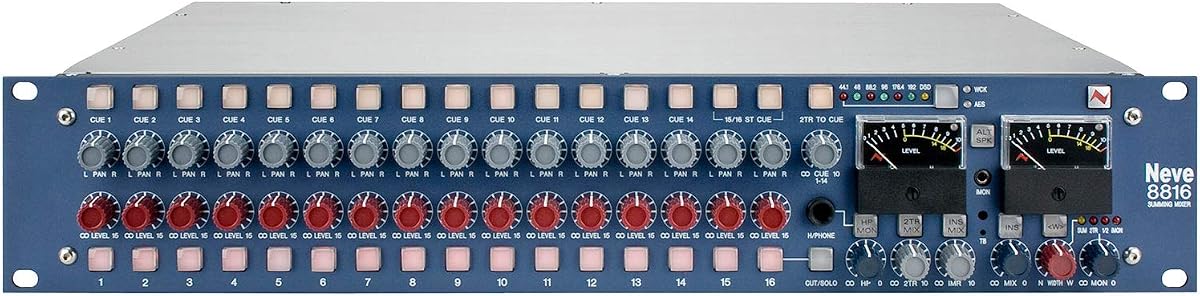
The Neve 8816 is a legendary unit known for imparting rich harmonic saturation to digital mixes. It is rated highly by enthusiasts for delivering that classic analog texture many seek today.
We may earn a commission when you buy through this link, at no additional cost to you.
Its transformer balanced design ensures signal integrity across sixteen channels while the monitoring section provides essential control for playback. This setup allows engineers to focus on critical listening during the mix process.
The high cost and lack of flexible routing make it better suited for fixed studios rather than mobile setups. However for those seeking pure tonal character these limitations are often outweighed by the sonic benefits.
Producers looking to add vintage coloration to tracks will find this mixer invaluable. It remains a benchmark for traditional summing and is recommended for studios prioritizing tone over features.
Transformers isolate signals and add a desirable coloration that enhances depth.
The monitoring section offers precise control over speaker outputs and headphone feeds.
We may earn a commission when you buy through this link, at no additional cost to you.
The Radial Mix 2:1 offers an accessible way to experiment with analog summing without a large investment. It earns high marks for simplicity and reliability in basic mixing tasks.
We may earn a commission when you buy through this link, at no additional cost to you.
This passive unit combines two inputs into one mono output allowing for quick sub mixing or signal blending. Its rugged build ensures it can withstand regular use in various environments.
The lack of active circuitry means no noise floor but also no gain control. This limitation restricts its use to specific tasks but makes it perfect for straightforward signal path management.
Beginners and producers needing a quick summing tool should consider this mixer. It provides a cost effective solution for those just starting to explore analog processing.
Passive circuitry ensures clean signal transfer without adding noise or coloration.
Its small size makes it easy to fit on any crowded studio desk.
We may earn a commission when you buy through this link, at no additional cost to you.
The 5059 Satellite Summing Mixer brings the Shelford sound to a smaller format ideal for hybrid studios. It is praised for its ability to deliver high end tonal characteristics in a compact box.
We may earn a commission when you buy through this link, at no additional cost to you.
This unit allows for sixteen channels combined into two main outputs with additional flexibility. The Shelford edition specifically incorporates transformers that enhance the warmth and presence of audio signals.
Its limited flexibility and premium cost may deter those needing extensive routing. However for those valuing specific tonal qualities the unique characteristics justify the expense for many engineers.
Studios wanting a touch of Neve heritage without a full console will find this useful. It is recommended for producers seeking high quality summing with a distinct sonic signature.
Specific Shelford transformers provide a warm and detailed sound profile.
The small design fits easily into modern compact studio setups.
We may earn a commission when you buy through this link, at no additional cost to you.
The Headliner R4 blends DJ functionality with analog quality for versatile mixing. It earns strong ratings for its build quality and intuitive control layout.
We may earn a commission when you buy through this link, at no additional cost to you.
Four stereo channels offer gain control and EQs while the built-in filter allows precise sound shaping. ALPS potentiometers ensure smooth and reliable operation during intense mixing sessions.
While the design is tailored towards DJ sets it can serve as a compact analog mixer. However the focus on DJ specific features might limit its utility for pure recording applications.
DJs needing a mixer with robust analog features should consider this unit. It offers a unique balance of performance and style suitable for live or studio use.
High and low pass filters let you shape frequency content dynamically.
A robust metal enclosure and wood panels ensure durability and style.
We may earn a commission when you buy through this link, at no additional cost to you.
The Mackie Onyx Series offers a balanced feature set for home studios needing USB integration. It is recognized for delivering solid audio quality at a reasonable price point.
We may earn a commission when you buy through this link, at no additional cost to you.
With sixteen channels and multi track USB recording it supports full band setups efficiently. The Onyx preamps are known for their clarity and dynamic performance during capture.
Its size may be cumbersome for small desks and it lacks advanced DSP tools. Yet for those needing a versatile bridge between analog mixing and digital recording it is highly effective.
Studios requiring a reliable interface and mixer combo should look to this model. It provides a practical solution for multi track recording and live sound.
Onyx preamps are acclaimed for their low noise and wide gain range.
Direct USB connection enables simultaneous recording of all channels.
We may earn a commission when you buy through this link, at no additional cost to you.
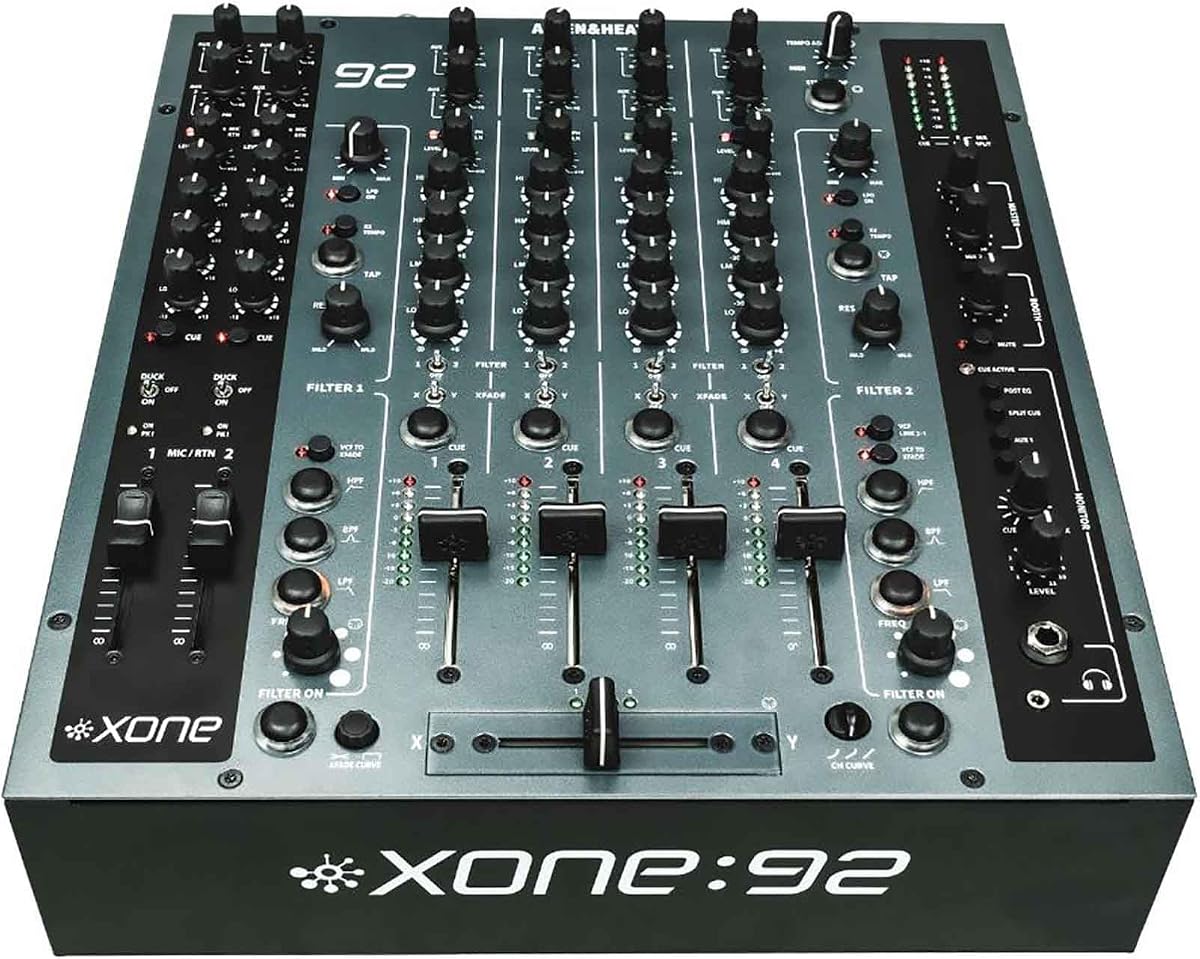
The Xone:92 Mk2 delivers a high level of analog sound and filter precision. It is a top choice for DJs seeking deep control over frequency modulation.
We may earn a commission when you buy through this link, at no additional cost to you.
The VCF system provides multimode filters that are renowned for smooth transitions. This feature set allows for creative blending and dynamic mixing techniques during performance.
Cost and specialized design limit its appeal for general studio mixing. However for those prioritizing filter quality and analog signal path it stands unmatched.
Professional DJs wanting superior analog control will find this mixer essential. It is recommended for those who value sonic character in their live sets.
The Voltage Controlled Filter offers versatile shaping of frequency bands.
Auxiliary outputs support external effects or additional routing needs.
We may earn a commission when you buy through this link, at no additional cost to you.
The Xone:43 is a compact mixer that brings VCF technology to a smaller format. It is highly rated for its reliability and sound quality in a portable package.
We may earn a commission when you buy through this link, at no additional cost to you.
Four plus one channels allow for multiple inputs while the send and return supports external FX. The Innofader compatibility offers flexibility for performance adjustments.
Fewer channels and master features may restrict complex mixes. However for those needing a portable unit with quality sound it is an excellent choice.
DJs wanting a lightweight but powerful mixer will appreciate this model. It is recommended for setups prioritizing mobility and analog sound.
External effects can be easily integrated into individual channels.
Supports upgrades for more precise performance control.
We may earn a commission when you buy through this link, at no additional cost to you.
The Mackie 1202VLZ4 is a reliable workhorse for live and studio sound. It earns a near perfect score for performance and value in its category.
We may earn a commission when you buy through this link, at no additional cost to you.
With twelve channels and Onyx preamps it delivers clear audio with minimal noise. RF rejection ensures clean signal transmission even in electrically noisy environments.
The lack of USB and limited inputs restrict digital integration. Yet for pure analog mixing needs it provides a dependable and high quality solution.
Those needing a straightforward and reliable mixer should consider this model. It is ideal for live sound and small recording applications.
Enhanced RF rejection prevents interference during operation.
Adjustable EQ helps tailor sound for different instruments and vocals.
We may earn a commission when you buy through this link, at no additional cost to you.
The Yamaha MG10 is a compact mixer designed for basic audio tasks. It is well received for its reliability and straightforward operation.
We may earn a commission when you buy through this link, at no additional cost to you.
Ten channels are managed by D-PRE preamps that offer clean sound. The one knob compressor simplifies dynamics control for quick setup.
Lack of USB limits connectivity to analog signals only. Despite this it remains a dependable choice for portable and entry-level sound.
Users needing a small and durable mixer will find this suitable. It is recommended for those prioritizing simplicity and sound quality.
D-PRE preamps deliver natural sound with low distortion.
Compression is easily applied to control dynamic range instantly.
We may earn a commission when you buy through this link, at no additional cost to you.
Choosing the right analog summing mixer involves considering channel count, sound quality, connectivity, and build. Below are key factors to evaluate for your specific needs.
The number of channels determines how many tracks you can mix at once. More channels provide flexibility for full band sessions but require more space.
Select a mixer that matches your typical workflow to avoid unnecessary bulk or limitations.
Analog circuits vary in transparency and character. Some add warmth while others focus on clarity. Testing audio samples helps identify the desired tonal signature.
Prioritize units with proven preamps and transformers that align with your sound goals.
Check input and output options for compatibility with your gear. XLR and RCA connections are standard but balanced lines reduce noise.
Ensure the mixer supports your monitoring setup and external gear requirements.
A sturdy chassis prevents noise and damage. Look for metal enclosures and reliable components for long term use.
Invest in a durable unit if you plan to move it frequently or use it heavily.
Prices vary widely from entry level to high end. Determine your spending limit while balancing necessary features.
Higher cost often brings better components but entry level units still offer value.
Consider how the mixer fits into your digital or analog workflow. Some units offer USB integration while others are purely analog.
Choose a design that supports your preferred production process for maximum efficiency.
To use an analog summing mixer, connect your DAW outputs to the mixer inputs. Route individual tracks through the analog summing bus before sending them to your master interface or recording device.
Care involves keeping the unit free from dust and moisture. Regularly inspect cables and connectors to ensure reliable signal transmission during sessions.
Avoid overloading inputs to prevent distortion. Gain staging properly ensures clean signals and optimal dynamic range through the analog circuit.
An analog summing mixer combines multiple audio signals through analog circuitry to create a single stereo output. It adds warmth and depth that digital mixing often lacks by using physical components.
It depends on your goals. If you seek richer sound and hands on control a mixer helps. Otherwise a digital workflow may suffice for simpler setups.
Yes most analog mixers connect via audio interface outputs. Some units include built in interfaces allowing direct computer integration for seamless workflows.
Many users report improved depth and cohesion. This comes from the harmonic distortion and phase alignment offered by analog components.
They can be costly and occupy space. Additionally setup complexity may increase depending on routing requirements and your gear.
Connect your DAW outputs to the mixer inputs. Adjust gain levels and EQ before routing the master output back to your interface or monitoring system.
We explored ten top options ranging from budget friendly units to high end consoles. Each provides unique features suited to various production needs and budgets.
Prioritize sound quality and channel count based on your typical sessions. Balancing these factors ensures you get a tool that grows with your skills.
Check current prices before purchasing as deals may vary. A reliable analog mixer can transform your sound for years with proper care.