
50pcs LDR Photoresistor Kit
4.9Editor score
Bulk pack of fifty units
High resistance in darkness
Compatible with many controllers
This guide compares the top ten light sensor for Arduino modules including photoresistors, photodiodes, and digital ambient light sensors for every project
Light sensors are essential components for any Arduino project that needs to react to environmental conditions. Whether you are building an automated garden system or a smart home device, choosing the right sensor ensures reliable performance and accurate data readings across various lighting scenarios.
We have evaluated ten top rated modules based on their sensitivity, output types, and compatibility with popular microcontrollers. Each product offers unique features such as analog or digital outputs, adjustable thresholds, and specific chipsets designed for precise illumination monitoring in diverse applications.
Our detailed reviews highlight the strengths and weaknesses of each option to help you make an informed decision. Please note that availability and stock levels can change frequently so we recommend checking the latest details directly on the manufacturer pages before placing your final order.
4.9Editor score
5.0Editor score
4.7Editor score
The following table provides a side-by-side comparison of all ten products to help you quickly identify which module meets your specific project requirements and technical constraints without needing to read every detail.


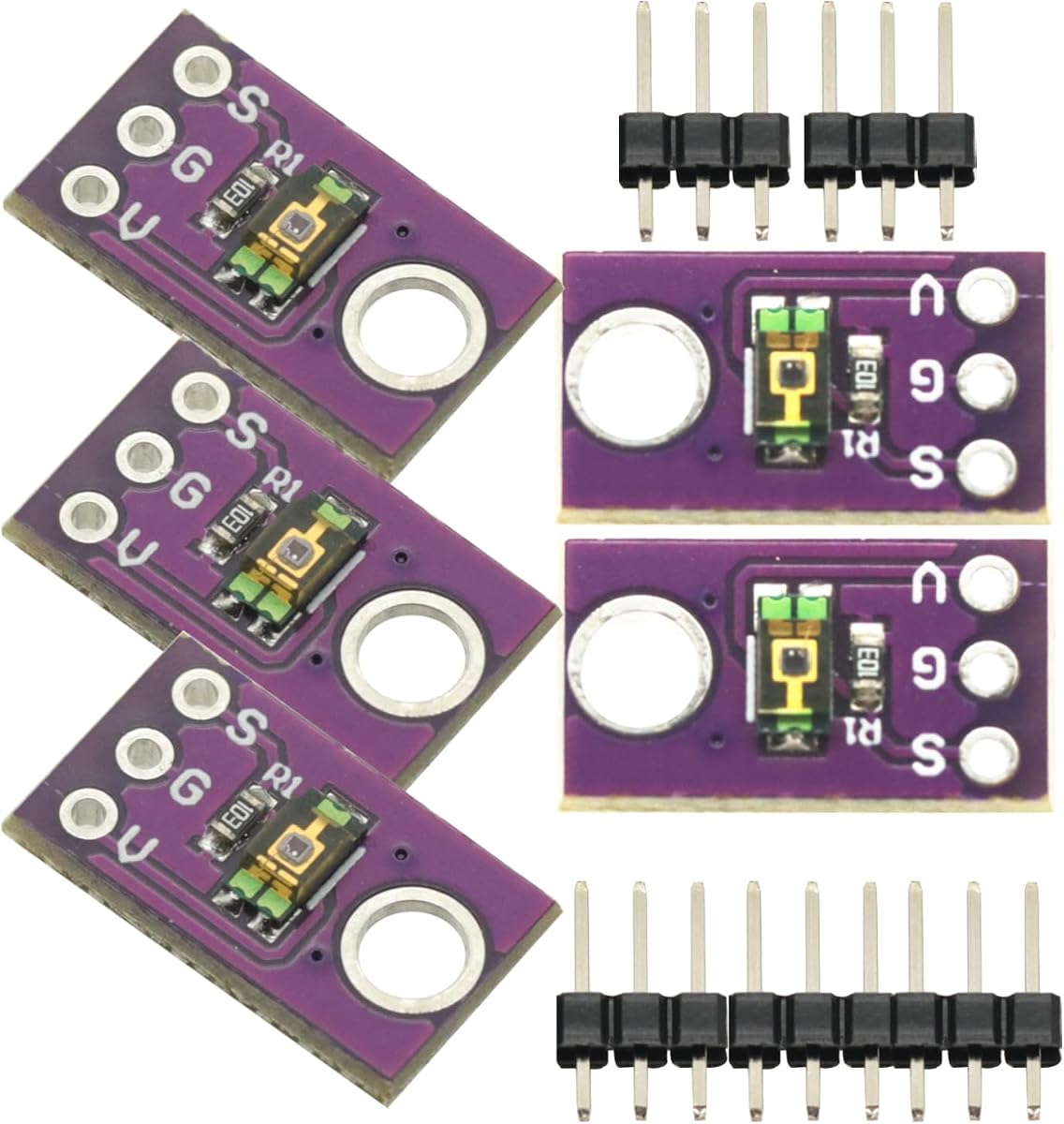
This module stands out as the top choice for projects requiring precise ambient light detection. With a perfect rating, it is designed specifically for display backlight dimming and keypad backlighting applications in industrial and consumer devices.
We may earn a commission when you buy through this link, at no additional cost to you.
The TEMT6000 sensor offers superior accuracy compared to standard photoresistors. Its output is linear and predictable making it ideal for applications where smooth transitions in lighting are required such as adjusting screen brightness automatically.
While it is slightly more expensive than basic kits, the performance justifies the cost for professional or high reliability projects. The five pack ensures you have spares for testing or multiple units for distributed sensor networks.
If you need a reliable sensor for smart displays or automated lighting control this is the recommended option. It simplifies design by providing a clean signal that reduces the need for complex software calibration.
The linear response of the TEMT6000 allows for smooth and natural brightness adjustments on displays and keyboards.
Built for demanding environments this module offers consistent performance over time without drift or degradation.
We may earn a commission when you buy through this link, at no additional cost to you.
This bulk pack offers the best value for hobbyists who need multiple sensors for classroom or large scale projects. Each GL5516 resistor provides reliable light sensitivity and is widely used in light automation tasks.
We may earn a commission when you buy through this link, at no additional cost to you.
The resistance values are well defined with low resistance in bright light and high resistance in darkness. This makes it easy to interface with Arduino analog inputs using a simple voltage divider circuit.
The main trade off is that these are raw components rather than modules. You will need to add your own resistors and potentially a comparator if you want digital outputs or precise threshold triggering.
If you are working on a budget or need spare parts for many prototypes this kit is perfect. It provides the raw material to build custom circuits tailored to your specific voltage and current requirements.
With fifty units you can outfit multiple projects or create a distributed sensor network without worrying about running out.
The 0.2 MOhm dark resistance ensures strong contrast between light and dark states for accurate detection.
We may earn a commission when you buy through this link, at no additional cost to you.
The GY-302 module uses the BH1750FVI chip to deliver precise digital light intensity measurements. It is perfect for applications where you need exact lux values rather than relative light changes.
We may earn a commission when you buy through this link, at no additional cost to you.
Its compact size makes it easy to fit into tight spaces on a PCB or breadboard. The digital I2C output simplifies wiring by reducing the number of pins needed compared to analog sensors.
While it is more expensive than basic LDRs the accuracy and ease of use are worth it for advanced projects. You can connect multiple modules on the same bus to monitor light in different locations.
For smart home devices or professional data logging this module is the top choice. It provides clean data that does not require complex calibration or filtering to interpret accurately.
The BH1750 chip outputs digital values representing lux directly so you can read light intensity with high accuracy.
Using the I2C protocol you can connect this sensor easily to Arduino and other microcontrollers without many wires.
We may earn a commission when you buy through this link, at no additional cost to you.
This kit includes six modules that combine a photoresistor with an LM393 comparator to provide both analog and digital outputs. It is ideal for users who want to set a specific light threshold for triggering events.
We may earn a commission when you buy through this link, at no additional cost to you.
The potentiometer allows you to adjust the sensitivity so the digital output switches at your desired brightness level. This is useful for projects like automatic night lights or security systems.
While the analog output allows for software calibration the digital output provides a clean signal that can drive relays directly. This dual mode offers flexibility for different project needs.
If you need a sensor that can trigger hardware directly without code this is a great option. The driving capability ensures it can handle the input of most standard relays or LEDs.
The built-in potentiometer gives you precise control over the brightness level that triggers the digital output signal.
Get both analog readings for data logging and a digital signal for immediate hardware triggering in one module.
We may earn a commission when you buy through this link, at no additional cost to you.
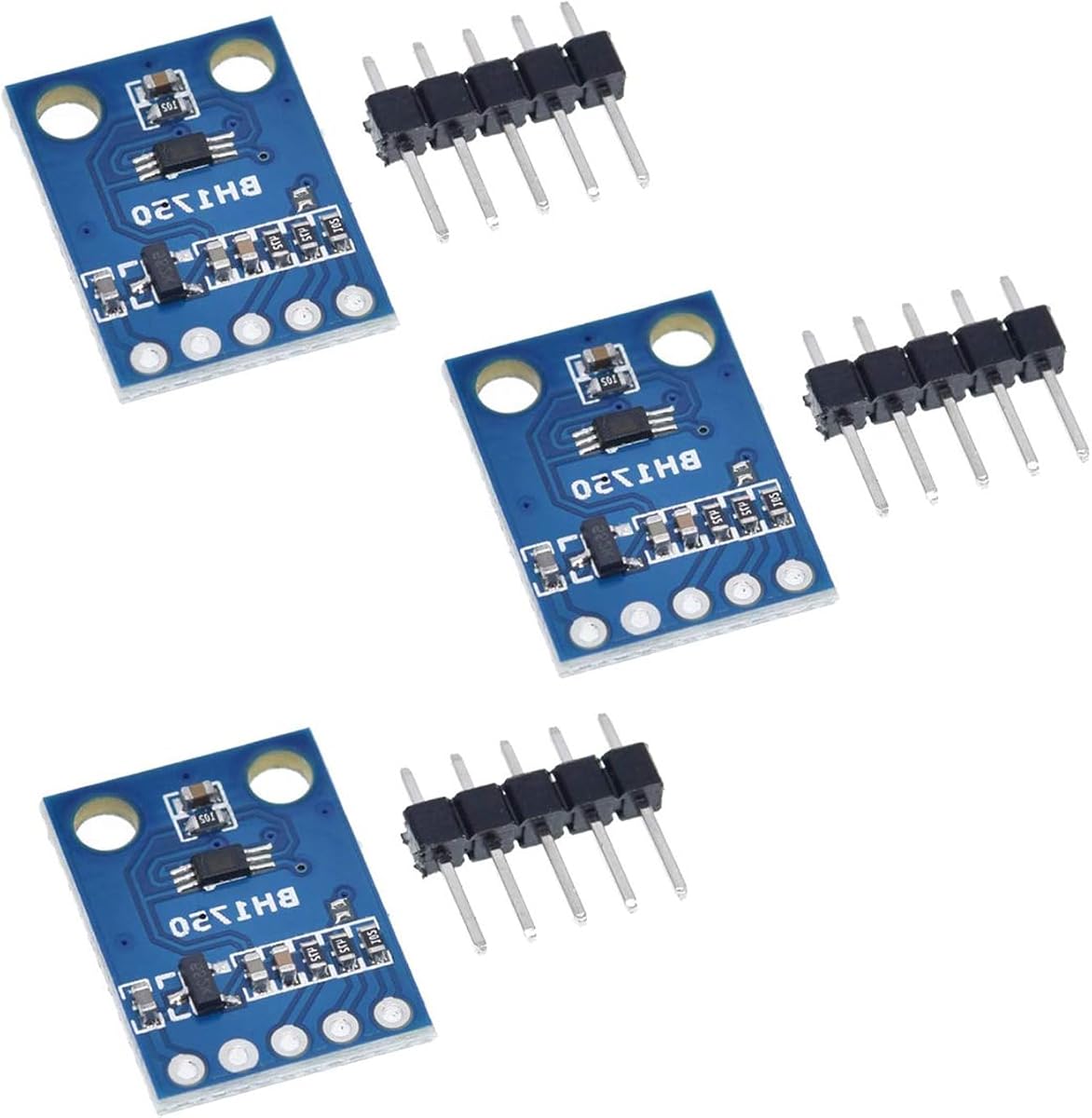
This module offers the same BH1750FVI chip as the previous pick with a focus on reliable performance. It is rated highly by users for consistent readings and stable operation across different environments.
We may earn a commission when you buy through this link, at no additional cost to you.
The compact dimensions make it suitable for small wearable devices or portable gadgets. The digital output ensures that you get accurate data without the noise often found in analog sensors.
It is slightly more basic in packaging compared to premium branded versions but functions just as well. The three pack is sufficient for most single projects or small batches.
If you need a digital sensor that is easy to code and reliable in output this is a strong choice. It is perfect for weather stations or light data logging applications.
The digital interface ensures that your microcontroller receives clean data without interference or signal noise.
Its small size allows you to include accurate light sensing in battery powered or compact projects easily.
We may earn a commission when you buy through this link, at no additional cost to you.
This module uses a photodiode instead of a photoresistor to provide directional light detection. This is ideal for applications where you need to sense light from a specific direction like sun trackers.
We may earn a commission when you buy through this link, at no additional cost to you.
The sensitivity is adjustable via a blue digital potentiometer on the board. You can fine tune the threshold for the digital output to trigger only when light is detected from the front.
With bolt holes and a small size it is easy to mount in tight spaces. The dual output provides flexibility for software and hardware based triggering logic in your design.
If you need precise directionality this module is superior to standard LDRs. It is perfect for smart car projects or light seeking robots that need to orient towards a source.
The directional design ensures the sensor responds only to light coming from the front for better robot navigation.
Use the potentiometer to set the exact brightness level needed to trigger the digital output signal.
We may earn a commission when you buy through this link, at no additional cost to you.
This pack provides thirty raw photoresistors that you can use to build custom circuits. They are ideal for experiments where you want to control every aspect of the sensor circuit yourself.
We may earn a commission when you buy through this link, at no additional cost to you.
The spectral peak matches the human eye sensitivity making them great for projects that mimic human light perception. The wide temperature range ensures they work in various weather conditions.
Because they are components rather than modules you will need to design your own voltage dividers and protection circuits. This offers learning opportunities for electronics enthusiasts.
If you are building a large batch of devices or teaching a class this bulk pack is efficient. It provides enough units to ensure you have spares for mistakes and testing phases.
The 540 nm peak aligns with human vision making these perfect for projects that adjust lighting based on human perception.
Building your own circuits with these parts helps you learn more about how voltage dividers work in practice.
We may earn a commission when you buy through this link, at no additional cost to you.
This module is designed to trigger relays directly based on light levels. It is perfect for creating automatic light switches or security systems that activate on darkness.
We may earn a commission when you buy through this link, at no additional cost to you.
The output levels are clearly defined as high or low so your microcontroller can easily read the state. The LM393 chip ensures stable switching when light crosses the threshold.
With ten units in the pack you can deploy sensors in multiple rooms or zones. The simple three pin connection makes wiring fast and error free for beginners.
If you need a sensor that can switch a relay without a microcontroller this is ideal. It simplifies automation projects by handling the logic on the hardware side.
Use this module to create automatic night lights that turn on when the room gets dark without any code.
The digital output is strong enough to drive standard relay modules directly for high power device control.
We may earn a commission when you buy through this link, at no additional cost to you.
This sensor supports a wide range of platforms including ESP32 and Raspberry Pi. This makes it versatile for projects that involve internet connectivity or complex OS environments.
We may earn a commission when you buy through this link, at no additional cost to you.
The adjustable threshold via potentiometer allows you to set precise trigger points for digital outputs. The dual output ensures you can read raw values or simple states as needed.
The included tutorials are helpful for beginners setting up the sensor for the first time. They save time by providing ready made code examples and wiring diagrams.
If you work with multiple microcontroller types this sensor is a great fit. It adapts easily to different voltage levels and programming environments without hardware changes.
Compatible with ESP32 and Raspberry Pi this module fits into many modern development environments seamlessly.
The included guides help you set up the sensor quickly with code examples for common platforms.
We may earn a commission when you buy through this link, at no additional cost to you.
This module is widely used in smart car projects and light intensity detection applications. It is robust and reliable enough for environments with varying electrical conditions.
We may earn a commission when you buy through this link, at no additional cost to you.
The comparator ensures a clean digital output even with noisy analog signals. This is critical for mobile applications where vibrations and movement might affect the circuit.
With dual outputs you can log exact light values or use a simple digital trigger. The wide voltage range means it will work with both 3.3V and 5V systems.
If you need a sensor for a vehicle or mobile robot this is a solid choice. It provides the stability and performance needed for real world moving applications.
Designed for smart cars this module handles vibration and movement without losing sensor accuracy or signal quality.
The comparator ensures the output remains clean even when the power supply voltage fluctuates slightly.
We may earn a commission when you buy through this link, at no additional cost to you.
Choosing the right light sensor depends on your project requirements such as precision, output type, and budget. This guide breaks down the key factors to consider before making your selection.
Sensors can provide analog values that vary with light intensity or digital signals that switch at a threshold. Analog is better for precise measurements while digital is simpler for basic switching tasks.
Choose digital outputs if you want to trigger relays directly without extra code.
Photoresistors are cheap and easy to use but may not be precise. Photodiodes offer better directionality and faster response times for advanced applications.
Pick photoresistors for hobby projects and photodiodes for directional or industrial tasks.
Ensure the module works with your microcontroller voltage such as 3.3V or 5V. Mismatched voltages can damage your board or produce incorrect readings.
Look for modules that explicitly support 3.3V to 5V input for maximum compatibility.
For general projects like night lights a basic LDR is sufficient. For scientific logging or display dimming choose a digital sensor like BH1750 for exact data.
Use digital modules when exact lux values are required for accurate reporting.
Some modules include mounting holes or small PCBs that fit into tight spaces. Others are bare components that require custom enclosures.
Select modules with holes or small sizes if space is limited in your project design.
Buying in bulk provides spares for testing and multiple sensors for larger setups. Single units are often less efficient if you have multiple prototypes.
Consider bulk kits if you plan to build several similar devices or teach others.
Modules with potentiometers let you adjust the trigger point manually. This is useful when you do not want to change code for different lighting conditions.
Opt for adjustable modules if you need flexibility without modifying software frequently.
Digital sensors often use I2C which reduces wiring compared to analog. Analog sensors require more pins but are simpler to read without libraries.
Use I2C sensors for clean wiring and analog sensors for straightforward code implementations.
Start by connecting the sensor to your board according to the wiring diagram. For analog modules use a resistor to create a voltage divider and connect the middle pin to an analog input.
Test the sensor using a simple sketch that prints values to the serial monitor. Observe how the readings change as you move the sensor between bright and dark environments.
Keep the sensor lens clean and free from dust to maintain accurate readings. Avoid mounting it in areas with extreme heat or moisture unless it is rated for those conditions.
Analog sensors provide a value that changes continuously with light intensity. Digital sensors switch to high or low at a specific brightness level. Analog is better for detailed data while digital is better for simple triggers.
For analog sensors use any analog input pin on your board. For digital sensors use any digital pin that can read high or low values. Check your board pinout for details.
Yes you typically need a resistor to create a voltage divider circuit. This allows the sensor to produce a readable voltage value for the microcontroller analog pin.
Yes you can connect multiple analog sensors to different analog pins. For digital modules you can use I2C buses which allow multiple devices on the same two wires.
Upload a basic sketch that prints sensor values to the serial monitor. If the numbers change when you cover or uncover the sensor it is working correctly.
Most standard modules are not weatherproof and should be used indoors. For outdoor projects use a protective enclosure or a sensor rated for environmental conditions.
Our top picks cover a wide range of needs from bulk basic components to professional ambient sensors. The TEMT6000 leads in precision while the LDR kits offer unbeatable value for budget builds.
Prioritize output type and voltage compatibility when selecting a module for your project. Digital sensors simplify code but analog sensors provide more detailed information for logging.
Always check the current availability and specs before purchasing to ensure you get the right component. Prices and stock change so refer to the links for the most accurate details.