
Fully Assembled Mini 3D Printer
4.4Editor score
Fully assembled out of box
Includes test filament and SD card
Auto leveling and quick loading
This guide compares the best 3D Printer for Beginners in 2026 based on ease of use, speed, precision, and multi-color capabilities.
Finding the right 3D Printer for Beginners can feel overwhelming with so many models on the market today. You need something reliable that balances ease of use with enough features to grow your skills over time.
We evaluated ten top models based on setup speed, print quality, and user-friendly features like auto leveling and quiet operation. Our list covers a wide range of budgets and project types.
Each pick shows key strengths and ideal use cases to help you decide quickly. Keep in mind that product availability and specs may shift slightly over time as manufacturers update their lines.
4.4Editor score

4.9Editor score

4.7Editor score
This side-by-side comparison shows key specs for each model to help you weigh speed build size and ease of use across all ten picks.




The Creality Ender 3 V3 SE Bundle is a standout choice for anyone starting their 3D printing journey. With a near perfect rating it delivers reliable performance and exceptional value for new users.
We may earn a commission when you buy through this link, at no additional cost to you.
It boasts a powerful Sprite direct extruder that handles PLA and TPU smoothly without slipping. Auto leveling and auto Z offset mean you can skip tedious calibrations and start printing faster.
While it lacks an enclosure which limits some advanced materials the included four filament packs let you test colors immediately. The dual Z axis design ensures long lasting stability for consistent results.
For beginners seeking a complete kit with high speed and minimal setup this bundle is hard to beat. It balances performance and convenience better than most competitors at this price point.
The bundle comes with filament and accessories so you can start creating right away without extra purchases.
The upgraded Sprite extruder pushes filament reliably for fewer clogs and smoother print layers.
We may earn a commission when you buy through this link, at no additional cost to you.
The Bambu Lab A1 brings premium features to beginners with its full auto calibration and high speed performance. It stands out for its quiet operation and seamless setup that reduces frustration.
We may earn a commission when you buy through this link, at no additional cost to you.
Its acceleration reaches 10000mm/s2 for blazing fast prints without sacrificing detail. The active flow rate compensation ensures consistent smooth layers even during complex geometries or sharp corners.
Multi color printing is possible with the optional AMS lite but even standalone it excels at single color projects. The one clip nozzle swap makes maintenance simple and safe for new users.
If you want a polished out of the box experience with advanced tech this printer delivers. It removes most guesswork from calibration so you can focus on designing and making.
Automatic Z offset and bed leveling happen at startup so manual tuning is rarely needed.
Active motor noise canceling keeps the environment peaceful during long print sessions.
We may earn a commission when you buy through this link, at no additional cost to you.
The Fully Assembled Mini is a delightful entry point for kids and adults wanting to try 3D printing without a big commitment. It is ready to use right out of the box.
We may earn a commission when you buy through this link, at no additional cost to you.
With auto leveling and one touch filament loading setup is nearly instantaneous. The included test filament and SD card let you start printing immediately and explore preloaded designs.
While the build volume is small it is perfect for toys and miniatures. The 0.01mm precision ensures clean details despite the compact size and quick 250mm/s speeds.
For first timers or classroom settings this kit removes barriers like assembly and tuning. Its strong warranty support adds peace of mind when learning with a new device.
Everything needed including filament and accessories is packaged together for immediate use.
One button controls make loading leveling and printing intuitive even for children.
We may earn a commission when you buy through this link, at no additional cost to you.
The Bambu Lab A1 mini shines for creators who want to dive into functional decor right away. The included LED Lamp Kit turns prints into glowing room pieces instantly.
We may earn a commission when you buy through this link, at no additional cost to you.
It features automatic calibration and a smooth setup that mirrors larger models. Access to MakerWorld gives you a huge library of ready to print files to inspire your work.
Its compact size fits neatly on desks or shelves while delivering reliable fast prints. Quiet operation ensures it won't disrupt study sessions or home office hours.
This model is ideal for beginners focused on small scale projects and gifts. The ecosystem support makes it easy to find files and control prints remotely from apps.
The LED lamp kit provides templates and guidance to turn models into lights.
Find ready to print files tailored to beginners for quick project wins.
We may earn a commission when you buy through this link, at no additional cost to you.
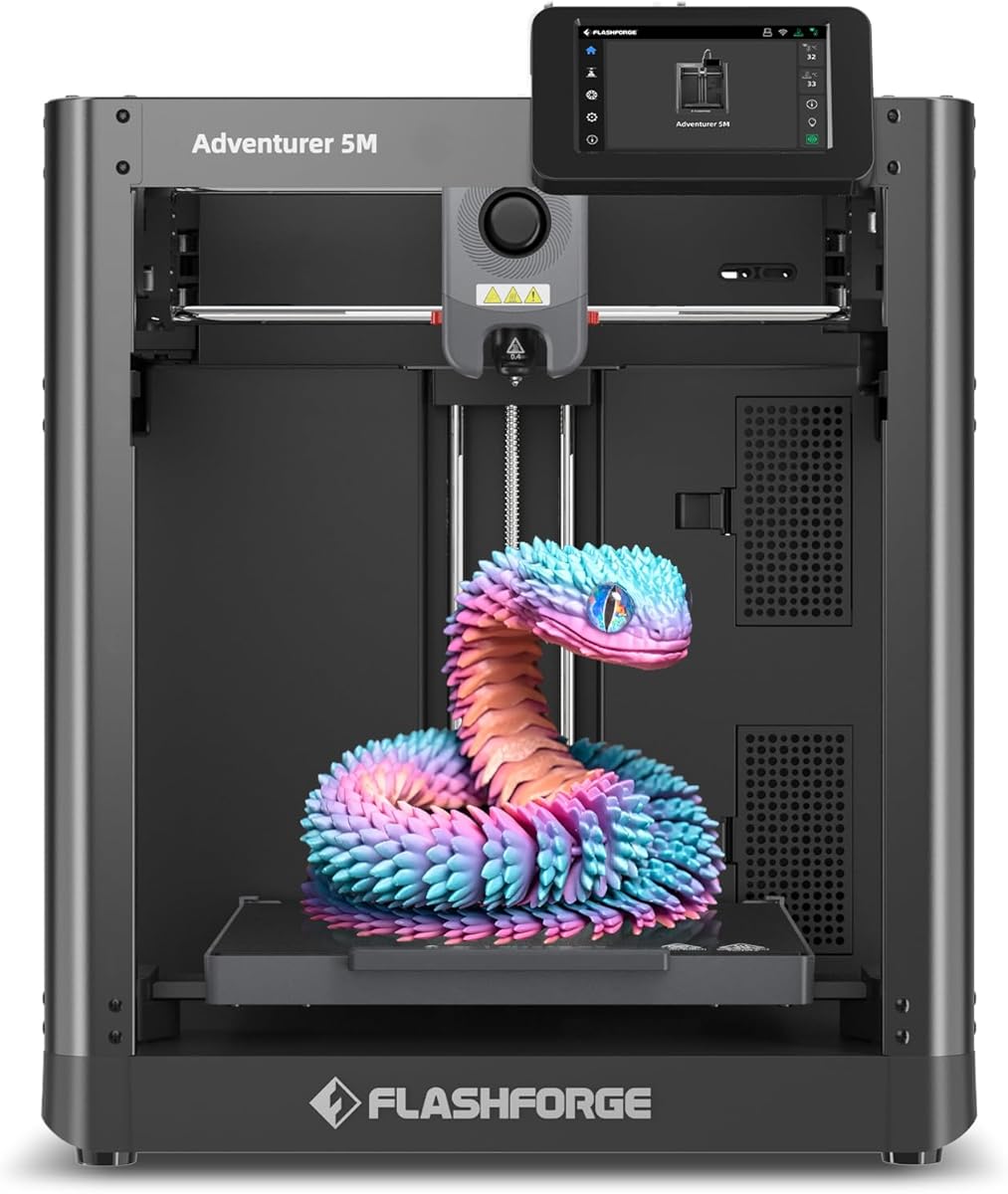
The FLASHFORGE Adventurer 5M is built for users who value speed without sacrificing build quality. Its CoreXY all metal structure supports high acceleration and reliable motion.
We may earn a commission when you buy through this link, at no additional cost to you.
Auto leveling ensures flawless first layers while the 3 second nozzle change simplifies maintenance. You can monitor prints remotely via the Flash Studio mobile app for added flexibility.
Though it shows a lower average rating its hardware features remain strong for prototyping. The 280C extruder and dual fan cooling handle a range of materials effectively.
For beginners eager to print quickly and try different nozzles this is a compelling option. The vibration compensation helps maintain detail even at maximum travel speeds.
600mm/s travel speeds reduce print times significantly for faster prototyping cycles.
Adjust settings and track status from your phone without being near the printer.
We may earn a commission when you buy through this link, at no additional cost to you.
The Bambu Lab P1S offers the safety and thermal stability of an enclosure without complex assembly. It supports advanced filaments like ABS and ASA more reliably than open frames.
We may earn a commission when you buy through this link, at no additional cost to you.
Setup takes around 15 minutes thanks to user friendly design and auto bed leveling. Its high acceleration and speed mean projects complete faster than many rivals.
While cost is higher the enclosed design and performance justify it for serious hobbyists. The consistent results and reliability make it a dependable workhorse for growing skills.
Beginners who plan to print diverse materials will appreciate the enclosed stability. It removes guesswork and ensures higher success rates for more challenging prints.
The closed design keeps heat in to prevent warping on advanced materials.
Hassle free assembly gets you printing within minutes of opening the box.
We may earn a commission when you buy through this link, at no additional cost to you.
The Bambu Lab P1S Combo brings vibrant multi-color printing to beginners with the included AMS unit. You can mix up to sixteen colors and materials seamlessly.
We may earn a commission when you buy through this link, at no additional cost to you.
It retains all strengths of the P1S like enclosed design and high speed. Auto leveling and fast setup ensure that color changes don't mean more calibrations.
This combo is ideal for creators wanting eye-catching prints without managing separate spools manually. The unified system streamlines filament switching and tracking for cleaner workflows.
While it demands more budget the ability to craft detailed multicolor models at home is unique. It transforms simple prints into complex art pieces with minimal user effort.
The AMS system loads and switches filaments automatically for vibrant multicolor models.
Design colorful parts and layered textures without manual intervention during prints.
We may earn a commission when you buy through this link, at no additional cost to you.
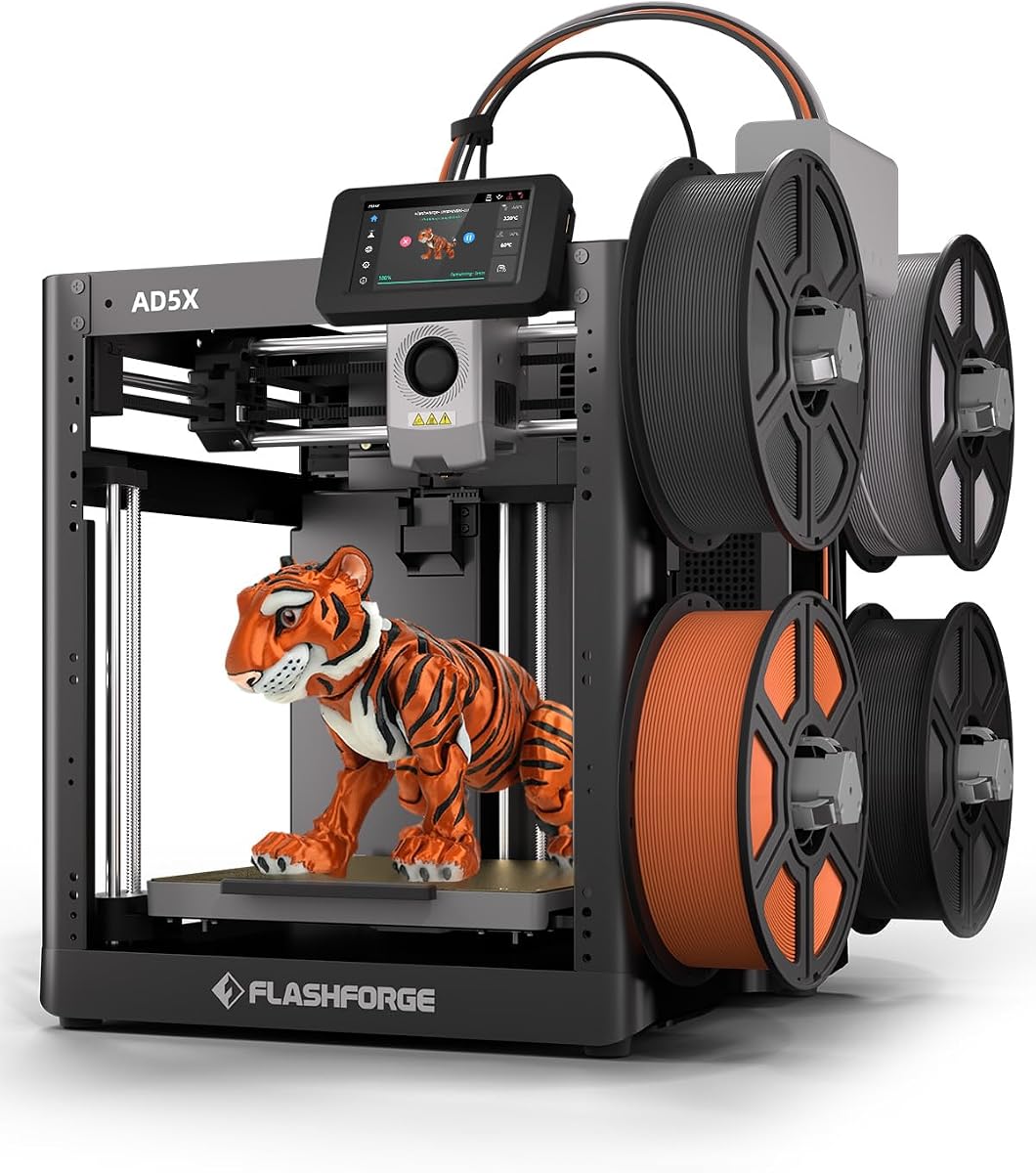
The FLASHFORGE AD5X supports simultaneous four color printing which is rare at this level. Its CoreXY structure reaches 600mm/s for rapid prototyping and batch production.
We may earn a commission when you buy through this link, at no additional cost to you.
A 300C direct drive extruder expands material choices while auto leveling reduces start errors. Vibration compensation and dual channel cooling help maintain quality at high speeds.
Although ratings reflect early challenges the features offer compelling versatility for color work. You can also control prints remotely via the Flash Maker app for flexibility.
Beginners interested in colorful prototypes will find this model intriguing. The quick resume function and automatic feeding add convenience for uninterrupted creative sessions.
Print up to four colors in a single pass for efficient multicolor models.
The 300C extruder supports a wider range of advanced and composite materials.
We may earn a commission when you buy through this link, at no additional cost to you.
The FLASHFORGE AD5M balances high speed with precision through fully auto calibration and CoreXY structure. It reduces manual setup steps so you can focus on creating models.
We may earn a commission when you buy through this link, at no additional cost to you.
The tool-free quick swap nozzle allows changing diameters in seconds for varied detail levels. You can track progress remotely via the Orca-flashforge slicer and mobile app.
It supports PETG and flexible materials with its double-sided PEI plate. Resume after power outages helps prevent lost work during long sessions.
For beginners needing reliable speed and easy maintenance this model fits well. Its stable motion structure ensures low noise even when running at maximum efficiency.
Change nozzle sizes in seconds to switch between detail and speed effortlessly.
Monitor batch prints and adjust parameters from anywhere using the mobile app.
We may earn a commission when you buy through this link, at no additional cost to you.
The AOSEED AI 3D Printer turns creativity into simple steps with AI powered design tools. Kids can create custom models using voice text or image prompts easily.
We may earn a commission when you buy through this link, at no additional cost to you.
Its enclosed safe design and TÜV Rheinland tested PLA ensure a secure environment. The kit includes eight filament rolls and tools so families start projects immediately.
Fast 400mm/s peaks let children see results quickly while maintaining precision. Built-in camera and time-lapse sharing add fun to documenting and reviewing creations.
This printer is tailored for young makers and family STEM activities. It removes technical barriers so learning happens through fun and imaginative play.
Use images or text to generate fun 3D models without design skills.
Includes filaments tools and templates so the whole family can create.
We may earn a commission when you buy through this link, at no additional cost to you.
Selecting the right model depends on your project goals budget and comfort with technical setup.
Beginners benefit most from printers with auto leveling and one click calibration. Manual tuning can be frustrating and leads to failed prints early on.
Look for features like auto Z offset and bed leveling to streamline startup and reduce errors.
High speed reduces wait times but accuracy matters more for detailed models. Acceleration and motion structure affect how well the printer handles fast moves.
Balance speed with quality by choosing CoreXY or dual Z designs that maintain stability at higher velocities.
Consider the size of objects you plan to print and whether you need multiple colors. Enclosed printers support advanced materials better than open frame models.
Ensure the build volume matches common project needs and supports filament types you intend to use.
Quieter printers suit home environments and shared spaces better. Safety features like enclosed bodies and tested filaments reduce risk during operation.
Prioritize models with low noise ratings and secure design for kids or small rooms.
A strong software ecosystem provides ready to print models and remote management tools. Look for active apps and large libraries that help beginners find files easily.
Check if the printer supports popular slicers and allows easy remote monitoring during print jobs.
Simple nozzle swaps and common parts reduce downtime and learning curve. Reliable support and warranty terms ensure you can fix issues quickly.
Choose brands with accessible maintenance guides and readily available spare parts.
Some models come with filament and starter kits that simplify early projects. Standard PLA and PETG filaments are easiest for beginners to work with.
Verify included accessories and compatibility with common filament types before purchase.
Strong warranty coverage gives peace of mind when learning new tech. Responsive support teams help troubleshoot issues quickly without costly delays.
Check return policies and repair service terms for long term satisfaction.
Start by loading the supplied filament and running auto calibration to ensure the bed is level and the nozzle height is correct. Most modern printers will guide you through these steps on screen.
Keep the printer in a well ventilated area and avoid leaving it unattended during long prints. Regularly clean the build plate and nozzle to prevent clogs and improve adhesion.
Store spare filaments in a dry container to avoid moisture that can degrade print quality. Update firmware and slicer settings as recommended to benefit from performance improvements.
PLA is the easiest filament to use for beginners. it prints at lower temperatures and does not warp easily. PETG is also good for items needing more strength and flexibility.
An enclosure helps when printing materials like ABS or ASA that are prone to warping. For PLA only projects open frame models work well and are easier to maintain.
Modern beginner printers often include noise dampening and operate quietly enough for home use. Look for models with active noise canceling if you want minimal disturbance.
Children should always be supervised when using a 3D Printer. Choose enclosed models with low risk features and place the machine out of reach during operation.
Auto bed leveling ensures the nozzle height is consistent across the entire print bed. This feature reduces failed prints and saves time for beginners learning the craft.
Regular cleaning of the nozzle and build plate helps maintain performance. Replace nozzles occasionally and check belts and firmware updates to keep prints smooth.
Online libraries like MakerWorld and Thingiverse offer thousands of free models ready to print. Filter by size and print time to find projects matching your machine.
Average beginner projects take between one to three hours depending on size and speed. Using faster settings and smaller objects can reduce time significantly for quick wins.
The ten models covered here show strong options for new users seeking reliable and fast 3D printing experiences. Each brings unique strengths in speed color and ease of use.
Prioritize what matters most to you such as setup simplicity speed or advanced features. A balanced choice helps you enjoy learning and creating without frustration.
Before buying check current availability and support details for the model you prefer. Availability and specs may vary so verify the latest information from retailers.