
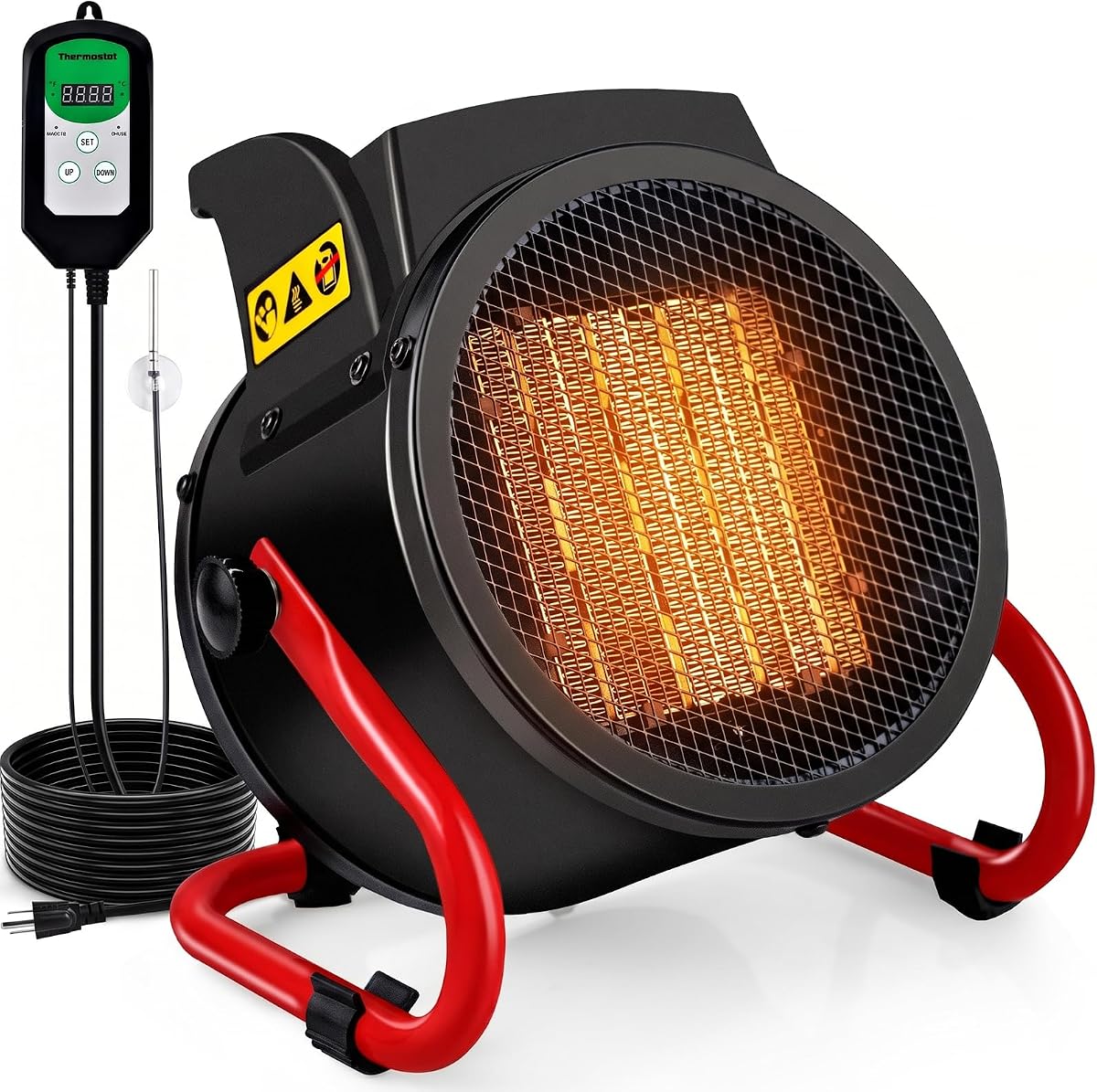
VEVOR Greenhouse Heater with Thermostat
4.2Editor score
Fast 1500 watt PTC heating
Independent soil temperature monitoring
Hot and cold mode operation
This comprehensive guide compares the top 10 greenhouse heater options for 2026, evaluating performance, safety features, and temperature control to help you
Keeping your plants healthy during colder months requires reliable heating solutions. A quality greenhouse heater maintains stable temperatures, preventing frost damage and ensuring continuous growth cycles throughout the winter season.
We evaluated ten top-rated models based on heating power, temperature precision, safety features, and durability. Our analysis focuses on electric units designed specifically for enclosed growing spaces and humid environments.
Each pick highlights key strengths and ideal use cases for different setups. Note that availability and pricing may fluctuate, so check current listings before making your final selection for your garden or workspace.
4.2Editor score

4.0Editor score

4.9Editor score
This side-by-side comparison outlines the core specifications and capabilities of each model to help you quickly identify which unit matches your specific heating needs and space requirements.



The BioGreen PALMA stands out as a reliable choice for serious growers seeking consistent warmth. With a 4.0 rating, it delivers steady performance through its digital thermostat and robust construction designed for damp environments.
We may earn a commission when you buy through this link, at no additional cost to you.
Its dual heating elements allow you to switch between 750 watts and 1500 watts depending on your needs. The 5800 cubic feet per hour air circulation prevents heat pockets and ensures even distribution across your growing space.
While it costs more than budget options, the stainless steel body and IPX4 splash resistance justify the investment for long-term use. The wide temperature range from 58 to 210.2 degrees gives you flexibility for various plant types.
Growers who need precise climate control in humid greenhouses should consider this model. It balances power and durability effectively, making it a top recommendation for year-round cultivation setups.
The stainless steel housing resists corrosion from high humidity and water spray, ensuring longevity in wet greenhouse conditions.
High airflow reduces run time by distributing heat quickly, which can lower overall electricity usage during peak heating seasons.
We may earn a commission when you buy through this link, at no additional cost to you.
The VEVOR model offers excellent value for hobbyists needing quick warming without a huge investment. Its 4.2 rating reflects solid performance for small grow tents and flower rooms where space is limited.
We may earn a commission when you buy through this link, at no additional cost to you.
A standout feature is the independent thermostat that monitors soil temperature in real-time, allowing precise control for seedlings. The PTC ceramic element heats up quickly, reducing wait times for desired ambient conditions.
While the IP20 rating is lower than splash-proof units, it remains suitable for indoor or covered spaces. The hot and cold modes add versatility, letting you use it as a cooling fan during summer months.
Budget-conscious gardeners will appreciate this unit's balance of features and cost. It provides essential temperature control and rapid heating for compact growing areas without breaking the bank.
The independent thermostat connects to a soil probe, ensuring root zones stay at optimal temperatures for healthy seedling development.
Switch between heating and ventilation modes to maintain comfort in your workspace during both cold winters and hot summers.
We may earn a commission when you buy through this link, at no additional cost to you.
This digital thermostat heater boasts an impressive 4.8 rating, reflecting user satisfaction with its consistent warmth. It is particularly effective for maintaining steady temperatures in grow tents and enclosed indoor spaces.
We may earn a commission when you buy through this link, at no additional cost to you.
The adjustable range from 41 to 108 degrees allows for fine tuning to suit young plants and seed trays. Its ability to lower excess dampness makes it useful for covered patios or humid greenhouses where moisture control matters.
Safety features like flame resistant materials and automatic overheat shutoff provide peace of mind during long runs. The IPX4 splash resistance ensures it can handle damp conditions without risking electrical faults.
Growers looking for a simple, reliable heater with strong safety credentials will find this model appealing. It delivers steady heat without complexity, making it ideal for those prioritizing function over extra features.
By reducing excess dampness in covered areas, this heater helps prevent mold growth while keeping plants in a balanced environment.
No permanent installation is required, allowing you to plug it in and set the temperature for immediate use in any space.
We may earn a commission when you buy through this link, at no additional cost to you.
The VEVOR tube element heater offers a practical design with an adjustable angle to direct heat exactly where it is needed. It serves well in small workshops or grow rooms where specific spot heating is required.
We may earn a commission when you buy through this link, at no additional cost to you.
Its 1500 watts output provides adequate warmth for areas up to 120 square feet. The heating and fan modes allow for flexibility, letting you choose between rapid warming and gentle air circulation.
Safety is maintained through overheat shutoff and a flame retardant housing. However, the lower rating suggests some users may find the controls basic compared to other models with more sophisticated features.
This model is suitable for those needing a lightweight, directional heater for temporary or supplemental use. Its portability makes it easy to move around your workspace as conditions change throughout the day.
The 25 degree adjustable angle lets you aim the heat directly at plants or work zones, minimizing waste and improving comfort.
A built-in handle and stable base allow you to carry the unit easily between locations without struggling with heavy weight.
We may earn a commission when you buy through this link, at no additional cost to you.
This green patio heater uses PTC ceramic technology to deliver consistent warmth without consuming oxygen or producing combustion gases. It is designed for spaces up to 160 square feet, making it suitable for small greenhouses.
We may earn a commission when you buy through this link, at no additional cost to you.
The smart digital thermostat helps stabilize ambient temperature by cycling automatically. This feature reduces stress on plants by avoiding rapid temperature shifts that can occur with less precise units.
Safety features include IPX4 resistance and overheat protection, ensuring it can handle humid environments. The three power modes offer flexibility for varying weather conditions and seasonal needs.
Gardeners looking for a tidy, energy efficient unit for semi covered areas will appreciate its design. It balances safety and performance well, making it a strong choice for maintaining stable conditions.
The auto on off cycling helps save energy by only running when necessary to maintain the set temperature range accurately.
IPX4 rating allows for use in damp greenhouses without fear of water splashes causing electrical hazards or damage.
We may earn a commission when you buy through this link, at no additional cost to you.
The Fast Heating model stands out with its IPX5 waterproof rating, making it highly resistant to water jets and harsh humidity. It is an excellent choice for greenhouses that experience frequent moisture or outdoor covered areas.
We may earn a commission when you buy through this link, at no additional cost to you.
Powered by a high performance 1500 watt PTC ceramic component, it produces heat almost instantly. The independent digital thermostat ensures precise control for seed sprouting and winter flower maintenance.
Safety is reinforced with thickened power cords and overheat protection, allowing for prolonged operation. The compact design and sturdy handle make it easy to move between different rooms or workspaces as needed.
Users prioritizing durability in wet environments will find this model reliable. It combines robust water resistance with efficient heating to keep your growing area safe and warm throughout the season.
IPX5 protection ensures the unit can withstand water jets, making it safer for use in high humidity or damp outdoor spaces.
The internal fan pairs with the heating element to circulate air efficiently, ensuring warmth reaches all parts of the space quickly.
We may earn a commission when you buy through this link, at no additional cost to you.
With a perfect 5.0 rating, this outdoor heater delivers reliable fast heating for spaces up to 200 square feet. Its stainless steel shell provides durability that resists wear and tear in various conditions.
We may earn a commission when you buy through this link, at no additional cost to you.
The digital thermostat with a waterproof probe senses air temperature accurately. This allows you to control the ambient environment precisely from 40 to 108 degrees, ensuring consistency for sensitive plants.
Safety features like automatic overheat protection prevent hazards by shutting down if internal temperatures get too high. The 7.5 foot power cord adds convenience, reducing the need for extension cables.
Growers needing a robust solution for larger or outdoor attached spaces will appreciate its build quality. It offers peace of mind through high reliability and effective temperature control during cold snaps.
The stainless steel shell ensures the unit remains durable and resistant to rust, even when used in challenging outdoor environments.
A waterproof temperature probe allows for accurate sensing of ambient conditions, enabling precise climate management for your plants.
We may earn a commission when you buy through this link, at no additional cost to you.
This kit includes both a heater and a digital thermostat for fully automatic temperature maintenance. The 4.7 rating highlights user satisfaction with its ability to manage power on and off cycles independently.
We may earn a commission when you buy through this link, at no additional cost to you.
Heating speed is quick, warming spaces up to 120 square feet in seconds. The independent thermostat controller ensures reliable operation for high power devices, making it ideal for both indoor and outdoor grow tents.
Energy saving is a core benefit, as the automatic control reduces unnecessary power consumption. This helps lower electricity costs over time while still keeping your plants in a stable temperature range.
Growers looking to automate their heating schedule will find this kit valuable. It reduces manual intervention and ensures consistent conditions, making it a smart choice for busy gardeners with limited time.
The independent thermostat monitors the temperature and controls the power, ensuring optimal conditions without constant manual checks.
By automatically turning off when targets are met, the system helps reduce energy waste and lowers your monthly electricity bills.
We may earn a commission when you buy through this link, at no additional cost to you.
This lightweight unit weighs less than 5 pounds, making it incredibly easy to carry between different rooms or locations. It features PTC ceramic technology that delivers 3 second heating for quick warmth.
We may earn a commission when you buy through this link, at no additional cost to you.
The 3-speed settings allow you to customize the airflow and heat output to your specific needs. It operates with low noise, which is beneficial for shared spaces or bedrooms where silence is valued.
Safety is maintained through overheat protection and an IP20 design that prevents foreign object intrusion. While it is basic, it provides essential heating for small tents and workplaces effectively.
Mobility is the primary strength here. If you need to move your heater frequently to different spots throughout the day, this unit offers the convenience and speed required for such tasks.
Weighing under 5 pounds with a handle, you can move this unit effortlessly between your greenhouse and garage without strain.
PTC ceramic technology allows the heater to reach warm temperatures in just seconds, reducing wait times significantly.
We may earn a commission when you buy through this link, at no additional cost to you.
The Pasapair model represents the premium tier with smart WiFi connectivity allowing control from anywhere via the Smart Life app. This high 4.9 rating reflects satisfaction with its precision and advanced features.
We may earn a commission when you buy through this link, at no additional cost to you.
A wired external probe measures the actual temperature near your plants rather than just the air around the heater. This ensures that your seedlings receive the exact soil temperature they need for healthy growth.
Advanced scheduling lets you set a 7-day routine to mimic natural day and night cycles. Four flexible modes including ECO and Fan Only provide adaptability for different times of day and seasons.
Tech savvy growers who want remote control and data precision will love this option. It is the best choice for those willing to invest in high end automation for their growing environment.
The Smart Life app allows you to check real-time probe temperatures and adjust settings from your phone anywhere.
Program weekly heating routines to automate temperature shifts, reducing daily manual adjustments and mimicking natural cycles.
We may earn a commission when you buy through this link, at no additional cost to you.
Selecting the right greenhouse heater involves understanding your space size, safety needs, and climate requirements to ensure optimal plant growth and comfort.
The heating power of a unit, typically measured in watts or BTUs, determines how quickly it can warm a specific area. For small grow tents or flower rooms, 1500 watts usually suffices, but larger greenhouses may require multiple units or higher outputs to maintain consistent temperatures. Always check the manufacturer's square footage recommendations to ensure the heater matches your space dimensions and volume. Matching power to your area prevents overworking the unit and reduces unnecessary energy consumption.
Precise temperature control is vital for plant health, especially for seedlings and sensitive crops. Digital thermostats offer more accurate adjustments than analog dials, allowing you to set exact target temperatures. Look for units with external probes if you need to monitor soil or ambient air conditions directly rather than just near the unit. A wide temperature range ensures the heater can adapt to different seasonal needs without needing to be replaced.
Greenhouses often have high humidity levels which increase the risk of electrical hazards. Check for IPX4 or IPX5 ratings to ensure the heater is splash proof or waterproof enough for your environment. Overheat protection is another critical feature that automatically shuts off the unit if internal temperatures get too high, preventing fires. Flame retardant materials in the housing add an extra layer of safety for enclosed spaces.
Energy efficient heaters help lower electricity costs while maintaining comfort. Units with adjustable power modes, such as 750 watts versus 1500 watts, let you reduce output during milder weather. Automatic on off cycling based on thermostat settings also prevents continuous running. Look for models that advertise energy saving technologies or timers to optimize when the heater is active during the day.
If you need to move your heater between different rooms or spaces frequently, portability becomes a key factor. Lightweight models with built-in handles and stable bases are easier to transport safely. Adjustable angles on the air outlet can help direct heat exactly where it is needed. Consider the dimensions and weight of the unit to ensure it fits comfortably on shelves or floors without obstruction.
Durable construction ensures that the heater lasts through multiple seasons without degradation. Stainless steel housings resist corrosion and moisture better than standard plastics in humid environments. Check for robust power cords and secure connections that won't wear out easily. A well built unit often comes with a warranty, providing confidence in its long term performance and reliability.
Modern heaters may offer smart connectivity through WiFi apps for remote control and scheduling. These features allow you to adjust temperatures from your phone and monitor conditions in real time. Smart models can help automate heating cycles, reducing manual work and ensuring consistency. However, ensure your network supports the required frequency, usually 2.4 GHz, for successful connection.
Some heaters include extra modes like fan-only or dehumidifying to manage air circulation and moisture levels. This versatility can extend the usefulness of the unit beyond just heating. Fans help distribute heat evenly and prevent hot spots that could harm plants. Evaluate these features based on your specific needs to decide if they add value to your purchase.
Place the heater on a flat, stable surface away from flammable materials like dry leaves or curtains to ensure safe operation. Keep at least three feet of clearance around the unit to allow for proper air circulation and prevent overheating.
Regularly clean the air vents and filters of dust and debris to maintain efficiency. Use a soft brush or vacuum to remove buildup that could block airflow or cause the heater to overwork. Always unplug the unit before cleaning to avoid electrical hazards.
In humid environments, check the heater periodically for signs of moisture buildup or corrosion. If the unit has a removable cover, wipe it down with a dry cloth to prevent mold growth. Store the heater in a dry place when not in use during summer months to extend its lifespan.
Energy consumption depends on wattage and usage time. Most greenhouse heaters use 1500 watts at high settings, which can increase bills if running constantly. Choosing units with adjustable power modes or timers helps reduce usage and save costs.
Most plants thrive between 55 and 75 degrees Fahrenheit in winter. Some tropical plants may need higher temperatures, while hardy varieties tolerate lower. A thermostat with precise control ensures you maintain a consistent range for optimal growth.
Yes, many models are designed specifically for grow tents. Ensure you select a unit with appropriate safety ratings and size to fit inside without blocking airflow. Proper ventilation is key to prevent heat buildup.
Ensure proper ventilation around the unit and avoid blocking air vents. Use heaters with built-in overheat protection features that automatically shut down. Never use the heater unattended for extended periods without monitoring.
Yes, units with IPX4 or IPX5 ratings are designed to resist water splashes. These are ideal for humid environments where condensation is common. Always check the specific rating before purchasing for wet conditions.
Look for ETL or UL certification marks indicating the heater meets safety standards. These ensure that electrical components and materials are tested for risks. Certified units provide peace of mind regarding fire and shock hazards.
Our top picks include the BioGreen PALMA for overall performance, the VEVOR model for budget needs, and the Pasapair unit for smart control. Each offers unique strengths tailored to different growing environments and requirements.
Prioritize safety features and temperature precision when selecting a unit. Matching the heater's power and waterproof rating to your specific space ensures reliable operation and plant health throughout the season.
Remember that availability and specifications may change over time. Check current listings and reviews before purchasing to confirm the details meet your expectations for your greenhouse setup.