
Entina Tina2C
4.4Editor score
STEM modules included
App controlled printing
Compact mini design
This guide compares the top 3D printers for educational use to help schools and families choose the best device for STEM learning and classroom projects.
Finding the right 3D Printer for Educational Use can transform how students learn STEM concepts. Modern devices offer speed and precision while remaining safe for classroom environments. Educators need reliable machines that minimize maintenance and maximize creative time for learners of all ages.
We compared ten leading models based on ease of use, safety features, and print quality. Each option was evaluated for its ability to support curriculum goals and engage students in hands-on design. Our analysis focuses on reliability and educational value rather than just technical specifications.
Each pick shows specific strengths for different learning contexts from home labs to full classrooms. Prices and availability change frequently so always check current listings before purchasing. These selections represent the most versatile tools available for integrating additive manufacturing into education today.
4.4Editor score

4.7Editor score

4.5Editor score
The following table provides a side-by-side overview of all ten selected models. Each entry highlights core capabilities relevant to educational settings including safety calibration and printing speed to help you narrow down your choices quickly.





The Bambu Lab A1 stands out as a top choice for educational environments due to its seamless setup and reliable performance. Its high rating reflects consistent quality and ease of use which are critical for classroom deployment. Students can focus on design rather than troubleshooting printer mechanics.
We may earn a commission when you buy through this link, at no additional cost to you.
Key strengths include full auto calibration and active flow rate compensation that ensure perfect prints every time. The motor noise cancellation keeps the environment calm during lessons and the touchscreen interface simplifies control for young users. Speed is impressive without sacrificing detail which supports tight project deadlines.
While the open frame limits some advanced filament use the safety and simplicity outweigh this trade-off for most educational settings. Users needing multi color printing must purchase the AMS lite separately which adds cost but enables creative projects. Overall the reliability makes it a strong investment for schools.
This device is ideal for teachers who need a printer that works reliably without constant supervision. It supports a wide range of educational projects from prototypes to functional parts. We recommend it as a primary machine for any program focused on hands-on learning and innovation.
Auto calibration eliminates manual adjustments so students can start printing within minutes of unboxing.
Noise canceling motors ensure the printer does not disrupt lectures or collaborative work sessions.
We may earn a commission when you buy through this link, at no additional cost to you.
The Entina Tina2C is designed specifically for young learners and beginners who need a safe and simple introduction to 3D printing. Its compact size fits easily on desks and the app interface guides users through every step of the process. This makes it perfect for home schooling or small classroom stations.
We may earn a commission when you buy through this link, at no additional cost to you.
Strengths include a library of over 3000 models and 20 creative DIY modules that align with STEM curricula. The app allows for remote control and monitoring which helps teachers manage multiple devices efficiently. Auto leveling ensures successful prints without technical knowledge from the students.
The small build volume limits larger projects but encourages focus on detailed and modular designs. It is optimized for PLA which keeps operation safe and simple but restricts material variety for advanced engineering. For introductory courses this limitation is often acceptable given the low cost and ease of use.
We recommend this model for elementary or middle school settings where space and budget are limited. It fosters creativity through guided projects while teaching fundamental design concepts. It is an excellent starting point for programs that prioritize accessibility and student engagement.
Guided courses and modules help students understand design thinking through structured hands-on activities.
Small rounded edges and quiet operation make it safe for close supervision and home environments.
We may earn a commission when you buy through this link, at no additional cost to you.
The Snapmaker U1 represents a premium solution for educational programs that require advanced multi-material capabilities. Its four toolhead system allows for true multi-color and mixed-material prints without manual intervention. This capability is rare in educational printers and opens up sophisticated project possibilities.
We may earn a commission when you buy through this link, at no additional cost to you.
Strengths include the rapid tool changer which minimizes waste and time compared to traditional multi-extruder setups. The CoreXY motion system provides high speed and stability which is essential for maintaining quality during complex prints. Software support is open source allowing for customization and learning.
The higher price and complexity mean it is best suited for high schools or maker spaces with experienced users. Beginners may find the toolhead management challenging without guidance. However the ability to print with supports or different materials in one job makes it a powerful learning tool.
We recommend this for advanced STEM courses where students need to prototype functional parts with varied materials. It teaches complex manufacturing concepts and prepares students for industry standards. It is a long-term investment for institutions committed to cutting-edge technical education.
Supports rigid and flexible materials in one print allowing for complex engineering prototypes.
Tool swapping takes only seconds so multicolor models complete faster than traditional methods.
We may earn a commission when you buy through this link, at no additional cost to you.
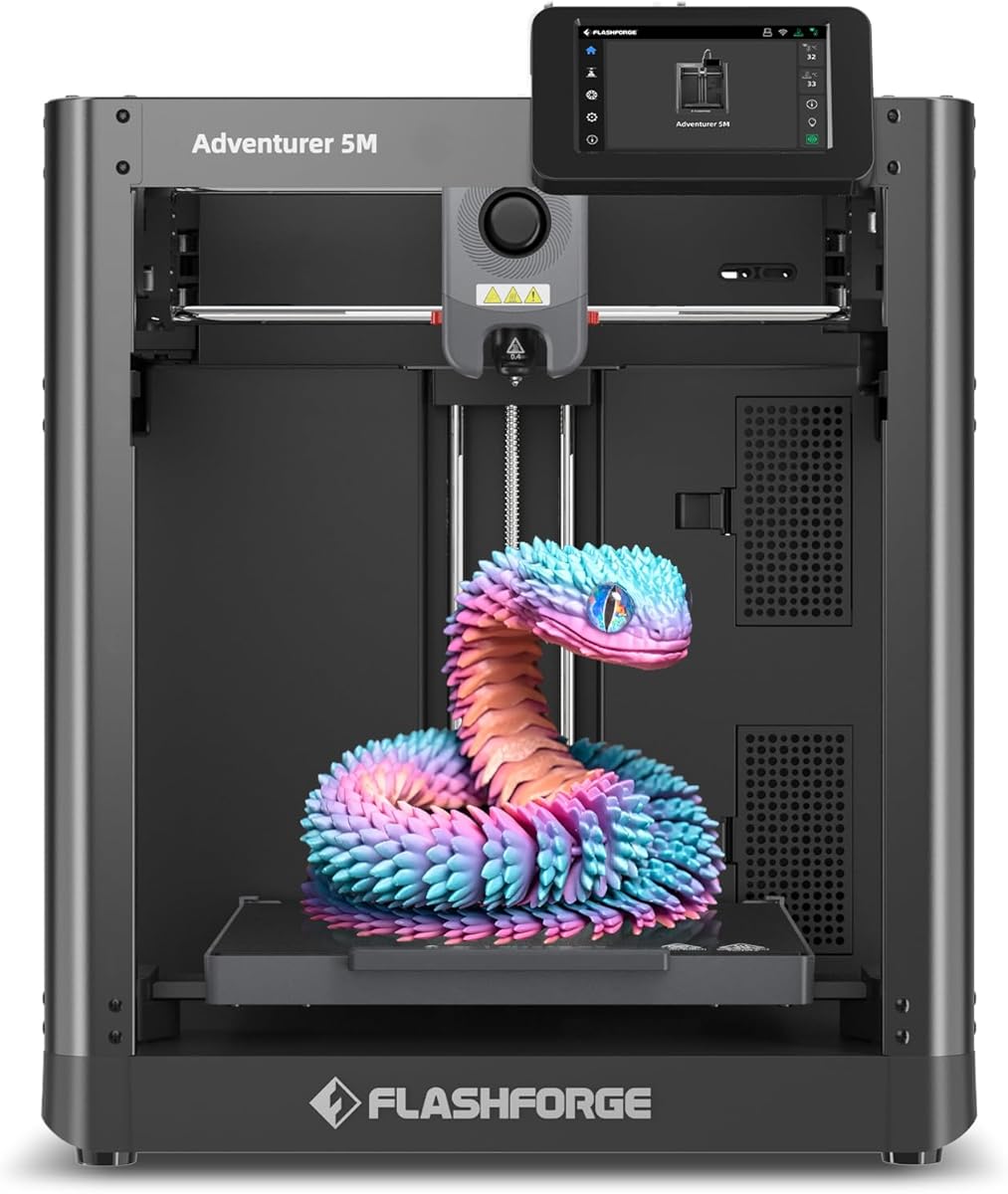
The FLASHFORGE Adventurer 5M offers exceptional speed which is beneficial for high volume educational use. It can complete prints significantly faster than standard devices reducing wait time for students. The CoreXY all metal structure ensures stability even at high velocities which helps maintain accuracy.
We may earn a commission when you buy through this link, at no additional cost to you.
Key strengths include a direct extruder and detachable nozzle that simplify maintenance and allow for quick part swaps. Auto leveling ensures consistent first layers and the dual sided PEI platform makes removing prints easy. These features reduce downtime and keep students engaged in the design process.
The rating is lower than competitors which suggests potential variability in user experience or reliability. While fast it may lack some of the refined user experience found in other models. For classrooms prioritizing output volume over polished interface it remains a viable option.
We recommend this for workshops with many users needing quick turnaround for prototypes. It balances performance and affordability well. Educators should monitor print consistency during initial setup to ensure all students receive reliable results.
Prints up to 600mm/s reducing project time significantly compared to standard printers.
Tool-free nozzle changes allow for easy upgrades or fixes without disrupting the class.
We may earn a commission when you buy through this link, at no additional cost to you.
The Bambu Lab P1S combines speed with an enclosed chamber making it suitable for a wider range of materials. This design improves reliability for engineering filaments and maintains consistent temperatures for complex prints. It retains the user-friendly experience of the A1 series with added robustness.
We may earn a commission when you buy through this link, at no additional cost to you.
Strengths include automatic bed leveling and fast setup times that allow students to start projects quickly. The machine handles materials like ABS and ASA which are useful for durable educational prototypes. High speed performance ensures that lab sessions are productive without long wait times.
The enclosure adds cost and complexity compared to open frames but pays off in material versatility. It is a strong choice for high schools or makerspaces that need more than just PLA. The integration with the ecosystem ensures smooth operation once connected.
We recommend this for programs needing durable prototypes or working with engineering-grade materials. It bridges the gap between hobbyist reliability and professional performance. Educators should note that multi-color printing requires additional hardware purchase.
The enclosed chamber allows safe printing with materials like ABS that require heat retention.
Speeds up to 500mm/s ensure that multiple students can test designs in one session.
We may earn a commission when you buy through this link, at no additional cost to you.
The FLASHFORGE AD5M focuses on ease of use with a strong emphasis on automatic calibration. This reduces the barrier to entry for students who might struggle with manual leveling. It offers high speed performance and a user-friendly app for remote monitoring of projects.
We may earn a commission when you buy through this link, at no additional cost to you.
Strengths include a resume feature that saves progress during power outages which is vital for classroom environments. The quick-swap nozzle simplifies maintenance and the all-metal structure ensures durability over time. These practical features make it a reliable workhorse for educational settings.
While it shares similarities with other models its specific focus on app integration and resume functionality stands out. Some users might prefer a more open system for advanced customization. However for standard use cases it delivers consistent results with minimal intervention.
We recommend this for schools that value reliability and minimal downtime. It supports standard materials well and its features are intuitive enough for younger students. It is a solid choice for general STEM classes needing consistent performance.
Power loss recovery ensures that interrupted prints can continue without wasting time or material.
Remote monitoring allows teachers to track multiple projects without being near the machine.
We may earn a commission when you buy through this link, at no additional cost to you.
The Bambu Lab P2S Combo offers a fully integrated multi-color solution with a built-in drying system. This reduces the need for external filament management which is helpful for busy educational labs. The high rating reflects its reliability and ease of use for complex prints.
We may earn a commission when you buy through this link, at no additional cost to you.
Strengths include the Adaptive Airflow System which ensures quality across different materials. The AMS Pro handles multiple spools and dries them to prevent clogs. This automation allows students to focus on design rather than filament maintenance. It is a high-performance tool for ambitious projects.
The higher price point may be a consideration for smaller budgets but the value in convenience is significant. The footprint is larger than standard models so space planning is required. For programs prioritizing advanced capabilities it is a compelling choice.
We recommend this for makerspaces or advanced high school classes where color and material variety are needed. It simplifies complex workflows and supports professional-quality outputs. It is ideal for institutions willing to invest in top-tier tools.
Built-in drying keeps filament dry to ensure consistent flow and reduce print failures.
The AMS Pro enables seamless multi-color printing without manual intervention or swaps.
We may earn a commission when you buy through this link, at no additional cost to you.
The Ugee Funbox is designed with safety and AI integration at the forefront. It is certified for low emissions and features a fully enclosed body to protect children from heat and moving parts. This makes it one of the safest options available for young learners.
We may earn a commission when you buy through this link, at no additional cost to you.
Strengths include AI tools that turn photos and voice into 3D models instantly. This lowers the barrier to entry for students without CAD experience. The built-in camera allows for easy sharing of progress and time-lapses which enhances engagement and learning outcomes.
It is limited to single-color PLA printing which is sufficient for most educational projects. The reliance on its app ecosystem means users must follow its workflow. For families and classrooms prioritizing safety and ease this trade-off is well worth it.
We recommend this for elementary education and home use where safety is paramount. It turns screen time into making time and fosters creativity without technical frustration. It is an ideal gift for curious minds interested in design and engineering.
AI engines convert drawings or descriptions into printable models instantly for instant gratification.
GreenGuard certification ensures low emissions which is vital for indoor educational settings.
We may earn a commission when you buy through this link, at no additional cost to you.
This version of the FLASHFORGE Adventurer 5M emphasizes quality through vibration compensation and a robust direct extruder. It balances speed with precision to ensure that educational prints look professional. Auto leveling and power recovery add reliability for classroom use.
We may earn a commission when you buy through this link, at no additional cost to you.
Strengths include a run-out sensor and flexible PEI plate which reduce failed prints and simplify material removal. The system is straightforward and supports a range of standard filaments. It provides consistent results which builds student confidence in the technology.
As an open frame machine it works best in well-ventilated areas. It lacks some of the advanced safety features of enclosed models but performs well for general tasks. For budgets needing a reliable single machine this is a strong contender.
We recommend this for general classroom use where simplicity and quality matter. It supports basic engineering projects and allows for quick iteration. Educators should ensure proper ventilation for best results.
Vibration compensation eliminates ghosting and improves surface quality on fast prints.
Run-out sensors prevent wasted prints by detecting when filament runs low.
We may earn a commission when you buy through this link, at no additional cost to you.
The Bambu Lab A1 Mini Combo brings full multi-color capabilities to a compact footprint. It offers the same high precision and ease of use as the larger A1 but fits more easily on limited surfaces. This makes it ideal for crowded classrooms or individual student desks.
We may earn a commission when you buy through this link, at no additional cost to you.
Strengths include fast setup and silent operation which minimize disruptions during lessons. The AMS lite integration allows for multi-color prints without manual filament swaps. It is an efficient tool for small projects and prototypes where space is tight.
The build volume limits larger functional parts but encourages students to design modular solutions. It is not suited for large-scale prototypes but excels at detailed small items. For educational programs with space constraints it is a valuable addition.
We recommend this for settings where desk space is at a premium. It brings professional multi-color capabilities to smaller labs at a manageable footprint. It is best for detailed design projects where space optimization matters.
Fits multi-color functionality into a small size suitable for individual desks.
Setup takes minutes so students spend more time designing and less time configuring.
We may earn a commission when you buy through this link, at no additional cost to you.
Selecting the right printer for education involves balancing performance safety and ease of use. This guide outlines key factors to consider before making a purchase.
Safety is paramount in educational settings especially when children are involved. Look for enclosed chambers anti-pinch features and certifications like UL GREENGUARD. These ensure that students are protected from hot surfaces and fumes.
Prioritize machines with built-in safety mechanisms that require minimal adult intervention for safe operation.
Teachers need equipment that can be deployed quickly without technical headaches. Auto leveling and pre-assembled designs reduce the time needed before students can start printing.
Choose printers that offer one-click calibration to maximize instructional time over maintenance.
Modern educational printers often include app control and cloud features. This allows teachers to monitor prints remotely and manage multiple devices efficiently.
Look for models with intuitive interfaces and compatibility with standard educational tools.
Balanced performance ensures that classes can complete projects within a reasonable timeframe. High speeds are useful for multiple students but should not compromise reliability.
Select printers that offer fast output without excessive failure rates.
Educational projects range from simple PLA to engineering-grade filaments. An open frame works for PLA while an enclosure supports ABS and ASA.
Choose based on the material needs of your curriculum.
Low maintenance designs like quick-swap nozzles reduce downtime and frustration. Educational machines should be easy to service by staff.
Prioritize tools that minimize cleaning and mechanical intervention.
Some models include STEM modules and design libraries that align with learning goals. This adds value by providing ready-made projects.
Consider bundles that offer structured learning pathways.
Beyond the initial price consider consumables and accessories needed for full functionality. Multi-color options may require add-ons.
Plan for the complete ecosystem costs to avoid hidden expenses.
Begin by placing the printer on a stable level surface away from direct drafts. Ensure the workspace is well-ventilated especially if using advanced materials. Connect the power and load filament as instructed in the manual.
Calibrate the printer before each batch of projects to ensure consistent adhesion. Use auto-leveling tools provided by the machine to simplify this step. Clean the build plate regularly to prevent debris from affecting print quality.
After use allow the printer to cool completely before touching the build plate. Clear failed prints gently to avoid damaging the surface. Store filament in a dry place to prevent moisture absorption which causes clogs.
Yes modern educational printers include safety features like enclosed chambers and cool-touch surfaces. Always supervise young users and choose models with certifications like UL GREENGUARD to ensure low emissions and safe operation during lessons.
PLA is the most beginner-friendly filament due to its low temperature requirements and lack of odor. It is safe for standard classroom environments and easy to print with on most educational 3D printers.
Most modern educational printers are designed for users with little to no experience. Features like auto leveling and app control make them accessible for teachers and students without technical backgrounds.
Print time varies by size and complexity but small educational projects usually take between 30 minutes to 2 hours. High-speed models can reduce this significantly allowing for more iterations within a class period.
Some models support multi-color printing with add-on modules that manage multiple filament spools. This requires additional hardware but allows for more complex and visually appealing educational projects.
Many educational printers feature power loss recovery which saves progress and resumes once power is restored. This minimizes wasted material and ensures that students can finish their projects reliably.
Check bed adhesion and nozzle cleanliness first as these are common causes. Recalibrate the bed and ensure the correct temperature is set for the filament type being used.
Yes many manufacturers and educational platforms offer lesson plans and design challenges. Look for printers that include built-in STEM modules to access ready-made resources for your program.
We reviewed ten models ranging from compact beginner devices to advanced multi-tool systems. Each option serves different educational needs and budgets while prioritizing safety and reliability.
Prioritize ease of use and safety features when selecting for younger students. Advanced programs may benefit from multi-material capabilities to support complex engineering projects.
Always verify current pricing and availability before purchasing as these change frequently. Choose a model that aligns with your specific learning objectives to maximize student engagement.