
Channel Master TV Antenna Signal Strength Meter
3.9Editor score
Supports all ATSC frequencies
Displays signal and noise ratio
Includes stylus and carrying bag
Finding the right cellular signal meter for antenna aiming is essential for optimizing boosters and installations. These tools provide real-time data to ensure your setup delivers the strongest possible connection.
We evaluated ten top products based on accuracy, frequency coverage, and ease of use. Our analysis focuses on devices that offer reliable RF readings for various carrier bands and environments.
Each pick highlights unique strengths for specific use cases like EV charging or home boosters. Keep in mind that product availability and details may change, so verify current listings before purchasing.
3.9Editor score

4.6Editor score

5.0Editor score
As an Amazon Associate we earn from qualifying purchases.
This side-by-side comparison highlights key specifications across all ten selected products. Use this table to quickly identify the best tool for your specific RF testing needs.



This device stands out as the top choice for professionals needing reliable 4G LTE measurements. It supports all major US carriers and provides true RSRP, RSRQ, and RSSI metrics for accurate readings.
We may earn a commission when you buy through this link, at no additional cost to you.
Its ability to function without SIM cards or phones simplifies testing in remote locations like EV charging stations. The lack of subscription requirements ensures long-term savings and uninterrupted access to data.
While the price point is higher than basic handheld meters, the specialized features justify the investment for serious installers. Users seeking deep technical insights will appreciate the detailed carrier support.
We recommend this meter for anyone installing cellular boosters or IoT devices. It offers the accuracy and reliability needed for professional-grade antenna aiming tasks.
True RSRP and RSRQ values provide granular insight into signal quality beyond simple strength indicators.
Support for AT&T, Verizon, T-Mobile, and regional carriers ensures versatility across diverse network environments.
We may earn a commission when you buy through this link, at no additional cost to you.
This kit combines advanced Wi-Fi 6 testing with cellular capabilities. It allows technicians to find physical locations of devices across 2.4GHz, 5GHz, and 6GHz bands.
We may earn a commission when you buy through this link, at no additional cost to you.
The included external directional antenna enhances antenna aiming accuracy significantly. Remote collaboration features save travel time by allowing off-site engineers to assist in real-time.
Data management platforms streamline reporting and integration with network systems. While the cost is high, the efficiency gains for enterprise networks are substantial.
Best suited for IT professionals managing complex wireless environments. This tool delivers enterprise-level precision for troubleshooting and installation.
Quickly locate access points and clients across all modern Wi-Fi bands with pinpoint accuracy.
AirMapper Site Survey enables seamless cooperation between remote and on-site technicians.
We may earn a commission when you buy through this link, at no additional cost to you.
An affordable option for basic signal alignment tasks. This handheld finder supports all over-the-air ATSC TV frequencies and displays signal level and noise ratio.
We may earn a commission when you buy through this link, at no additional cost to you.
It features a color touch screen and includes a stylus for easy operation. The rechargeable battery ensures you can work without needing constant power replacements.
While it lacks advanced cellular bands, it serves well for OTA antenna installations. The included bag protects the device during transport.
Ideal for homeowners needing a simple tool for TV antenna aiming. It offers reliable performance for entry-level signal measurement needs.
Color touch screen provides immediate visual feedback for signal adjustments.
Includes carrying case and stylus for convenient and safe usage on-site.
We may earn a commission when you buy through this link, at no additional cost to you.
This meter is specifically designed for cell phone signal booster installations. It covers five essential bands including LTE, PCS, and AWS for broad compatibility.
We may earn a commission when you buy through this link, at no additional cost to you.
The rechargeable design with NiMH batteries provides 2.5 to 3.5 hours of working time. A controllable backlight helps in dark environments like attics or basements.
High receiving sensitivity at -110dBm ensures weak signals are detected accurately. This precision is crucial for positioning outdoor antennas correctly.
Recommended for DIY booster installers who need dedicated band coverage. It simplifies the process of finding optimal signal sources.
Targeted band coverage aligns perfectly with common cell phone booster requirements.
Controllable backlight ensures visibility when working in poorly lit spaces.
We may earn a commission when you buy through this link, at no additional cost to you.
A professional-grade platform combining a spectrum analyzer, power meter, and tracking generator. It covers frequencies up to 7.5 GHz with an 8-inch high-definition touchscreen.
We may earn a commission when you buy through this link, at no additional cost to you.
Features like zero span and waterfall modes offer deep dynamic signal monitoring. USB connectivity supports advanced data logging and real-time analysis on PCs.
Modular design allows choosing between 3.3, 6, or 7.5 GHz configurations. Software licenses for cable testing can be added separately.
Best for RF engineers and advanced users needing lab-quality portability. It provides versatile tools for complex interference analysis.
Combines spectrum analysis and power meter functions into a single portable unit.
Visualize signal strength across locations for improved site assessment.
We may earn a commission when you buy through this link, at no additional cost to you.
Designed for high-frequency EMF measurements of mobile phones and base stations. It uses a non-directional triaxial probe for accurate field strength readings.
We may earn a commission when you buy through this link, at no additional cost to you.
The 50 MHz to 3.5 GHz range covers most mobile communication frequencies. Manual store recall allows keeping up to 99 measurement sets for later review.
Suitable for checking microwave leakage and ensuring safety standards. The isotropic probe ensures consistent readings regardless of orientation.
Recommended for safety technicians monitoring RF exposure levels. It provides reliable data for environmental and health assessments.
Three-channel probe ensures precise readings from all directions without orientation errors.
Stores up to 99 sets of measurements for efficient comparison and logging.
We may earn a commission when you buy through this link, at no additional cost to you.
This analyzer offers continuous coverage from 0.1 to 1300 MHz across HF, VHF, and UHF bands. The 4.3-inch touch screen makes navigation intuitive and easy.
We may earn a commission when you buy through this link, at no additional cost to you.
It supports single point measurements and frequency sweeps for detailed antenna analysis. TDR mode helps in cable diagnostics and fault finding.
Users should note that firmware cannot be updated, so initial features are fixed. Still, its portability and broad range make it a strong value.
Perfect for amateur radio operators and technicians needing a portable analyzer. It balances performance with affordability effectively.
Covers HF to UHF bands continuously for versatile antenna system testing.
Time Domain Reflectometry mode enables quick identification of cable faults.
We may earn a commission when you buy through this link, at no additional cost to you.
This handheld integrates a spectrum analyzer and signal generator for versatile testing. It covers 35 to 6200 MHz, supporting Wi-Fi, LTE, GSM, and more.
We may earn a commission when you buy through this link, at no additional cost to you.
A 3.2-inch color touchscreen displays real-time spectrum data with clear visuals. USB Type-C allows PC connectivity for logging and analysis on desktops.
Battery life offers approximately 3 to 4 hours of continuous use. Lightweight design makes it easy to carry for on-site RF testing.
Recommended for technicians and hobbyists needing both analysis and signal generation. It serves as a practical all-rounder for RF diagnostics.
Switch instantly between spectrum analysis and signal generation for comprehensive testing.
Compatible with 2G, 3G, 4G, LTE, and modern Wi-Fi networks.
We may earn a commission when you buy through this link, at no additional cost to you.
A rugged compact device covering 35 to 6200 MHz for field evaluations. It includes an integrated tracking generator for characterizing filters and amplifiers.
We may earn a commission when you buy through this link, at no additional cost to you.
Fast scan speeds allow rapid RF environment assessment. The housing is built for tight spaces and energy-efficient operation.
Accessories like extension cables and stylus are included for immediate use. Note that SWR measurements require optional components.
Great for maintenance teams working in challenging locations. It balances performance with portability for on-site tasks.
Delivers stable output to characterize passive components and filters reliably.
Small dimensions and light weight ensure easy transport and durable usage.
We may earn a commission when you buy through this link, at no additional cost to you.
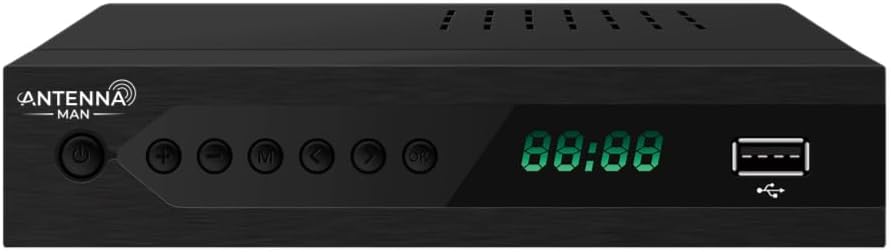
This meter focuses on TV antenna alignment using ATSC digital conversion. It provides real-time signal strength to help users get more channels easily.
We may earn a commission when you buy through this link, at no additional cost to you.
The plug-and-play design simplifies setup without technical expertise. Users can see immediate feedback while adjusting antenna direction.
While less specialized for cellular bands, it serves well for OTA TV setups. Recording features add extra utility for viewing preferences.
Suitable for homeowners setting up terrestrial TV antennas. It offers a straightforward approach to improving reception.
Designed specifically for over-the-air digital TV signal acquisition and recording.
Real-time strength indicators make adjusting antenna direction quick and effective.
We may earn a commission when you buy through this link, at no additional cost to you.
Selecting the right tool involves balancing frequency coverage, accuracy, and specific use cases.
Ensure the meter supports the bands you need such as LTE, PCS, and AWS. Different boosters require different frequencies so check specifications carefully.
Verify that the device covers all carrier bands used in your region for accurate aiming.
Look for true RSRP and RSSI values which provide precise data on signal strength and quality. Basic meters might only show bars or relative values.
High sensitivity ratings ensure weak signals are detected during critical installation steps.
Consider battery life and rechargeability for field work away from outlets. Devices with built-in batteries offer more flexibility than disposable ones.
Choose a lightweight model that fits easily in a carrying case for transport.
A clear display helps you read values quickly in various lighting conditions. Touchscreens or physical buttons should be responsive and intuitive.
Backlight features are useful when working in dark or shaded installation spots.
Check if the device supports all major carriers like AT&T, Verizon, and T-Mobile. Universal support avoids issues when switching networks.
Carrier-agnostic tools simplify testing without needing specific SIM cards.
Features like data logging, GPS heatmaps, or spectrum analysis add value for professionals. Decide if you need extra tools beyond basic signal strength.
Advanced capabilities may justify a higher price for complex installation needs.
Ruggedized designs withstand rough handling and outdoor environments better. Look for durable housing that protects internal components.
Ensure the device has been tested for reliability in real-world conditions.
Balance the cost with the features you actually need for your projects. Expensive professional gear might not be necessary for basic home setups.
Read user reviews to confirm long-term durability before purchasing.
Begin by calibrating the meter if required by the manufacturer. Connect it to your antenna or booster system following the provided guide.
Point the antenna toward the tower while monitoring real-time signal readings. Adjust the position incrementally until the values stabilize at the highest point.
Store the device in a protective case when not in use. Keep it away from extreme temperatures to maintain battery and electronic health.
It is a tool used to measure signal strength and quality to optimize antenna placement. These devices help installers find the best direction for maximum reception.
Most standalone meters do not require subscriptions. However some advanced tools may need data plans for real-time tracking features.
Generally no because cellular bands differ from TV frequencies. Ensure the meter supports LTE and cellular bands for accurate results.
Professional models provide true RSRP and RSSI values for high accuracy. Basic tools might offer relative readings which are less precise.
Rechargeable units often last 3 to 5 hours on a single charge. Always carry a backup power source for extended field work.
Yes specialized meters like the Berkeley Varitronics are designed for EV sites. They ensure reliable connectivity for charging infrastructure.
Some meters are plug-and-play for easy use. Professional analyzers may require training to interpret complex RF data effectively.
Major online retailers carry a wide range of options. Check product listings for compatibility before purchasing to meet your needs.
The top picks highlight different strengths from budget-friendly options to professional-grade analyzers. Each device serves specific needs depending on your installation goals.
Prioritize frequency coverage and accuracy to ensure reliable antenna aiming. Choose tools that match your technical expertise and project requirements.
Verify current availability and details before buying as offerings may change. The right meter ensures optimal connectivity for your cellular setup.