
G-PLUG 15FT RG8X Coaxial Cable
4.5Editor score
Pure copper core for signal
Double shielding to reduce noise
Flexible weather-resistant design
Discover the top 10 coax cables for ham radio to maximize signal clarity and minimize loss across HF VHF and UHF bands for reliable amateur communication today.
Selecting the right coaxial cable is fundamental for any amateur radio operator seeking clear transmission and reception. Whether you run a base station or a mobile setup, the cable connecting your transceiver to the antenna determines signal integrity and system efficiency. Choosing poorly can lead to excessive signal loss, increased SWR, and frustrating communication gaps during critical contacts.
This guide compares ten highly rated coax cables tailored for ham radio applications, focusing on performance, durability, and connector quality. We evaluated each product based on conductor materials, shielding effectiveness, flexibility, and real-world user feedback from active operators. Every option listed offers reliable 50 Ohm impedance suitable for standard RF systems and antenna analyzers.
Each pick highlights key strengths like low loss, weather resistance, and connector security to help you match the cable to your specific operating needs. Keep in mind that availability and conditions may shift over time so always verify current stock and compatibility before finalizing your purchase decision for your station.
4.5Editor score

4.7Editor score
4.7Editor score
This side-by-side comparison reviews all ten selected coax cables focusing on their construction materials connector types and intended applications for ham radio enthusiasts.



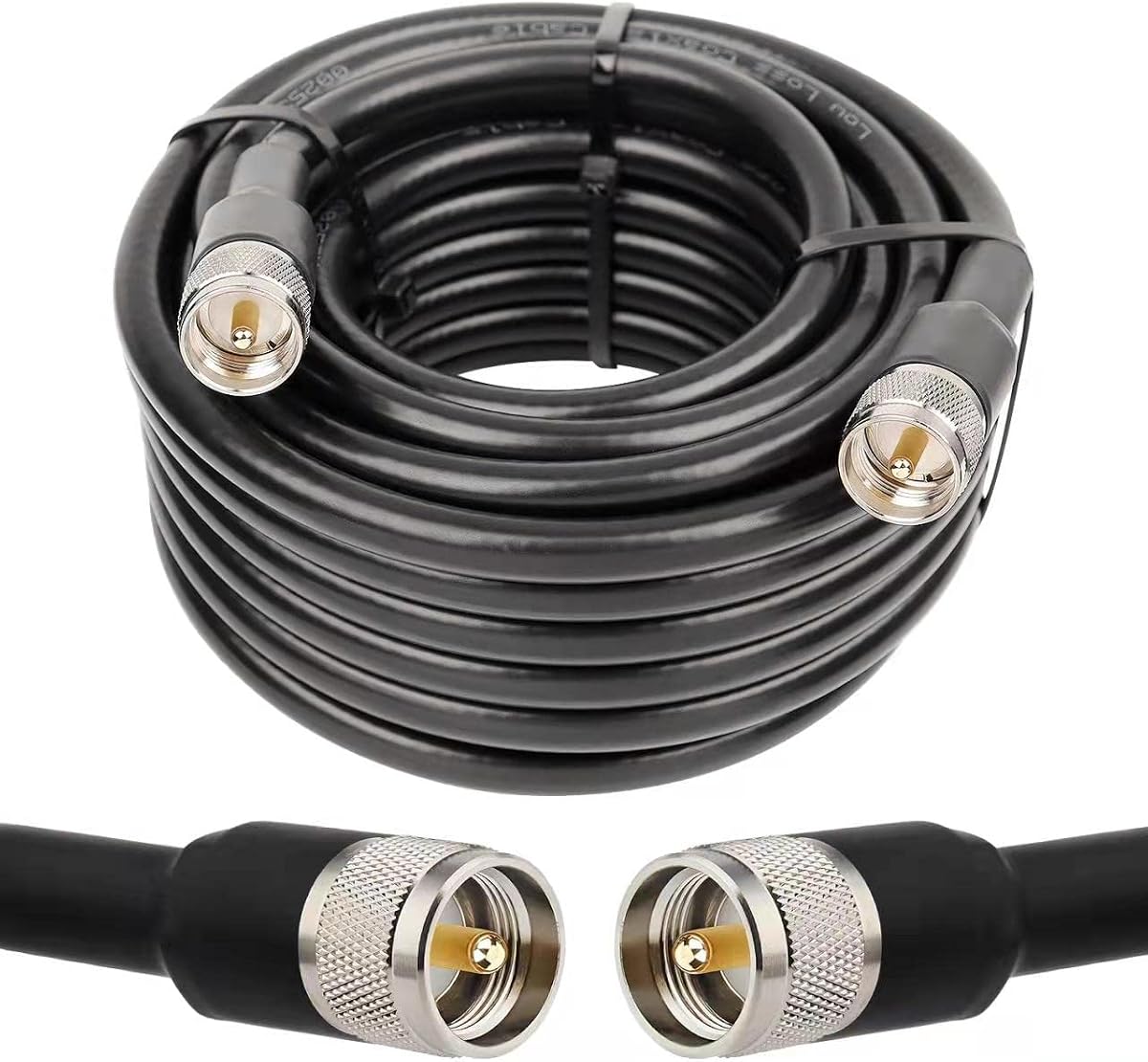

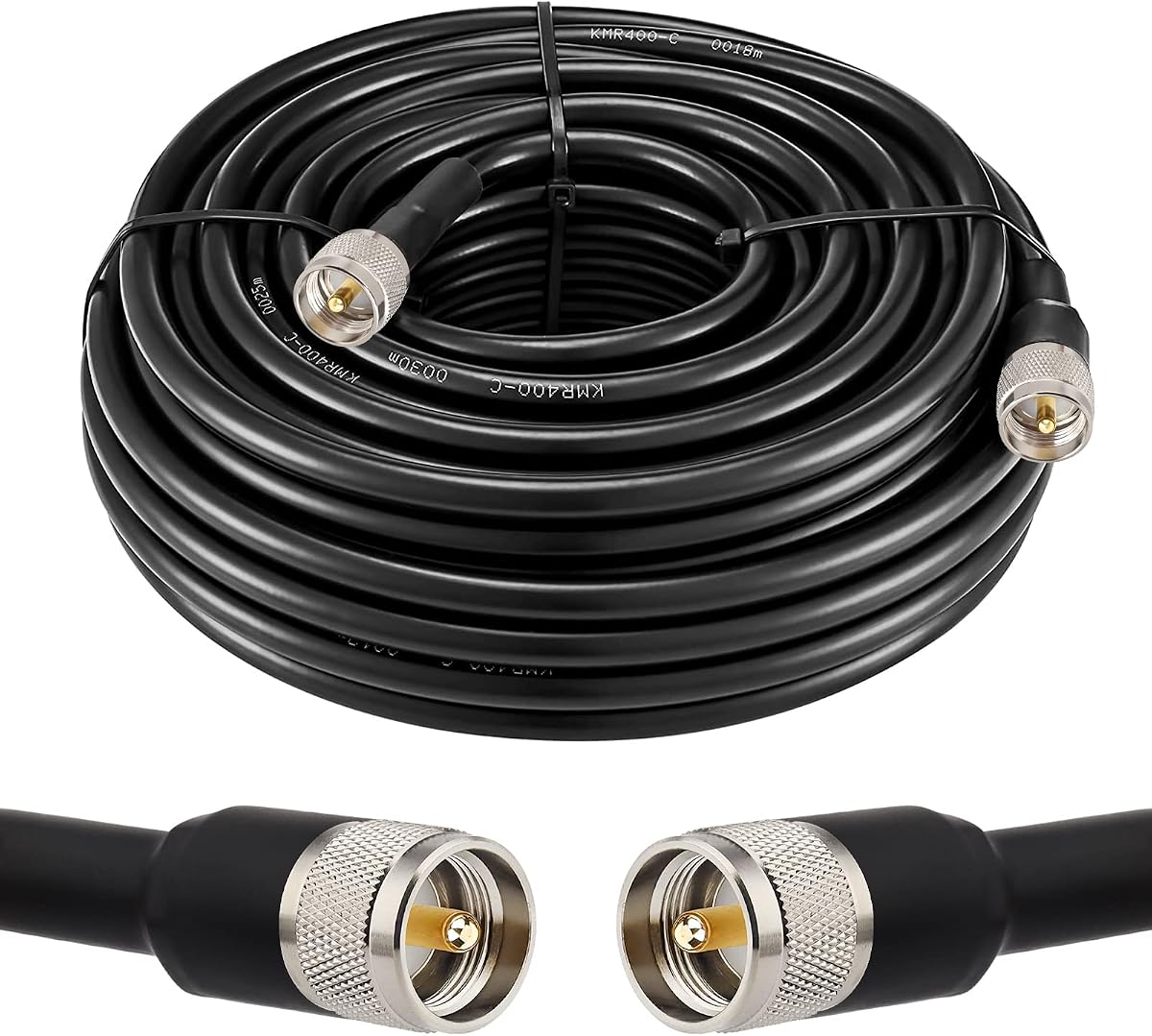
This MOOKEERF cable stands out with its low loss characteristics specifically engineered for HF high-frequency use up to 450MHz. With a rating of 4.7 stars it consistently delivers reliable connections for ham radio and VHF applications where signal integrity matters most.
We may earn a commission when you buy through this link, at no additional cost to you.
The copper clad aluminum conductor paired with aluminum foil and tinned copper braid shielding provides maximum protection against signal degradation over large distances. The built-in 2.2 inch heat shrink tube with adhesive ensures the connector stays firmly attached preventing pull out issues common with cheaper cables.
While the price is higher than basic options the durability and performance justify the cost for serious operators. The only trade off is slightly less flexibility compared to thinner RG58 cables but the weather-resistant jacket makes it ideal for permanent outdoor installations.
Radio operators running base stations or marine VHF setups should consider this cable for its balance of low loss and rugged construction. It is an excellent choice for anyone prioritizing signal clarity and long term reliability in their antenna system.
The low loss design ensures your transmission reaches the antenna with minimal attenuation improving overall communication range.
Extended heat shrink tubing with adhesive creates a sealed connection that withstands moisture and physical stress.
We may earn a commission when you buy through this link, at no additional cost to you.
This RG8X cable is built with a pure copper inner conductor and double shielding to prevent signal leakage and interference. It holds a solid 4.6 rating and is often used by HAM radio operators needing robust connections for base or mobile setups.
We may earn a commission when you buy through this link, at no additional cost to you.
The 17AWG thicker pure copper conductor offers better performance than standard RG8X cables especially for high-powered applications. Fully molded nickel plated brass connectors with gold plated center pins ensure secure mating with your radio equipment and antenna.
The only drawback is that the PVC jacket might stiffen significantly in freezing temperatures limiting flexibility for temporary field operations. For most stationary installations this cable provides excellent protection against environmental factors and electrical noise.
Use this cable for Jeep Wrangler CB installs or permanent ham radio stations where durability is key. It is a reliable upgrade from RG58 and handles 50 Ohm RF systems with consistent signal quality.
A thicker pure copper core reduces resistance and maintains signal strength better than copper clad alternatives.
Molded connectors with gold plated pins resist corrosion and ensure low resistance electrical contact.
We may earn a commission when you buy through this link, at no additional cost to you.
STEREN offers a premium RG8X coaxial cable designed to step up from RG58 for better performance in high powered applications. It is highly rated for CB radios HAM radios and HF antennas making it a versatile choice for many hobbyists.
We may earn a commission when you buy through this link, at no additional cost to you.
The fully molded PL259 connectors are nickel plated to provide long lasting performance even in challenging conditions. This cable is suitable for vehicle installs and portable radios ensuring stable connections without frequent signal disruptions.
While not as specialized as KMR400 cables it offers solid value for standard 50 Ohm systems. The durable jacket can withstand outdoor exposure so it is ideal for base station antennas requiring consistent reliability.
Operators looking for a balance of cost and performance will find this RG8X cable meets most amateur radio needs. It works well with antenna tuners and meters making it a practical all-rounder for HF and 10 meter antennas.
Fully molded connectors reduce the risk of loosening under vibration or temperature changes.
Works seamlessly with common RF accessories like dummy loads SWR meters and transceivers.
We may earn a commission when you buy through this link, at no additional cost to you.
This G-PLUG RG8X cable delivers dependable transmission with a pure copper core and low loss design helping maintain signal strength across distance. It is an affordable option for CB radio tuning or HAM setups needing short reliable jumpers.
We may earn a commission when you buy through this link, at no additional cost to you.
The dual shielding minimizes signal leakage and external interference ensuring cleaner reception and stronger transmission. Gold plated pins and nickel plated brass bodies provide stable corrosion resistant connections ideal for long term use.
Its flexible weather resistant design makes it perfect for rooftop antennas or indoor stations needing adaptability. The 15ft length is great for short runs but longer distances may require a different cable solution.
Budget conscious hobbyists should choose this cable for quick upgrades without sacrificing essential quality. It works with SWR meters antenna analyzers and other 50 Ohm RF systems for efficient antenna performance.
Offers solid RG8X performance at a fraction of the cost of premium branded options.
Flexible jacket and standard connectors make it easy to route through tight spaces quickly.
We may earn a commission when you buy through this link, at no additional cost to you.
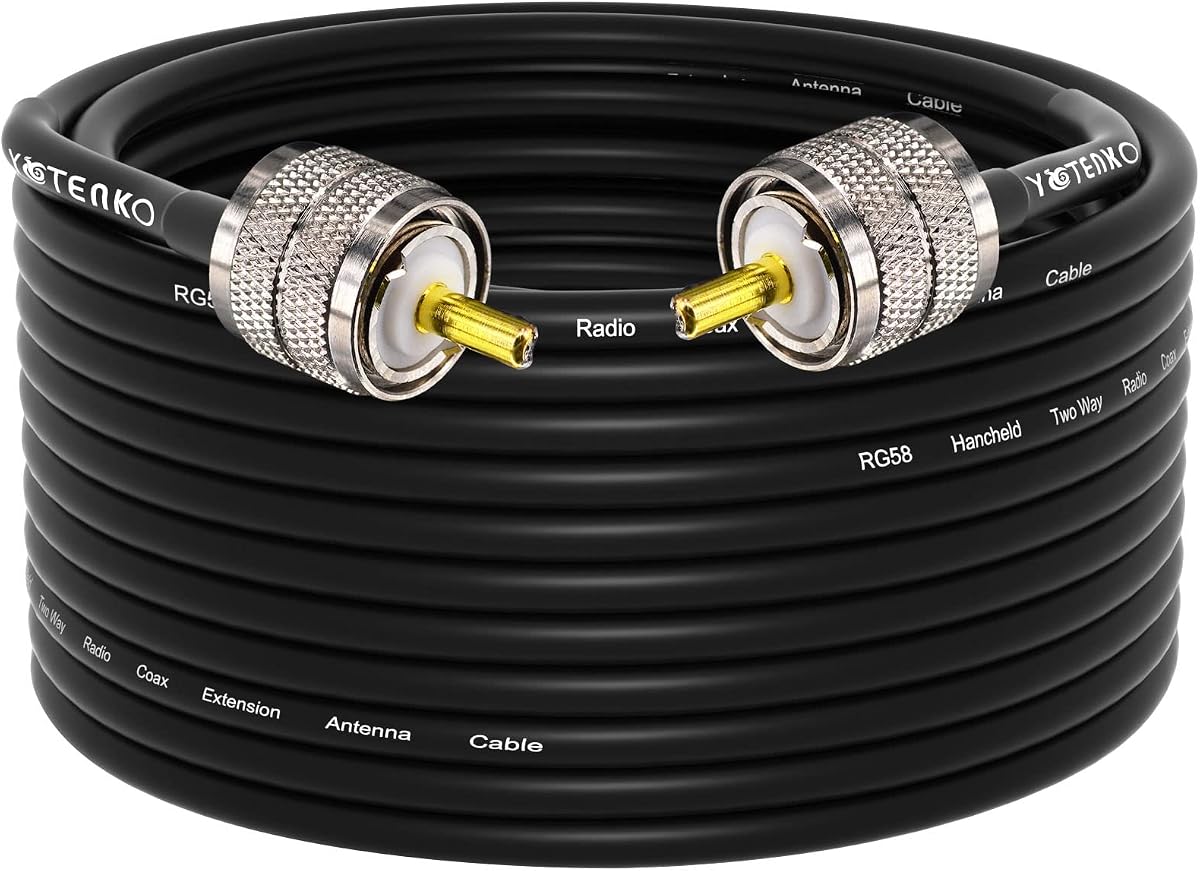
This RG58 coaxial cable stands out for its ultra-flexible design allowing easy routing through window frames and vehicle conduits. It is specifically engineered for HF and VHF amateur radio bands and CB radio communication needs.
We may earn a commission when you buy through this link, at no additional cost to you.
The real bare copper braided shield ensures effective interference rejection and maximum flexibility for mobile installations. An extended 6cm heat shrink tube secures the UHF connectors preventing connection failure during frequent bending or stress.
While RG58 has higher loss than RG8X it is lighter and easier to handle for portable or stealth setups. It is a great alternative for field days or temporary stations where cable weight and flexibility matter most.
Mobile operators or those needing to route cables through tight vehicle conduits will find this RG58 cable practical. It serves as a reliable connection between transceivers and SWR meters for accurate station tuning.
6cm heat shrink tubing distributes stress away from solder points to prevent premature failure.
Pure bare copper braid provides superior oxidation resistance and soldering properties.
We may earn a commission when you buy through this link, at no additional cost to you.
This exgoofit RG8X cable features 16AWG tinned pure copper strands which perform better than common 17awg conductors for enhanced durability. It is a strong choice for users needing 100 feet of reliable coax for HAM radio or antenna setups.
We may earn a commission when you buy through this link, at no additional cost to you.
Double shielding prevents signal leakage and interference while the strong flexible PVC jacket allows indoor and outdoor usage without worry. The molded nickel plated brass connectors with gold plated pins ensure stable connections across RF systems.
The two year warranty offers peace of mind for longer term investments though connector quality can occasionally vary. Its thickness and shielding make it ideal for long runs where signal loss must be minimized effectively.
Anyone setting up a Jeep Wrangler CB install or base station antenna needs will appreciate the extra length and warranty. It is a reliable step up from standard cables for maintaining signal integrity over distance.
16AWG tinned copper strands offer better conductivity and corrosion resistance than standard options.
Flexible PVC jacket resists moisture ensuring performance in varied indoor outdoor environments.
We may earn a commission when you buy through this link, at no additional cost to you.
XRDS offers an ultra-low loss KMR 400 coaxial cable designed for demanding amateur radio and two-way radio applications. With a large center conductor it retains signals better than standard RG58 or RG400 type cables.
We may earn a commission when you buy through this link, at no additional cost to you.
The flexible UV proof RF PVC jacket is engineered for 20 year outdoor exposure in harsh environments ensuring long term reliability. Clamp connectors instead of crimp types provide secure attachment and prevent connectors from coming loose over time.
Adhesive lined heat shrink tubes up to 2.2 inches long seal the connection to the UHF connector protecting against moisture. This construction makes it ideal for marine antennas and permanent outdoor setups requiring minimal maintenance.
High end operators needing long runs with minimal signal degradation will find this cable worth the investment. It is widely used for HF amateur radio SWR meters and marine VHF where performance is paramount.
UV proof jacket maintains integrity for two decades of sun exposure without cracking.
Clamp connectors avoid crimp failures ensuring robust physical and electrical connections.
We may earn a commission when you buy through this link, at no additional cost to you.
This RG8 coaxial cable achieves less than 1.5dB loss at 450MHz making it a low loss option for high-frequency use. It is equivalent to LMR400 RG8U and performs well for long-distance ham and VHF radio connections.
We may earn a commission when you buy through this link, at no additional cost to you.
The adhesive inner wall of the shrink tubing seals against moisture and contaminants which is critical for outdoor and marine environments. Clamp connectors are heavy duty and well integrated into the cable preventing breaking under stress.
While thicker and heavier than RG58 cables the weather resistance and low loss justify the bulk for permanent setups. The nickel plated shells resist oxidation ensuring clean connections even in corrosive marine air conditions.
Marine boat operators and HF amateur radio users need reliable cables that withstand harsh weather and moisture. This MOOKEERF cable delivers consistent performance for antenna setups that demand durability and signal clarity.
Adhesive lined heat shrink seals connectors to prevent water ingress and corrosion.
Performance matches LMR400 standards at a competitive price point for most users.
We may earn a commission when you buy through this link, at no additional cost to you.
XRDS offers a miniature 50ft RG-316 coax cable with a 0.1in diameter allowing extra flexibility for tight spaces. It is highly rated for lightweight RF applications such as ham radio baluns and interconnections.
We may earn a commission when you buy through this link, at no additional cost to you.
The inner conductor and braid are silver plated copper ensuring high efficiency and very low signal loss up to 3GHz. A flexible Teflon jacket provides durability against harsh environmental conditions and chemical exposure.
While it is very flexible and thin it may not be ideal for high power transmitters or permanent outdoor antenna feeds. Users often crimp their own SMA connectors which requires proper tools and technique.
Ideal for VHF UHF baluns or WiFi and ADS-B connections this cable excels where flexibility is the top priority. Its low SWR and lightweight design make it a favorite for portable and mobile RF setups.
Silver plated conductors ensure efficient transmission with minimal loss even at high frequencies.
0.1in diameter makes routing around corners and through tight enclosures effortless.
We may earn a commission when you buy through this link, at no additional cost to you.
Superbat offers a low loss RG8X cable with a waterproof PVC jacket designed for harsh outdoor environments. It is widely compatible with many 50 Ohm RF systems including CB ham radio antenna analyzers and WiFi repeaters.
We may earn a commission when you buy through this link, at no additional cost to you.
The cable supports better signal transfer with minimum signal loss over large distances and higher frequency use making it adaptable for many setups. It can be bent and strapped without inducing interference for flexible installation options.
Customization options allow users to request specific lengths which is helpful for unusual station configurations. However detailed shielding specs are not always provided so verify performance needs before purchasing.
Radio enthusiasts needing a versatile cable for diverse systems and custom lengths will appreciate this option. It is a practical choice for improving antenna performance and station efficiency without overcomplicating the build.
Compatible with PL259 SMA BNC TNC and N connectors for flexible system integration.
Professional manufacturers can customize lengths to fit unique radio station layouts.
We may earn a commission when you buy through this link, at no additional cost to you.
Choosing the right coaxial cable depends on matching its performance and durability to your operating frequency power output and environment.
The inner conductor material directly affects signal loss and flexibility. Pure copper conductors offer the best conductivity but are heavier and more expensive. Copper clad aluminum (CCA) provides a lighter and cheaper alternative but may have higher loss at high frequencies. Look for 16AWG or 17AWG conductors in RG8X for high powered stations.
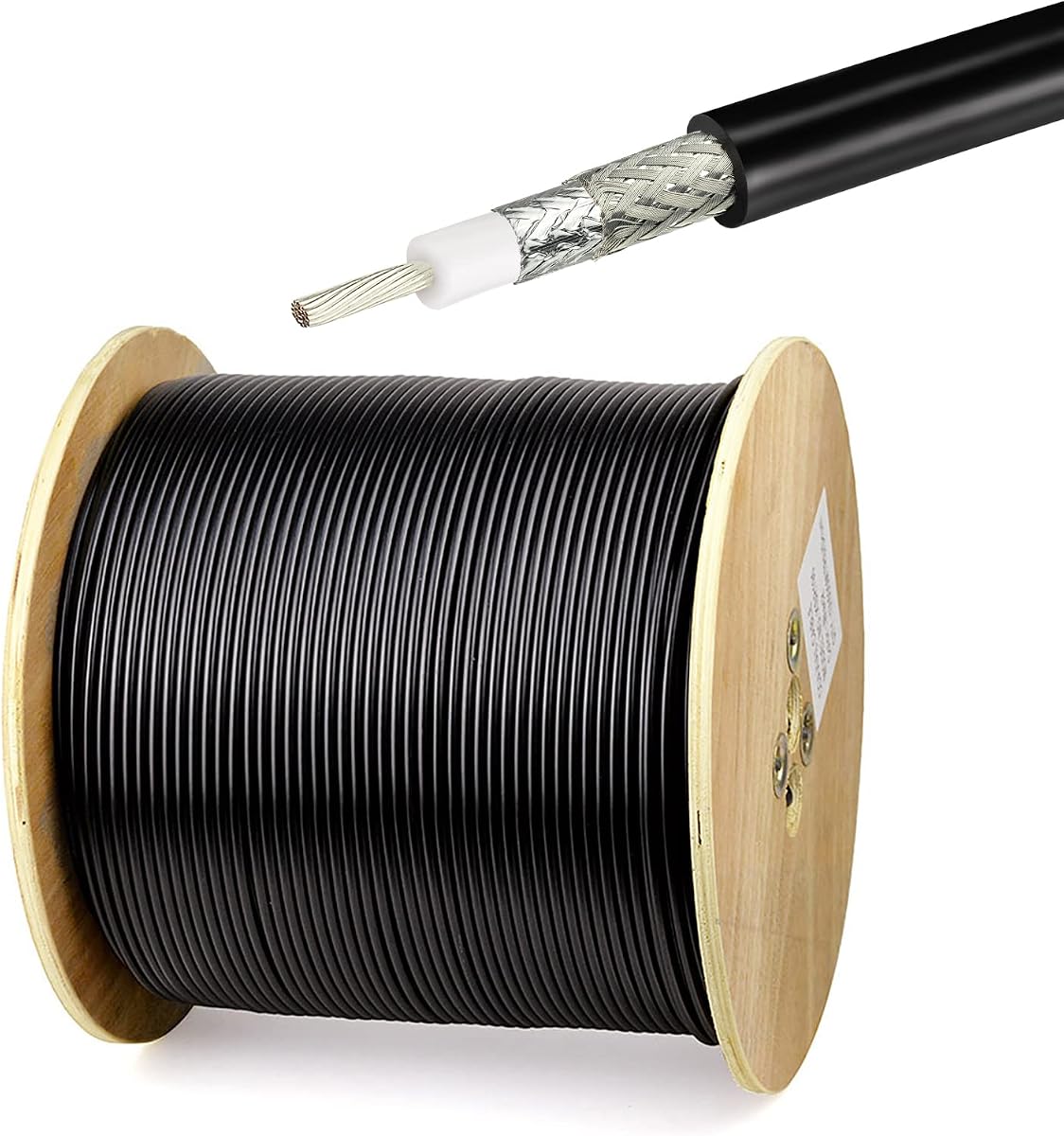
Effective shielding prevents external interference from degrading your signal. Double shielding with foil and braid provides superior noise rejection compared to single shielding. This is critical in urban environments with heavy electronic noise. Ensure the braid is made of tinned copper or bare copper for better oxidation resistance.
Different cables are optimized for specific frequency ranges. RG58 is adequate for VHF but loses signal quickly at higher frequencies. KMR400 and RG8X maintain signal strength better across HF VHF and UHF bands. Check the loss specifications at 450MHz to ensure the cable matches your intended band usage.
High quality connectors ensure stable electrical contact and mechanical strength. Look for nickel plated brass bodies with gold plated center pins to resist corrosion. Clamped connectors are more durable than crimped ones for outdoor use. Extended heat shrink tubing with adhesive provides extra protection against moisture ingress.
The outer jacket protects the cable from physical damage and weather conditions. PVC jackets are common and flexible but can stiffen in cold weather. UV proof RF PVC or Teflon jackets are better for long term outdoor exposure. Choose a jacket that matches your climate and installation location.
Thinner cables like RG58 are more flexible and easier to route through tight spaces. Thicker cables like RG8X and KMR400 offer better performance but are less flexible. Balance flexibility needs with performance requirements for mobile versus base station setups.
Match the cable to your power levels and antenna system. High power stations need low loss cables to avoid heating and signal degradation. Portable setups benefit from lightweight cables that are easy to deploy. Consider your specific use case whether marine automotive or home station when selecting cable type.
Manufacturer warranties indicate confidence in product durability. Look for cables offering at least a one year warranty. Good customer support helps resolve issues with connectors or performance. Reputable manufacturers often provide consistent quality control which matters for critical RF connections.
Inspect connectors before installation to ensure pins are straight and free of corrosion. Clean connector surfaces with isopropyl alcohol and allow to dry completely before mating. Proper connector preparation ensures low SWR and prevents intermittent signal issues during operation.
Route cables to avoid sharp bends or kinks which can damage the dielectric and conductor. Use soft bends with a radius at least five times the cable diameter to maintain performance. Secure cables with UV resistant ties but avoid overtightening which can deform the cable jacket.
Regularly check cable integrity for cracks or weathering especially in outdoor installations. Replace any section showing significant wear to prevent signal loss. Proper care extends the life of your coax and keeps your ham radio station operating efficiently for years.
RG8X has a thicker inner conductor and lower signal loss compared to RG58 making it better for higher power and long runs. RG58 is more flexible and suitable for VHF portable setups. RG8X is recommended for HF and high powered transmitters where signal integrity matters.
Yes RG8X can be used for VHF marine setups but cables with lower loss like KMR400 are preferred for longer runs. Ensure connectors are corrosion resistant to handle salt spray. Check impedance matches 50 Ohm for all components in your system.
Use adhesive lined heat shrink tubing to seal connectors to the cable jacket. Apply silicone grease on connector threads to repel moisture. Elevate outdoor connectors slightly to prevent water from pooling inside the connector housing during rain.
Choose the shortest cable length needed to minimize signal loss. For most base stations 20 to 50 feet is adequate. Use low loss cables like KMR400 if longer runs are unavoidable to maintain signal strength and SWR.
Clamp connectors are generally more durable and resistant to vibration than crimped types especially for outdoor use. Crimped connectors can fail under stress over time. Select connectors that match your installation environment for long term reliability.
Use an SWR meter or antenna analyzer to measure signal loss and reflection. A SWR under 1.5 indicates good performance. Check continuity with a multimeter to ensure the conductor and shield are intact without shorts.
Splicing should be avoided as it introduces impedance mismatches and signal loss. Use a single continuous cable when possible. If necessary use high quality adapters rated for 50 Ohm systems to maintain performance integrity.
Yes poor quality or damaged coax can cause high SWR readings unrelated to antenna performance. Use cables with proper 50 Ohm impedance to ensure accurate SWR measurements. Replace old degraded cables if SWR remains high after antenna tuning.
We highlighted ten top rated coax cables that balance performance durability and cost for ham radio operators. The MOOKEERF 50ft KMR400 leads with low loss and robust shielding. Budget buyers can trust G-PLUG 15FT RG8X for essential performance at low cost.
Prioritize cables with solid shielding and weather resistant jackets if you install antennas outdoors. Match the cable type to your frequency bands and power levels to ensure consistent communication. Regular maintenance and proper connector sealing extend the service life of your coax.
Always verify current availability and specifications before purchase as product details may change. Consult your antenna system requirements to select the best fit. Investing in quality coax ensures reliable and clear amateur radio communications.