
SUNLU High Toughness Resin
4.7Editor score
Five times higher elongation
Low shrinkage rate
Widely compatible formula
This guide compares the top 10 flexible resin for 3D printing to help you choose the best durable flexible material for your specific printing needs.
Flexible resin for 3D printing offers a unique combination of strength and elasticity that standard resins cannot match. These materials allow makers to create parts that bend, stretch, and absorb shock without breaking under stress. Choosing the right flexible resin is essential for producing functional prototypes and end-use parts that perform well in real-world applications.
We have carefully evaluated the leading options available on the market today to bring you a comprehensive comparison. Each product was analyzed based on its Shore hardness, elongation capabilities, print speed, and overall durability. Our goal is to help you find the perfect balance between softness and structural integrity for your specific projects.
Every pick in this list highlights unique strengths ranging from high impact resistance to exceptional rebound properties. Please note that availability and specific formulations can change over time so always check the latest product details before purchasing. We recommend reviewing the detailed specs to ensure compatibility with your specific LCD or DLP printer setup.
4.7Editor score
4.7Editor score
4.2Editor score
The following table provides a side-by-side comparison of the top ten flexible resins available today allowing you to quickly identify key specifications and features that matter most for your printing workflow.



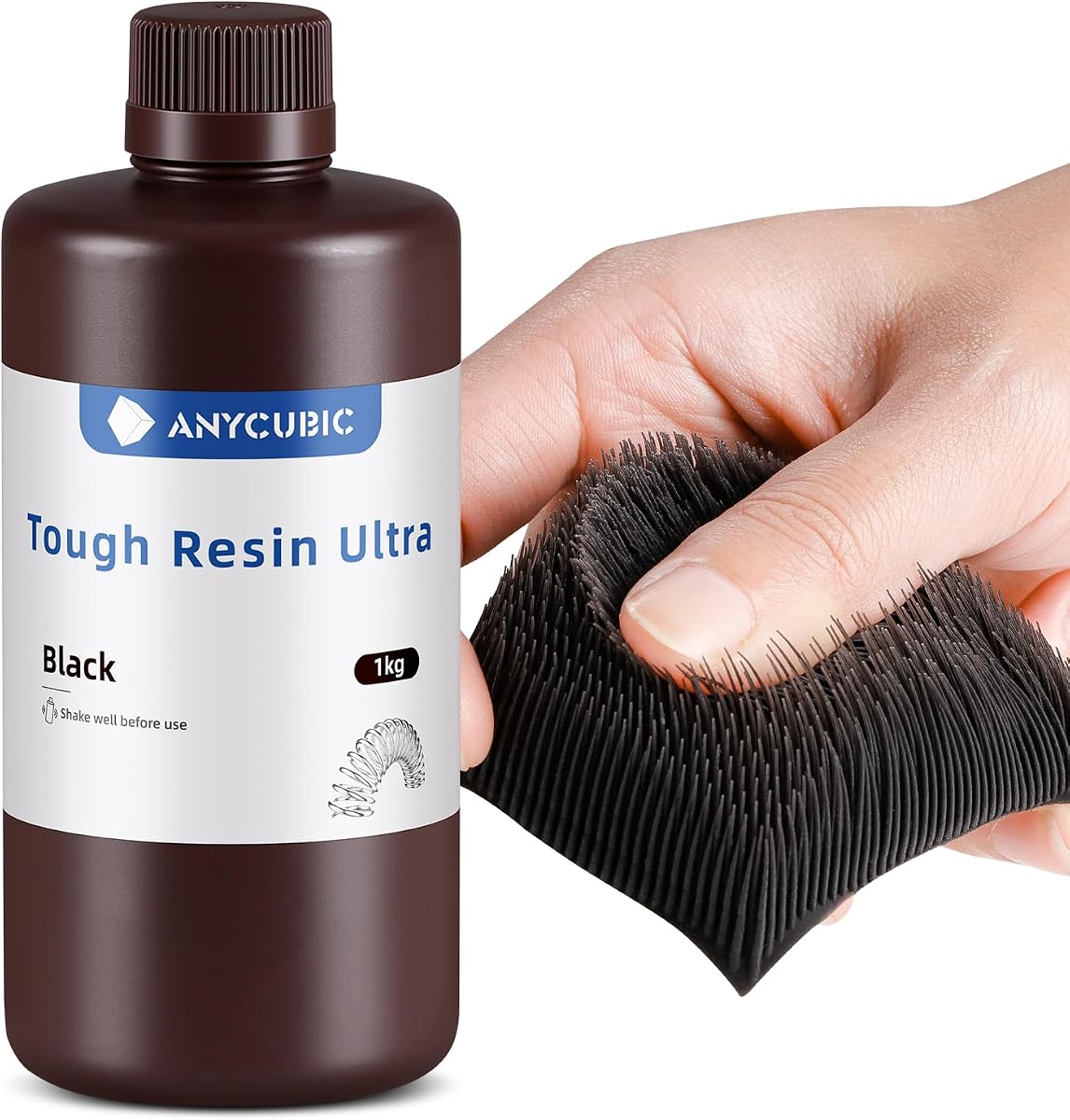
The ANYCUBIC Ultra Tough Resin stands out as a top choice for those seeking a balance between flexibility and durability. With a rating of 4.7, it has garnered significant trust among users who need prints that can withstand real-world stress. Its ability to recover quickly from external forces makes it ideal for dynamic applications where resilience is key.
We may earn a commission when you buy through this link, at no additional cost to you.
This resin shines in its impact resistance and flexibility. It is engineered to handle deformation without breaking, ensuring that your models remain intact even after significant stress. The surface finish is exceptionally smooth, providing a non-irritating experience that is perfect for wearable items like earphone covers or cosplay accessories.
While the performance is high, users should note that mixing this resin with others of different colors might alter the final shade. However, this does not affect the structural integrity of the print. For most applications, the benefits of enhanced toughness outweigh this minor cosmetic consideration during the printing process.
If you need a versatile flexible resin for direct use or as an additive to toughen other materials, this is a prime candidate. It is highly recommended for anyone looking to produce durable functional parts that require both strength and elasticity in equal measure.
The unique formulation ensures that prints bounce back to their original shape quickly, making it perfect for parts that undergo repeated bending or compression cycles.
After curing, the resin creates a skin-friendly surface that does not irritate, allowing for safe use in items that come into direct contact with the body.
We may earn a commission when you buy through this link, at no additional cost to you.
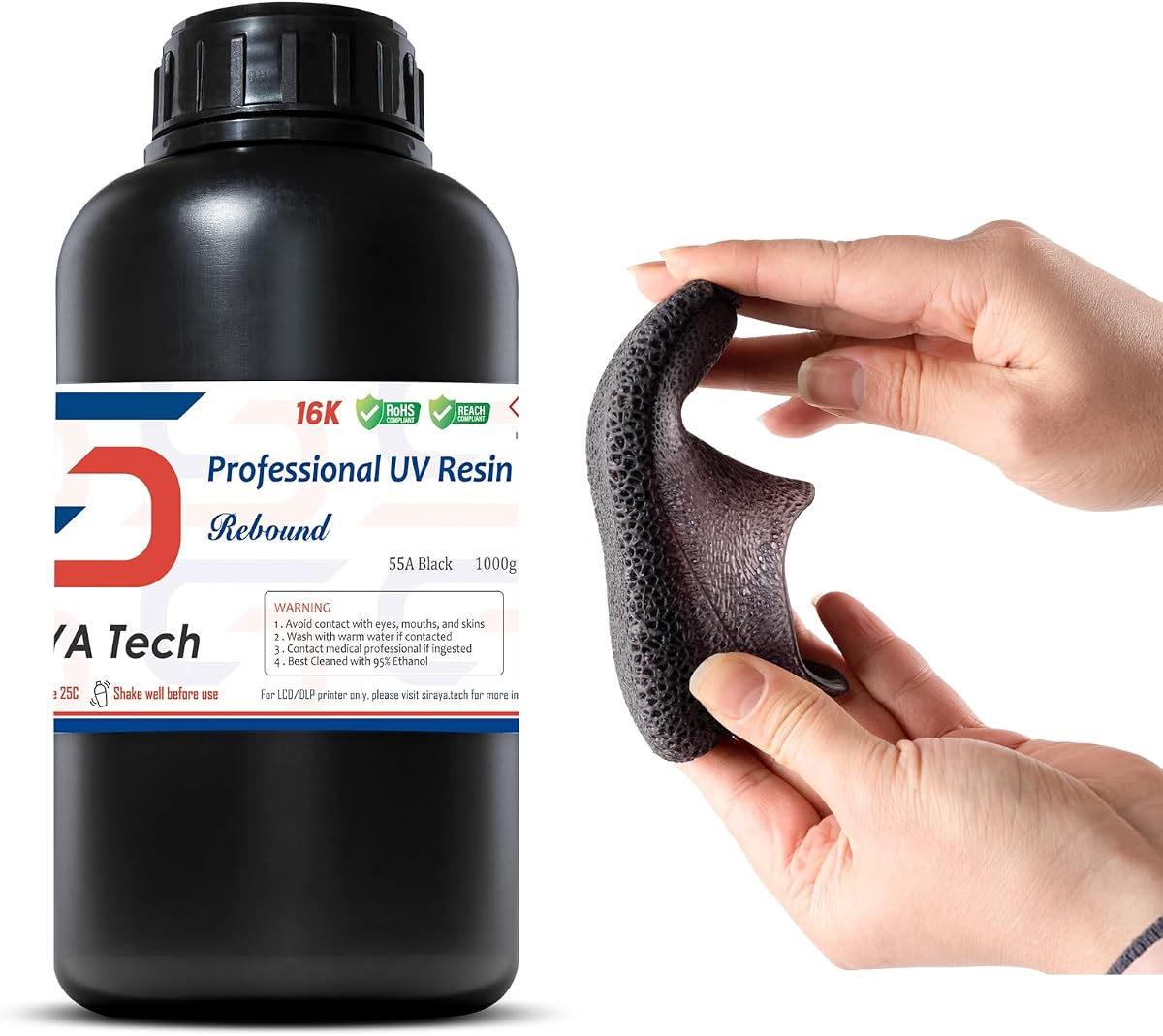
Siraya Tech Rebound 55A is designed for applications where speed of recovery is critical. With a Shore hardness of 55A, it offers a softness that allows for significant compression while maintaining structural integrity. This makes it particularly useful for shock-absorbing components in industrial or consumer products.
We may earn a commission when you buy through this link, at no additional cost to you.
The standout feature of this resin is its rapid rebound action. Unlike many standard elastic resins that may take time to regain shape, this formulation recovers almost immediately. This property is vital for parts that are subjected to continuous cycling, such as gaskets or seals in machinery.
A notable advantage is that it does not require complex mixing or specialized cleaning methods. Users can clean prints with standard isopropyl alcohol, simplifying the post-processing workflow significantly. This ease of use reduces the barrier to entry for those new to flexible resins.
While it is one of the pricier options, the performance benefits justify the cost for professional applications. It is highly recommended for users who need reliable elasticity in protective equipment or industrial prototypes without sacrificing ease of use.
The balance of flexibility and strength makes it a top choice for industrial gaskets and seals that require consistent performance under pressure.
By avoiding complex mixing protocols, this resin allows for a smoother transition from standard resins to elastic ones in your printing workflow.
We may earn a commission when you buy through this link, at no additional cost to you.
The SUNLU High Toughness Resin delivers exceptional value for makers on a budget who still require high performance. With a rating of 4.7, it proves that affordability does not mean compromising on quality. It features elongation that is five times higher than regular standard resins, making it highly resistant to breaking.
We may earn a commission when you buy through this link, at no additional cost to you.
This resin is engineered for accuracy and reliability. Its low viscosity ensures faster curing times and easier model formation, while the low shrinkage rate minimizes distortion. This means your printed parts will maintain their intended shape and size even after washing and curing processes.
One of its most appealing features is the low odor formula, which provides a more comfortable printing environment compared to many market alternatives. It also cleans easily with alcohol or ethanol, reducing the hassle of post-processing. This combination of user-friendly traits makes it a favorite for many home users.
For those seeking a bendable and not brittle solution for structural parts or solid models, this resin is an excellent choice. It offers a great balance of toughness and flexibility at a price point that is hard to beat in the current market.
The focus on low shrinkage ensures that your prints come out true to size, which is critical for parts that must fit precisely with other components.
The reduced volatile compounds mean less pungent smell in your workspace, allowing you to work longer without discomfort during extended sessions.
We may earn a commission when you buy through this link, at no additional cost to you.
Superflex 3D Printer Resin is optimized for speed and productivity in printing farms. It allows for printing a 50um layer in just 1.7 seconds on monochrome LCD printers, which significantly reduces time and electricity costs. This efficiency makes it a top contender for high-volume flexible part production.
We may earn a commission when you buy through this link, at no additional cost to you.
The resin offers a balanced mix of softness and strength with an 80A Shore hardness. This hardness level is well-suited for cushioning, damping, and shock absorption applications. It simulates rubber or TPU effectively, ensuring that your prototypes function like the final rubber or TPU.
Safety is a key factor in this formulation, as it passes the ISO 10993-5 test when properly cleaned and cured. This certification adds a layer of trust for users working on biomedical or sensitive applications. However, it is important to follow cleaning protocols strictly to maintain safety standards.
If you need to boost productivity without sacrificing the flexibility required for hard flexible prototypes, this resin is a strong candidate. It is ideal for users who prioritize speed and efficiency in their printing operations while maintaining quality structural integrity.
The rapid layer curing time directly translates to faster turnaround times for orders, making it perfect for commercial printing services.
ISO certification ensures that the material meets specific biocompatibility tests, giving peace of mind for sensitive industrial or medical uses.
We may earn a commission when you buy through this link, at no additional cost to you.
ANYCUBIC Tough Resin 2.0 represents a significant upgrade in terms of flexural strength and precision. It is designed to be less prone to fracture when printing miniature components and thin models. This makes it particularly useful for projects that require fine details alongside structural toughness.
We may earn a commission when you buy through this link, at no additional cost to you.
The resin exhibits strong elongation, effectively resisting peeling, cracking, and stress marks caused by cyclic vibrations. This durability ensures that models remain intact even when subjected to drops or stress during handling. It is a reliable choice for engineering prototypes that undergo rigorous testing.
Low-odor formulation is another highlight, creating a comfortable printing environment by reducing volatile organic compounds. It also maintains a low shrinkage rate, ensuring that prints feature smooth surfaces and clear details. This combination of health and precision makes it a strong all-rounder.
For users who need industrial spare parts or DIY projects that demand high strength without sacrificing detail, this resin is an excellent fit. It balances toughness with precision to meet the needs of professional and hobbyist makers alike.
The material resists stress marks that usually develop after repeated flexing, ensuring long-term reliability in functional prototypes that move often.
By lowering VOCs and odor, this resin contributes to a safer workplace, reducing the need for heavy ventilation compared to older standard resins.
We may earn a commission when you buy through this link, at no additional cost to you.
SUNLU Flexible 3D Printer Resin offers a perfect balance of softness and strength for printing soft and flexible items. With a 70A Shore hardness and 135% elongation at break, it is capable of withstanding significant bending without breaking. This makes it suitable for cushioning and shock-absorbing applications.
We may earn a commission when you buy through this link, at no additional cost to you.
The resin provides a high-resolution and smooth surface finish that is pleasant to the touch after cleaning. Its minimal odor makes it more comfortable to work with than many other flexible resins. Additionally, the leak-proof bottle design reduces the risk of spills during transportation and handling.
Despite its strengths, the lower user rating suggests some inconsistencies in performance across batches. However, for projects that prioritize softness and high elongation over hard precision, it remains a viable option. It is also compatible with 99% of printers on the market.
If you need a reliable resin for soft prototypes that can endure drops and bends without cracking, this product is worth considering. It is a practical choice for general-purpose flexible modeling where cost and ease of use are important factors.
The resin has good tolerance to weak acids and greases, which prevents deformation when exposed to common environmental elements.
The leak-proof design ensures that you do not waste material due to spills, keeping your workspace clean and your print budget intact.
We may earn a commission when you buy through this link, at no additional cost to you.
Siraya Tech Tenacious Flex Black is a formulation that offers faster rebound and incredible elasticity compared to the classic Tenacious resin. It is significantly softer and more rubber-like, making it perfect for flexible and resilient 3D prints. Its superior elasticity allows for more dynamic prints.
We may earn a commission when you buy through this link, at no additional cost to you.
The resin is designed to keep models resilient and protected. It can withstand extreme bending and compression while quickly returning to its original shape. This exceptional impact resistance ensures that accidental drops or impacts do not cause deformations or cracks in your parts.
It is highly versatile for specialized applications like soft grips, gaskets, and shock-absorbing components. You can also use it as an additive to boost the flexibility and impact resistance of other resins. This flexibility in use cases adds significant value to the user.
For projects that require a high degree of pliability and resilience, this resin is an outstanding choice. It is highly recommended for users who need parts that can handle significant stress without compromising on structural integrity.
Mixing a small amount with tough resins can significantly enhance the flexibility of your standard prints without needing a full resin change.
The rubber-like formulation makes it ideal for grips and handles that require a comfortable and non-slip surface for ergonomic use.
We may earn a commission when you buy through this link, at no additional cost to you.
ELEGOO Tough 3D Printer Resin offers excellent flexibility and extraordinary resilience for structural parts. It has a Shore hardness of 84.7D, which is higher than many other flexible resins. This hardness allows for easy bending while maintaining strength against tension and stress.
We may earn a commission when you buy through this link, at no additional cost to you.
The resin features high-strength physical properties that can withstand significant impacts. It is particularly suitable for tools and high-performance models that must endure hard use. The finished resin can even be drilled without cracks, making it versatile for engineering prototypes.
Weather resistance is a strong point, with the material resisting brittleness and corrosion even in high humidity environments. It also has a low odor and is non-irritating. This creates a comfortable printing experience and ensures the prints remain functional in challenging conditions.
If you need parts like jigs, fixtures, or tool casings that require both flexibility and rigidity, this resin is a top option. It is designed for users who need reliable end-use products that can withstand repeated use without breaking.
The ability to drill into the printed part without cracking expands the range of post-processing options available for functional engineering prototypes.
The material retains its elasticity and flexibility even in damp environments, making it suitable for outdoor or humid workspace applications.
We may earn a commission when you buy through this link, at no additional cost to you.
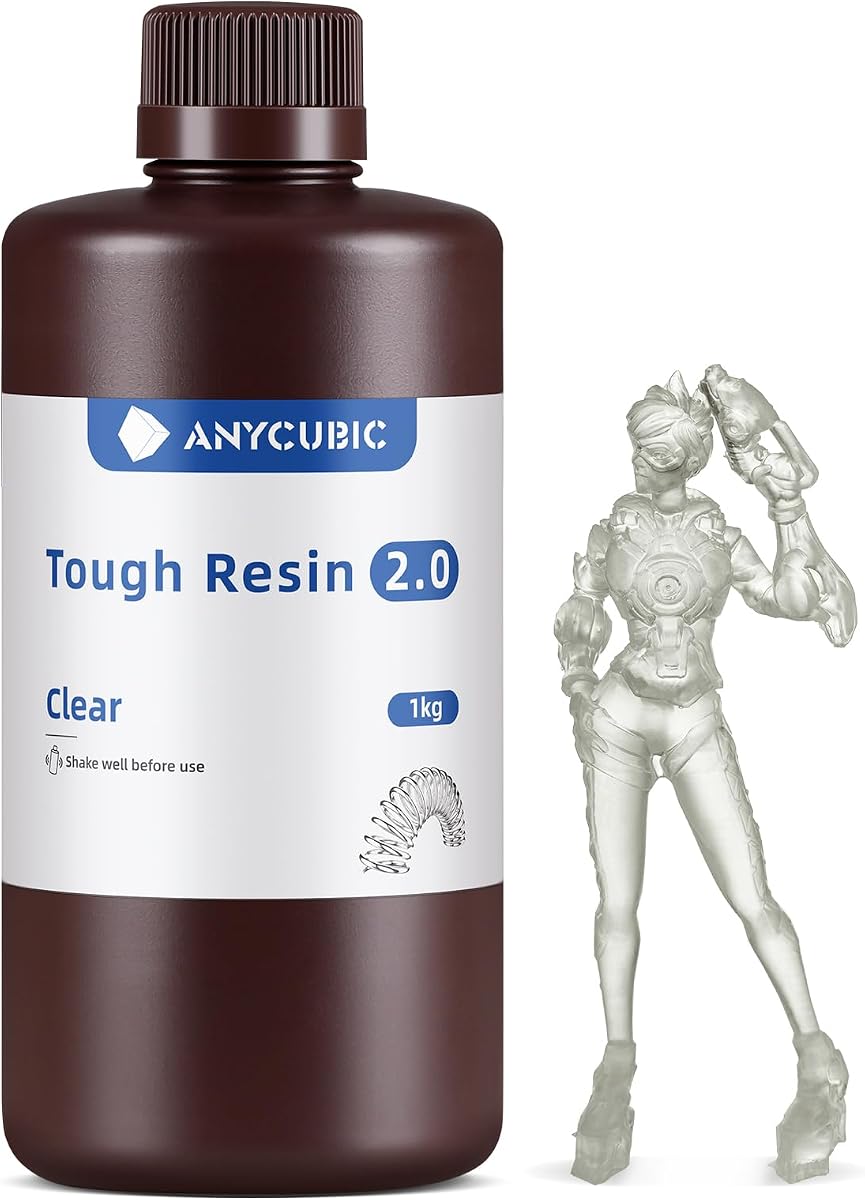
ANYCUBIC Tough Resin 2.0 in Clear offers unmatched strength and high precision for transparent or color-critical projects. It has achieved a significant enhancement in flexural strength. making it less prone to breakage when printing delicate components. The clear formulation allows for detailed light-passing prototypes.
We may earn a commission when you buy through this link, at no additional cost to you.
The resin offers exceptional stretch and flexibility, resisting damage caused by cyclic vibrations. Models printed with this resin are less likely to break even when subjected to drops from a height. This makes it suitable for industrial and engineering parts where transparency is required.
Its design focuses on minimizing volatile organic compounds for a serene and pleasant printing environment. The low shrinkage rate ensures high precision prints. The combination of clarity and toughness is a rare feature in the flexible resin market.
For applications that require clear functional parts that must be durable, this resin is a solid choice. It is ideal for users who need to combine optical clarity with mechanical strength in their 3D printed prototypes.
The clear version allows for testing fluid dynamics or light transmission in prototypes without losing the structural benefits of tough resin.
The high flexural strength means thin-walled transparent parts are less likely to shatter during handling or assembly.
We may earn a commission when you buy through this link, at no additional cost to you.
This flexible and upgraded tough resin offers a Shore 90A hardness that simulates the toughness of rubber. It is designed to be soft yet strong enough to withstand repeated folding and bending without breaking. This makes it highly suitable for parts that face real-world stress.
We may earn a commission when you buy through this link, at no additional cost to you.
The resin delivers high elongation and excellent tear resistance, ideal for gaskets and protective cases. It keeps its cool under stress, bending where ordinary resins snap. This feature ensures that your models stay reliable even after frequent handling or mechanical stress.
High precision and low odor make it comfortable to work with in your workshop. It works well on most LCD and DLP printers. The formula avoids brittle failures, providing reliable performance for technical applications and detailed models.
If you are a maker or engineer needing durable flexible parts for end-use applications, this resin is ready to flex. It is a reliable option for those who prioritize resilience and flexibility in functional engineering designs.
The formulation resists tearing even under repeated stress cycles, making it suitable for consumer products like shoe soles or toy tires.
Despite its flexibility, the resin maintains crisp details, ensuring that technical models do not lose accuracy during the printing process.
We may earn a commission when you buy through this link, at no additional cost to you.
Selecting the right flexible resin involves evaluating several technical factors to ensure the material meets your specific project needs and printer capabilities.
Shore hardness determines the stiffness of your print, ranging from very soft 55A to stiffer 90A. Lower numbers mean softer and more rubber-like parts, while higher numbers offer more rigid flexibility.
Choose a rating based on how much force the part will encounter during use.
This spec measures how much the part can stretch before snapping. High elongation like 135% allows for significant bending without breaking.
Prioritize high elongation for parts that need to flex frequently.
Flexible resins often require longer exposure times than standard resins. Check if the resin supports fast printing modes for your specific printer to save time.
Faster curing reduces the risk of print failures over long runs.
Flexible resins can have strong odors during printing. Look for low-odor or non-irritating formulations for a better workspace experience.
Safety certifications like ISO 10993-5 are valuable for sensitive applications.
Ensure the resin wavelength matches your printer, typically 405nm or 365nm. Most modern LCD printers use 405nm UV light.
Verify compatibility lists on the manufacturer website to avoid curing issues.
Some flexible resins need special cleaning or curing steps to achieve durability. Look for resins that clean easily with standard isopropyl alcohol.
Simpler post-processing saves time and reduces the risk of print damage.
Impact resistance ensures your parts can survive drops or collisions. Some resins are designed specifically to prevent brittle cracks.
Choose high impact resistance for tools or protective cases.
Flexible resins sometimes shrink more during curing. Low shrinkage formulations help maintain the dimensional accuracy of your prints.
Check shrinkage rates if precise tolerances are required.
Before printing, shake the bottle gently to mix the resin without creating too many bubbles. Ensure your printer build plate is clean and level to prevent adhesion issues.
After printing, wash the model in isopropyl alcohol for the recommended time. Some flexible resins require longer washing to remove sticky uncured layers.
Post-cure the print in a UV chamber or sunlight for the specified duration. Proper curing ensures the final part reaches its full strength and flexibility.
Flexible resins are designed to bend and stretch without breaking, while tough resins prioritize resistance to fracture. Some products combine both properties to offer high durability alongside significant elongation.
Most flexible resins can be cleaned with standard isopropyl alcohol. However, you may need to rinse for longer periods to ensure all sticky uncured residue is removed.
Yes, you can mix flexible resin with standard or tough resin to adjust the hardness and flexibility of your parts. Start with small batches to test the results.
Flexible resins require complex chemical formulations to achieve elasticity without losing structural integrity. The specialized ingredients and testing processes contribute to a higher cost.
Shake the bottle gently and let it sit before printing to reduce air bubbles. Avoid vigorous shaking as this can introduce microbubbles that affect print quality.
Many high-quality flexible resins cure to a skin-friendly finish. However, always check for safety certifications like ISO 10993-5 to ensure biocompatibility.
We hope this guide helped you identify the right flexible resin for your specific needs. Whether you prioritize speed, softness, or impact resistance, there is a perfect match among the top choices we reviewed.
Remember to consider your printer compatibility and post-processing requirements when making your final decision. The right resin can transform your projects from fragile models to durable and functional parts.
Prices and availability may change over time so always check current listings before purchasing. Stay updated with the latest tech to keep your printing workflow efficient and productive.