
Dual-Channel Compressor
4.7Editor score
Dual channel precision
Noise gate included
Sidechain insert available
VCA circuitry design
This guide compares the top 10 hardware compressors for home studios, evaluating sound quality, features, and value to help you choose the right dynamic
Choosing the right hardware compressor can transform your home studio mixes by adding punch, clarity, and professional polish to your recordings. Whether you need to tame vocal peaks or glue a mix together, analog dynamics processors offer tactile control and unique sonic character that plugins cannot fully replicate.
We have analyzed ten standout models ranging from budget-friendly options to premium units, focusing on their compression types, connectivity, and ease of use. Each product was selected based on user feedback, technical specifications, and reputation among audio engineers to ensure reliable performance in any home recording environment.
Each pick highlights specific strengths and ideal use cases to help you match a compressor to your unique workflow and sonic goals. Please note that prices and availability can fluctuate over time, so check the latest listings before making your final decision to get the best value.
4.7Editor score

4.9Editor score

4.6Editor score
The following comparison table provides a side by side overview of all ten selected compressors. Review the key specifications and features to quickly identify which unit offers the best fit for your specific studio needs and budget constraints.



The ART Solo VLA stands out as a top choice for home studios seeking analog warmth without breaking the bank. With a high user rating, it delivers mastering quality signal processing that rivals more expensive units in its class.
We may earn a commission when you buy through this link, at no additional cost to you.
Its standout feature is the Selectable MultiVoice control allowing you to switch between Tube and Solid State settings for different sonic flavors. The OPTO Analog Optical Isolators ensure smooth natural compression while the Variable Blend knob lets you mix uncompressed and compressed signals for perfect balance.
While it lacks a sidechain input and operates as a single channel unit, these limitations are acceptable for vocalists and solo producers who prioritize tone. The level mode switch adds further flexibility for different interfaces.
This unit is ideal for home recordists wanting classic tube dynamics on a budget. We recommend it for anyone looking to add analog character to vocals or acoustic instruments easily.
Switch between tube warmth and solid state precision to match your source material perfectly.
Parallel compression becomes easy with the variable blend knob for subtle or heavy effects.
We may earn a commission when you buy through this link, at no additional cost to you.
This dual channel compressor offers incredible value for home studios needing full dynamic control across multiple sources. It earns a strong rating for its smooth Overeasy compression that avoids pumping artifacts often found in budget units.
We may earn a commission when you buy through this link, at no additional cost to you.
The classic VCA circuitry enhances vocal clarity and detail while the built-in noise gate cleans up background noise effectively. Visual LED displays provide clear feedback on gain reduction and thresholds helping you tune settings accurately without guessing.
Trade-offs include somewhat generic build materials and fewer manual knobs than high end models. However, the included sidechain insert and flexible routing options make it surprisingly capable for live streaming and basic recording tasks.
Perfect for producers needing affordable stereo dynamics processing on a tight budget. We suggest this for home users recording drums or vocals where dual channel control is essential.
Enjoy natural sounding dynamics without harsh gain reduction artifacts during critical listening.
Independent LED indicators show gain reduction and thresholds for accurate setup every time.
We may earn a commission when you buy through this link, at no additional cost to you.
The Warm Audio Bus-Comp delivers top-tier analog warmth ideal for master bus or drum bus compression in home studios. Its reputation for authentic circuit modeling and robust build quality makes it a favorite among serious producers.
We may earn a commission when you buy through this link, at no additional cost to you.
Featuring Cinemag transformers and five distinct ratio options it offers precise control over dynamics with minimal coloration unless desired. The side chain input filter provides extra versatility for frequency targeted ducking tasks.
While pricier than entry models it justifies the cost with superior components and reliable performance. The stereo focus limits single channel use but is perfect for mastering or bus processing.
Invest in this unit if you want premium analog glue for your mixes. We recommend it for home mastering engineers needing professional grade stereo dynamics.
Premium transformers add subtle warmth and depth to your mix without muddying the sound.
Choose from five ratios to tailor the compression curve for any musical context easily.
We may earn a commission when you buy through this link, at no additional cost to you.
The dbx 266xs is a reliable workhorse for portable studios and live applications. Known for error proof operation it helps smooth uneven levels and tighten mixes with minimal setup effort.
We may earn a commission when you buy through this link, at no additional cost to you.
New gate timing algorithms ensure smooth release characteristics while separate LED displays allow quick accurate setup for threshold and gain reduction. The sidechain insert is useful for creative ducking effects on instruments.
It lacks advanced features like blending or tube options but excels at consistent performance. The compact 1U design makes it easy to integrate into small racks or travel kits.
Ideal for touring musicians or small studios needing dependable dynamics. We recommend this for users prioritizing simplicity and portability over sonic coloration.
Release characteristics are optimized for natural sound without abrupt cuts or pumping noise.
LED displays show threshold and gain reduction clearly for fast accurate adjustments.
We may earn a commission when you buy through this link, at no additional cost to you.
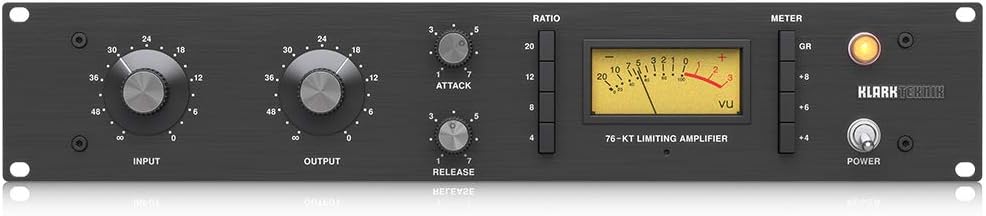
Modeled after the iconic 1176LN this compressor brings classic FET punch to home studios. The completely discrete signal path ensures authentic vintage tone with modern reliability.
We may earn a commission when you buy through this link, at no additional cost to you.
Push button selection of ratios like 4:1 and 20:1 make it easy to dial in aggressive or subtle compression. Custom-built MIDAS transformers add high fidelity to the Class-A line level output.
Fixed ratios limit fine tuning but offer quick workflow for live use. The build quality is solid though it may require more gain staging than variable ratio units.
Best for rock or pop producers wanting fast aggressive compression. We recommend it for vocal and drum bus applications needing instant character.
Achieve that classic vintage punch and speed that modern plugins often struggle to match.
Pure signal path without integrated circuits ensures cleaner and more dynamic audio processing.
We may earn a commission when you buy through this link, at no additional cost to you.
The Warm Audio WA-1B offers a premium one channel tube optical compression experience. It is designed for users seeking the slow smooth action typical of optical circuits.
We may earn a commission when you buy through this link, at no additional cost to you.
Optical compressors are known for musical gain reduction that feels natural on vocals and bass. The tube section adds warmth that digital units rarely replicate effectively in home settings.
Despite its premium status the rating suggests users may find the price steep for limited controls. It lacks modern features like sidechain or metering which may frustrate some producers.
Ideal for vintage tone enthusiasts needing a dedicated vocal compressor. We suggest this for high end studios prioritizing pure analog warmth over flexibility.
Slow attack and release times create a natural and transparent compression effect.
Tube components add harmonic richness to your signals for a pleasing analog sound.
We may earn a commission when you buy through this link, at no additional cost to you.
The dbx 286s is a full featured channel strip combining preamp and dynamics processing in one unit. It offers four independent effects including de esser and enhancer for complete signal shaping.
We may earn a commission when you buy through this link, at no additional cost to you.
Classic dbx compression reduces dynamic range effectively while the enhancer adds punch and shimmer to mixes. De-essers target specific frequency ranges to reduce harsh sibilance on vocals.
Setup can be complex due to the number of controls but offers great flexibility. The loop-out jack allows inserting external processors between the preamp and processor sections.
Best for vocalists needing all-in-one tone control. We recommend this for home producers wanting a complete vocal processing chain in one rack space.
Adds detail and definition to high and low frequencies for a more open mix sound.
Insert external processors between preamp and effects for expanded signal routing options.
We may earn a commission when you buy through this link, at no additional cost to you.
This rackmount compressor offers dual channel dynamics with a dedicated limiter mode for peak control. It is designed for versatile applications from studio recording to live streaming.
We may earn a commission when you buy through this link, at no additional cost to you.
The VCA design improves vocal clarity and warmth while Overeasy compression ensures natural transitions. LED indicators provide clear feedback on gain reduction and gate thresholds for precise tuning.
Build quality is functional but basic compared to premium units. However the included sidechain input supports frequency ducking for bass and kick drums easily.
Great for multi-source streaming setups needing consistent levels. We suggest this for streamers wanting reliable audio processing without complex setup.
Prevent clipping and peaks with a robust limiter function for safer signal levels.
Use sidechain inputs for creative ducking effects on specific instruments or vocals.
We may earn a commission when you buy through this link, at no additional cost to you.
The ART SCL2 is a versatile dual channel compressor suitable for mono or stereo processing. It provides reliable dynamics control with flexible linkage options for balanced stereo images.
We may earn a commission when you buy through this link, at no additional cost to you.
Selectable auto and manual attack release settings allow quick setup or detailed tuning. Precise LED level meters help visualize compression activity ensuring accurate adjustments during sessions.
While it lacks transformers it offers solid performance for the price. Stereo mode balance control allows easy centering of the processed signal for consistent width.
Perfect for stereo recording or mixing tracks needing matched compression. We recommend this for producers needing stereo dynamics at a reasonable price.
Ensure both channels compress together to maintain a balanced stereo image throughout.
Adjust attack and release manually for precise control over dynamic transitions.
We may earn a commission when you buy through this link, at no additional cost to you.
The Behringer 369 captures the legendary Neve 33609 sound for home studios. It offers rich vintage tone with modern production reliability and high fidelity transformers.
We may earn a commission when you buy through this link, at no additional cost to you.
Both compressor and limiter modes allow subtle glue or aggressive peak control. Custom-built MIDAS transformers ensure authentic sound quality and clean signal paths for recording.
The 2U chassis is sturdy but takes up significant rack space. Controls are extensive offering deep shaping but may require learning for beginners.
Best for engineers seeking authentic vintage analog compression. We recommend this for mastering and drum bus tasks needing rich coloration and glue.
Developed with engineers who worked on classic Neve circuits for authentic sound.
Midas transformers provide clean signal transfer with added warmth and depth.
We may earn a commission when you buy through this link, at no additional cost to you.
Selecting the right hardware compressor depends on your specific needs, budget, and desired sound. Consider these factors to find a unit that fits your workflow.
Different compressors use VCA, FET, Optical, or Tube technology each with unique sonic characteristics. VCA offers speed and precision ideal for drums, while Optical provides smooth transparent gain reduction great for vocals.
Choose a type that matches your source material and mixing style to get the best results.
Decide between single channel and dual channel or stereo units. Dual channel allows you to process two tracks simultaneously or link them for stereo buses which is efficient for busy studios.
Stereo or linked operation is essential for bus compression to maintain balance across left and right channels.
Look for adjustable Threshold, Attack, Release, and Ratio controls to shape dynamics precisely. Some units offer variable blend knobs for parallel compression which adds depth without squashing the original signal.
More manual controls give you greater creative freedom but may require more time to dial in.
Rackmount units offer stability and professional integration but consume rack space. Desktop or portable models save space and work well for small setups but might lack robustness.
Check dimensions and durability to ensure the unit fits your physical studio environment comfortably.
Ensure the compressor has XLR and TRS inputs and outputs compatible with your audio interface. Sidechain inserts allow external signals to trigger compression which is useful for ducking bass or guitars.
Verify balanced connections are available to reduce noise in longer cable runs.
Many compressors include built-in gates de-essers or enhancers to simplify your signal chain. LED metering is crucial for visualizing gain reduction and ensuring optimal settings during performance.
Extra tools reduce the need for multiple devices saving money and rack space.
Budget compressors offer functional performance but may lack refinements found in premium models. High-end units provide better components and sonic coloration but cost more and require careful handling.
Evaluate your budget against your priorities to find the best return on investment.
Consider whether you need the compressor for vocals instruments mastering or live streaming. Some units excel at specific tasks like vocal warmth while others are better for heavy drum bus glue.
Match the compressor to your most frequent recording needs for maximum utility.
Start by routing your signal through the compressor and set the Ratio to a moderate value. Adjust the Threshold until you see 3 to 6 dB of gain reduction on the meter for transparent compression.
Tweak Attack and Release to shape the dynamic response. Faster attacks tame peaks quickly while slower attacks preserve transients for punchier sounds.
Regularly clean the unit with a dry cloth to prevent dust buildup on connectors. Avoid extreme temperatures to maintain consistent performance and extend the lifespan of electronic components.
A hardware compressor is an analog device that controls dynamic range by reducing the volume of loud signals. It helps achieve a more consistent and polished sound in music production and live audio.
Hardware compressors offer unique analog coloration and tactile control that plugins cannot fully replicate. They also reduce CPU load on your computer while providing physical knobs for real-time adjustments.
Yes, compressors are essential for taming dynamic peaks and bringing out detail in vocals and instruments. Even basic units help polish recordings to sound more professional and cohesive.
A sidechain insert lets you send an external signal to control the compressor without passing the audio through it. This is commonly used to duck background music when a vocalist speaks.
Single channel is fine for specific tracks like vocals while dual or stereo is better for buses or pairs. Match the configuration to your workflow to save space and money.
Optical and VCA compressors are popular choices for vocals. Optical provides smooth transparent control while VCA offers fast precise shaping for consistent performance.
Keep the unit clean with a dry cloth and avoid extreme temperatures or humidity. Ensure all cables are secure and regularly check inputs and outputs for wear.
Yes, most hardware compressors work with digital interfaces via XLR or TRS cables. Just route your digital audio out to the compressor and back in to process the signal.
From the versatile ART Solo VLA to the robust Behringer Classic 2-Channel our top picks cover a range of budgets and needs. Each unit offers unique strengths whether you seek warmth, precision, or stereo processing.
Prioritize the features that matter most to your workflow such as channel count or build quality. The right compressor will become a staple in your production chain enhancing every recording session.
Always verify current pricing and availability before buying to ensure you get the best value. Investing in quality dynamics processing now will pay off in improved mix clarity for years.