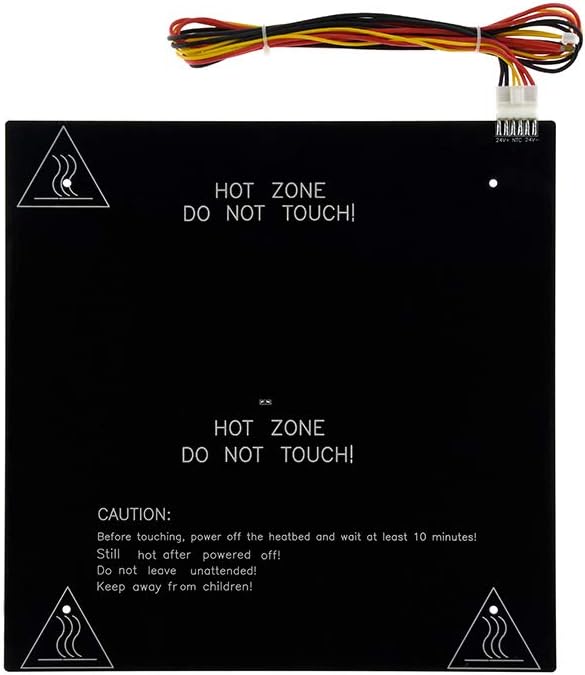
This guide compares the top heated bed for 3D printer models across sizes and voltages to help you find the perfect upgrade for your specific printing setup
As an Amazon Associate we earn from qualifying purchases. We may earn a commission when you buy through links on this page, at no additional cost to you. Read our affiliate disclosure.As an Amazon Associate we earn from qualifying purchases.Purchases through our links may earn us a commission, at no extra cost to you. Read our affiliate disclosure.
Finding the right heated bed for 3D printer upgrades is crucial for print quality. A reliable bed ensures proper adhesion and reduces warping issues during long printing sessions for better results.
We compared ten popular heated bed options based on voltage, size, material quality, and user feedback. Each product offers unique benefits for different printer models and specific printing requirements.
Each pick highlights key features and performance aspects to guide your decision. Please note that product availability and shipping terms may vary by region and time of purchase.
Top 3 Picks for Best Heated Bed for 3D Printer
Best Budget
HICTOP Ender 3 Heated Bed with Cable 24V 220W Compatible with Creality Ender 3, Ender 3 Neo, Ender 3 pro, Ender 3 V2, Endder 3 V2 Neo, Voxelab Aquila X2 3D Printers
Official Ender 3 V2 Heated Bed 3D Printer Replacement Hot Bed 220W 24V with Cable Compatible for Creality Ender 3, Ender 3 Pro, Ender 3 V2, Ender 3 Neo, Ender 3 V2 Neo…
This official replacement bed delivers reliable performance for Ender 3 V2 users seeking original equipment quality. It receives strong ratings for consistent heat distribution and straightforward installation.
Pros
Official Creality quality assurance
Exact compatibility with Ender 3 V2
Pre-assembled cable saves time
Stable aluminum platform design
Consistent heating performance
Cons
Limited to specific Ender models
Higher price than third-party options
We may earn a commission when you buy through this link, at no additional cost to you.
The aluminum platform provides a stable base for printing while the 220W 24V power ensures efficient heating. The pre-installed cable eliminates additional wiring steps during setup.
While it costs more than generic alternatives the exact fit and official quality standards reduce risks of compatibility issues. This makes it ideal for users prioritizing reliability.
Ender 3 V2 owners looking for a direct replacement should consider this option for peace of mind. It balances cost and quality effectively for daily printing needs.
Official Quality Assurance
Using an official Creality part ensures the bed meets factory specifications for safety and performance standards.
Ready-to-Use Installation
The included cable means you avoid purchasing separate wiring components for a simpler upgrade process.
This budget-friendly bed offers excellent value for Ender 3 users who want reliable heating without paying premium prices. It maintains high ratings for functionality and ease of use.
Pros
Affordable third-party alternative
Compatible with multiple printer models
Good heating performance
Includes cable for setup
Proven track record
Cons
May vary slightly from official specs
Build quality differs from OEM
We may earn a commission when you buy through this link, at no additional cost to you.
The aluminum construction supports consistent heat distribution while the 24V 220W power matches original requirements. Compatibility spans multiple Ender variants and the Voxelab Aquila X2.
Although it lacks official branding the performance is comparable for standard printing tasks. The cost savings make it a practical choice for hobbyists on a tight budget.
Consider this option if you prioritize affordability and have verified printer compatibility. It delivers solid results for everyday 3D printing projects.
Cost Effective Solution
This bed provides similar heating performance at a lower price point than official replacements.
Wide Printer Compatibility
Support for multiple models allows flexibility if you upgrade printers later.
This silicone heated bed stands out for its rapid heating and even temperature spread. Users praise its performance with a perfect rating indicating high satisfaction levels.
Pros
Silicone material for flexibility
Fast heating capabilities
Uniform heat distribution
High temperature resistance
Strong user satisfaction
Cons
Higher cost than aluminum beds
Requires careful handling
We may earn a commission when you buy through this link, at no additional cost to you.
The silicone construction allows for efficient heat transfer while the 200W 24V rating ensures quick warm-up times. This reduces waiting periods between prints.
While more expensive than traditional aluminum beds the flexibility and speed justify the investment for frequent printers. It is especially useful for time-sensitive projects.
Upgrade to this if you need faster heat-up and even heating across the surface. It is ideal for advanced users who print regularly.
Fast Heating Technology
Silicone material heats up quicker than standard aluminum platforms saving you wait time.
Even Heat Distribution
The design ensures uniform temperatures preventing warping and improving print quality.
This heated bed is designed specifically for the Creality CR-10 with a larger 310mm build area. It aims to replace older beds with reliable heating performance.
Pros
Larger 310mm build area
Designed for CR-10 printers
Standard mounting holes
Solid aluminum construction
Includes power wire kit
Cons
Lower user rating
Protective film must be removed
We may earn a commission when you buy through this link, at no additional cost to you.
The aluminum plate with 24V 220W power provides consistent heat for standard printing materials. Mounting holes are pre-drilled for easy installation on the frame.
Users note the need to remove protective film before use to ensure proper adhesion. The lower rating suggests some quality control variations exist.
Consider this if you own a CR-10 and need a direct replacement. Verify condition upon arrival for best results.
CR-10 Compatibility
Dimensions and mounting are tailored for the CR-10 frame for seamless integration.
Pre-Installed Mounting
Holes are positioned to match the original bed layout for quick swaps.
This bed targets large format printing with a massive 500x500mm surface. It features high power heating to manage the larger area effectively.
Pros
Very large 500mm print area
High 350W power
Fast heating speed
Sturdy aluminum alloy build
Plug-and-play installation
Cons
Lowest user rating
Requires robust power supply
We may earn a commission when you buy through this link, at no additional cost to you.
The 24V 350W design provides rapid heating and uniform distribution across the bed. Aluminum alloy construction supports heavy prints without deformation.
User feedback indicates potential quality issues despite the strong specs. This may limit recommendations for critical applications.
Use this for oversized prints if you have the necessary power supply. Check reviews for recent quality updates.
Large Print Capacity
The 500mm size allows for big parts or multiple objects at once.
High Power Heating
350W output ensures the large bed reaches target temperatures quickly.
This plate is engineered for Voron builds and offers complete coverage for the hot bed plate. It earns top ratings for reliability and safety features.
Pros
Perfect for Voron projects
High power AC heating
Integrated safety fuse
Full coverage mat design
Excellent user reviews
Cons
Requires AC power supply
High wattage needs solid state relay
We may earn a commission when you buy through this link, at no additional cost to you.
The 750W AC heating with thermistor and fuse provides controlled and safe operation. It fits directly over existing mats for enhanced heating area.
Caution is needed with high wattage requiring proper relays. Users should verify their power systems before installation.
Ideal for Voron users seeking a drop-in upgrade. It improves temperature stability for precise prints.
Voron Project Ready
Designed specifically for Voron 2.4 R2 and Trident builds for exact fit.
Safety Features
Thermal fuse disconnects at high temps to protect your bed from overheating.
We may earn a commission when you buy through this link, at no additional cost to you.
Buying Guide – How to Choose the Best Heated Bed for 3D Printer
Selecting the right heated bed involves considering size, power, and material to match your printer and print needs.
Size Compatibility
Ensure the bed dimensions match your printer frame to avoid installation issues. A proper fit ensures even heating and safe operation.
Check dimensions like 220mm, 235mm, or 300mm to align with your model.
Power Requirements
Verify voltage and wattage match your printer's power supply. Using the wrong voltage can damage electronics.
Common options are 12V, 24V, or AC 110V/220V systems.
Material Quality
Aluminum offers durability and heat retention while silicone heats faster. Select based on speed versus stability needs.
Aluminum alloys provide better flatness for large prints.
Mounting Features
Countersunk holes keep the surface flat and prevent nozzle collisions. Look for designs that maintain printing space.
A flat surface reduces print defects and curling issues.
Safety Components
Thermistor sensors and fuses protect against overheating. Safety features are critical for unattended prints.
Bimetal fuses disconnect power if temperatures exceed limits.
Heating Speed
Silicone pads heat up faster than standard aluminum plates. Faster heat-up reduces wait times between prints.
This is valuable for high volume printing environments.
Warranty and Support
Original parts often include better warranties and support. Third-party options vary in reliability.
Check return policies when buying replacement parts.
Printer Model Match
Not all beds fit every printer. Confirm compatibility with your specific brand and model.
Many are designed for Ender CR-10 or Voron builds.
How to Use and Care for Your Heated Bed for 3D Printer
Before installation ensure the printer is powered off and cooled. Remove old screws and clean the frame to prepare the surface for the new bed.
Once installed test the heating function in small increments. Monitor temperature with the printer software to confirm accurate readings.
Avoid overloading the bed with heavy prints beyond its capacity. Clean the surface regularly to maintain adhesion and performance.
Frequently Asked Questions
Why is my 3D printer bed not heating?
Check connections and fuses for damage. Verify power supply voltage matches the bed rating. Replace if components are faulty.
Can I use a 24V bed on a 12V system?
No. Using mismatched voltages will result in insufficient heating or damage. Always match the voltage rating of your printer.
How do I level a new heated bed?
Use the printer auto-leveling feature or manual knobs. Adjust screws to ensure even clearance across the entire print surface.
What temperature should I set for the bed?
For PLA set around 60°C and ABS around 100°C. Refer to filament manufacturer recommendations for best results.
Why is my bed uneven after replacement?
Uneven mounting or debris under the bed may cause this. Ensure a clean surface and consistent screw tightening.
Is a silicone bed better than aluminum?
Silicone heats faster but aluminum retains heat better. Choose based on whether you prioritize speed or stability.
How do I clean the heated bed?
Use isopropyl alcohol and a soft cloth after cooling. Avoid abrasive cleaners to prevent damage to the surface.
Can I cut a silicone heating pad to size?
No. Trimming may damage heating elements and void safety. Use only the correct size for your printer.
Final Thoughts on Choosing the Best Heated Bed for 3D Printer
We reviewed ten options ranging from official replacements to third-party alternatives. Each offers unique benefits based on size power and compatibility.
Prioritize exact compatibility with your printer model to avoid installation issues. Choose a heating technology that fits your speed and stability needs.
Always verify current product availability and specifications before purchasing. Prices and stock may change over time.
This guide compares the top low profile air conditioner models for 2026, evaluating cooling power, noise levels, smart features, and slim designs for better