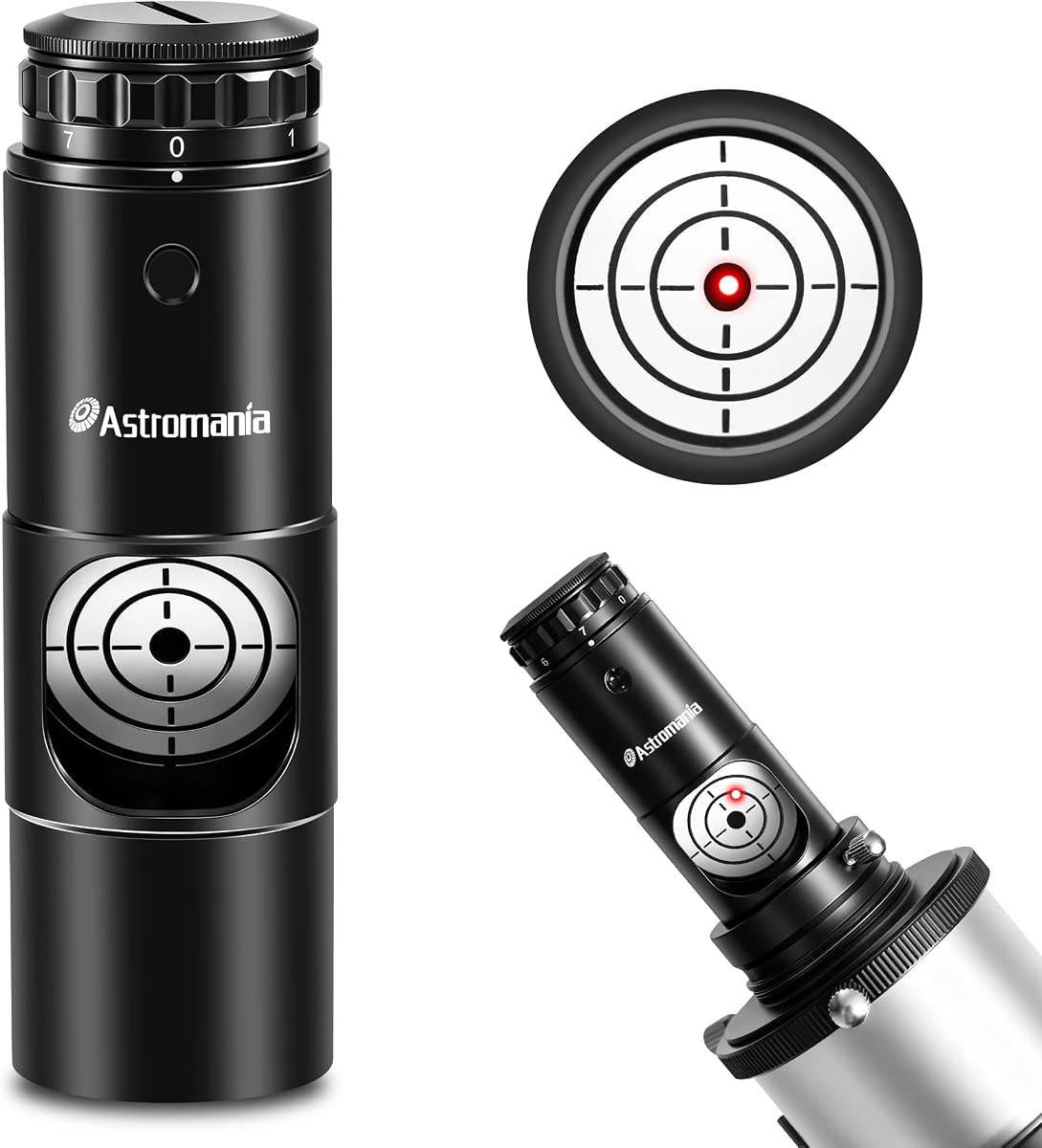
Astromania Laser Collimator 1.25"
4.5Editor score
Fits 1.25 inch focusers
Includes CR2032 battery
Seven brightness levels
Aligning your telescope optics is crucial for sharp views. A laser collimator for telescope alignment simplifies this process by projecting a beam to check mirror placement. It ensures your instrument performs at its peak potential.
We evaluated ten leading models based on build quality, compatibility, and ease of use. Our comparison covers budget options and premium tools designed for serious astronomers. Each product offers unique features for different telescope setups.
Every pick includes detailed specs and real-world usage notes. Prices fluctuate frequently on major retail platforms. Always verify current listings before purchasing to ensure you get the best value available today.
4.5Editor score

4.5Editor score
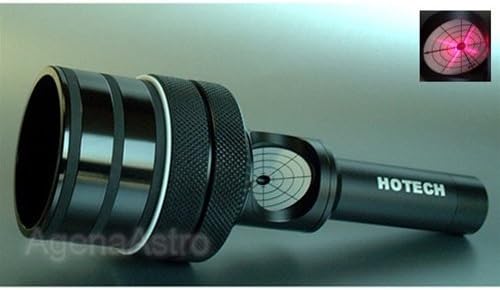
4.7Editor score
As an Amazon Associate we earn from qualifying purchases.
This table provides a side-by-side overview of key features across all ten selected laser collimator for telescope alignment tools to help you compare specifications quickly.


The Astromania Laser Collimator Telescope Alignment is a top choice for owners of Newtonian Marca telescopes. It holds a solid 4.5 star rating and offers excellent value for its performance. The dual 1.25 and 2 inch adapters make it highly versatile.
We may earn a commission when you buy through this link, at no additional cost to you.
Its construction features premium anodized aluminum that resists wear and tear effectively. The laser provides seven brightness levels to match your observing environment whether indoors or under a dark sky. The side window with a central hole allows you to see the reflected beam easily.
While the battery is included, you may need to unscrew the rear cap to replace it which takes a moment. The red laser beam is bright but might be harder to see in very bright daylight conditions. These are minor trade-offs for the precision it offers.
If you want a reliable tool that works with most standard focusers without extra cost this is the right pick. The clear instructions help beginners get started quickly. It ensures your optics are aligned for sharper views in minutes.
The removable 2 inch adapter ensures compatibility with both common focuser sizes.
The side window design lets you confirm alignment quickly by seeing the reflection.
We may earn a commission when you buy through this link, at no additional cost to you.
This model is ideal if you own a telescope with standard 1.25 inch diameter focusers. It delivers accurate collimation quickly and holds a strong 4.5 star rating from users. The design is compact and fits naturally in your palm.
We may earn a commission when you buy through this link, at no additional cost to you.
The body is made of premium metal with anodized aluminum to resist wear. You can adjust the laser brightness to seven levels for different light conditions. The included CR2032 lithium battery lets you start using it right away.
One limitation is the lack of a 2 inch adapter so it may not fit larger focusers. The instructions are clear in German and English but some beginners might prefer a video guide. Despite this it remains a solid budget choice.
Choose this if you need a reliable tool without spending much. It provides clearer images after alignment. The lightweight design makes it easy to carry to dark sky sites.
This tool offers premium metal construction at a very affordable price point.
Adjustments take only minutes with the simple layout and included guide.
We may earn a commission when you buy through this link, at no additional cost to you.
The SVBONY Laser Collimator is designed for calibrating reflecting telescopes efficiently. It carries a 4.5 star rating and supports both 1.25 and 2 inch reflector telescopes. This dual compatibility saves you from buying separate tools.
We may earn a commission when you buy through this link, at no additional cost to you.
Its triple cemented lens improves the stability of the red dot projection significantly. The solid metal body ensures long term use in the field. A full set of instructions with step by step procedures helps beginners align their reflectors.
You need to handle the lens carefully as it is a precision component. The price is slightly higher than basic models but the adapter and lens quality justify it. It is a great gift for astronomy enthusiasts.
If you want a tool that grows with your telescope this is a smart pick. The clear alignment in dark and day conditions is a key benefit. You get better views with minimal setup time.
The triple cemented lens ensures the red dot stays steady during adjustments.
Included 2 inch adapter means you do not need a new calibrator after upgrades.
We may earn a commission when you buy through this link, at no additional cost to you.
This bundle combines a user adjustable laser collimator with a telescope eyepiece. It supports both 1.25 and 2 inch reflector telescopes. The eyepiece offers a super wide 62 degree field for detail across the view.
We may earn a commission when you buy through this link, at no additional cost to you.
The laser beam has seven brightness levels to suit different light conditions. It complies with Class I laser safety standards making it safe for eyes. The removable 2 inch adapter adds great versatility to the package.
The price is higher since it includes two items in one bundle. The added eyepiece adds weight to your observing kit but provides immediate value for wide field targets. It is a good choice for beginners needing both tools.
If you want an all-in-one solution for alignment and viewing this bundle works well. The wide angle eyepiece gives you a lost in space feeling. You get better views with proper alignment quickly.
You get both alignment tools and a wide field eyepiece in one purchase.
Class I safety standards ensure the laser is safe for your eyes.
We may earn a commission when you buy through this link, at no additional cost to you.
This laser comes fully adjusted from the factory for quick use. It fits all 1.25 inch focusers on Mark Newtonian telescopes. The side window allows you to view the reflected beam for precise alignment.
We may earn a commission when you buy through this link, at no additional cost to you.
The battery can be exchanged by unscrewing the rear cap. The laser unit is built with metal material to ensure durability. The seven brightness levels help you adapt to different observing environments.
The main trade-off is that the battery is not included in the package. You also need to buy a separate adapter if your scope has a 2 inch focuser. For 1.25 users it remains a top tool.
If you prefer a straightforward device without extra steps this fits the bill. The clear instructions make it simple for newcomers. You can collimate your telescope alone and quickly.
Fully adjusted from the factory means you can start using it immediately.
The side window shows the laser reflection to confirm accuracy easily.
We may earn a commission when you buy through this link, at no additional cost to you.
This model features a standard 1.25 inch fit with an included 2 inch adapter. It works well for reflector telescopes needing versatility. The laser comes pre-calibrated with adjustment openings for fine-tuning.
We may earn a commission when you buy through this link, at no additional cost to you.
The durable metal construction ensures long lasting performance. A triple cemented lens provides stable beam projection. You can see alignment through the side window during use.
The rating is 4.0 which means some users faced issues with calibration stability over time. The unit is a bit heavier than basic models. However the included adapter adds value.
Choose this if you need both sizes in one tool and want robust build quality. The clear visibility during alignment makes the process easier. It delivers clearer images with proper setup.
The included adapter covers both 1.25 and 2 inch focusers.
Triple cemented lens ensures the laser beam stays steady.
We may earn a commission when you buy through this link, at no additional cost to you.
This kit includes the collimator plus a cell phone adapter for capturing images. It supports phones like iPhone and Samsung Galaxy with 25 to 48mm eyepiece diameters. The 2 inch adapter allows dual scope use.
We may earn a commission when you buy through this link, at no additional cost to you.
The laser has seven brightness levels for day or night alignment. The metal material builds durability for field use. You get a lost in space feeling when viewing targets.
The phone adapter does not fit 2 inch eyepieces directly. Setting up the phone clamping might require careful adjustment to avoid slipping. Still the bundle is great for imaging.
If you plan to take photos through your telescope this bundle saves extra purchases. The collimator ensures your optics are aligned for sharp captures. It is a great gift for tech savvy astronomers.
The included phone adapter allows you to start astrophotography right away.
The 2 inch adapter ensures compatibility with your telescope upgrades.
We may earn a commission when you buy through this link, at no additional cost to you.
This bundle combines a red laser collimator with a cheshire eyepiece. The laser supports 1.25 and 2 inch reflector telescopes. The cheshire eyepiece helps with secondary mirror collimation during daylight.
We may earn a commission when you buy through this link, at no additional cost to you.
The laser features seven brightness levels for different light conditions. The cheshire requires no batteries so it is always ready. Both tools are made of durable metal.
You cannot use the cheshire at night so you still need the laser for dark sky sessions. The price is higher but having both tools adds reliability. The 5.0 star rating reflects high satisfaction.
If you want complete alignment options for any time of day this bundle is ideal. The laser ensures fast alignment while the cheshire verifies accuracy. It covers all your alignment needs.
Use the cheshire during the day and the laser at night for full coverage.
The cheshire eyepiece needs no batteries so it never runs out.
We may earn a commission when you buy through this link, at no additional cost to you.
This is a premium laser collimator with innovative self-centering adapter technology. It solves the slop issue common in other collimators. It fits both 1.25 and 2 inch focusers precisely.
We may earn a commission when you buy through this link, at no additional cost to you.
The crosshair model helps with star collimation and telescope alignment. The unit includes a CR123 battery and manuals for various scopes. The build ensures repeatable installation every time.
The price is the highest in this list but the precision justifies it. Using CR123 batteries is less common than standard types. Still the accuracy is unmatched for imaging.
If you need pixel level accuracy for imaging this tool is worth the cost. The self-centering adapter ensures your laser stays aligned. It delivers consistent results for your optical axis.
The patented adapter removes the slop found in standard collimators.
The crosshair design allows precise star collimation for long exposures.
We may earn a commission when you buy through this link, at no additional cost to you.
This electronic collimator brings modern tech to optical alignment. It is designed for Newtonian and Schmidt Cassegrain telescopes. The software-guided calibration circles enable quick and precise adjustments.
We may earn a commission when you buy through this link, at no additional cost to you.
The all-in-one design allows for complete collimation functionality on-the-go. Each unit comes factory-centered to pixel-level accuracy. The portable solution fits field adjustments and mobile astronomy.
Since it is electronic it depends on battery life and software stability. The rating is N/A as it is a newer product. But it offers a unique approach to alignment.
If you prefer using apps and software for alignment this is a great pick. The pixel-level accuracy ensures your baseline is optimal. It delivers professional-grade collimation capabilities in a modern package.
Software-guided calibration circles make alignment faster and easier.
Factory-centered pixel-level accuracy ensures you start with a perfect baseline.
We may earn a commission when you buy through this link, at no additional cost to you.
Choosing the right laser collimator for telescope alignment depends on your telescope type and budget. These factors will help you find a tool that ensures precise optical alignment.
Ensure the collimator fits your telescope focuser. Most tools support 1.25 inch but some offer 2 inch adapters. If you upgrade your focuser later a dual size tool will save you from buying again.
Always check the adapter size before purchasing.
A laser with multiple brightness levels helps in different conditions. The wavelength affects visibility on the mirror. Red lasers are common but ensure it is bright enough for your needs.
Adjustable brightness improves usability in daylight or bright rooms.
Metal construction is durable and resists damage during transport. Plastic tools might bend and lose calibration. Look for anodized aluminum or similar materials for a long lifespan.
Durable materials keep your alignment accurate over time.
Some collimators require internal adjustments using screws. Others come pre-calibrated. If you are a beginner a pre-calibrated tool saves time and effort.
Simple adjustment mechanisms help you maintain precision.
Lasers should comply with safety standards like Class 3R or Class I. This ensures they are safe for your eyes. Avoid cheap lasers that do not specify safety ratings.
Safety ratings protect you from accidental exposure.
Side windows to view reflections help confirm alignment. Some bundles include batteries or adapters. Consider if you need extra tools like a phone adapter for imaging.
Extra features add value to your purchase.
Prices vary widely from basic to premium models. A higher price often means better build quality and precision. Decide how much you want to spend based on your needs.
A balanced budget ensures value without overspending.
Clear instructions are vital for beginners. Look for guides in your language. Some collimators offer step by step diagrams for alignment.
Good instructions help you start using the tool quickly.
Insert the collimator into your focuser and tighten it gently. Remove any caps and turn on the laser to see the beam. Observe the dot on the secondary mirror and adjust the screws until it centers.
Use the side window if your collimator has one to view the reflection from the primary mirror. Keep the laser away from direct sunlight to prevent battery drain or lens damage. Store it in a cool dry place.
Regularly check calibration by aiming at a distant wall. If the dot moves significantly the tool may need adjustment. Keep batteries fresh and clean the lens with a soft cloth to maintain clarity.
Yes if you own a Newtonian or reflector telescope. Optical alignment ensures sharp images and maximizes performance. Without it your views may appear blurry or distorted.
You should collimate before each observing session. Transporting the scope can misalign the optics. Regular checks maintain image quality for better views.
Look for Class 3R or Class I ratings. These ensure the laser is safe for your eyes. Avoid unmarked lasers that may pose risks.
Yes but the beam might be hard to see. Choose a model with high brightness levels. A darker environment improves visibility.
Only if it comes with a 2 inch adapter. Always check compatibility before buying. Some tools support both sizes out of the box.
Most require batteries like CR2032 or CR123. The batteries power the laser beam. Some models offer long life or rechargeable options.
Yes alignment is critical for astrophotography. Poor alignment leads to uneven stars and blurred images. A good tool ensures sharp field stars.
A durable metal tool can last years with care. Avoid drops and moisture to extend life. Regular calibration checks keep it accurate.
We covered ten excellent options ranging from affordable tools to precision systems. The Astromania models offer great value while HoTech provides high-end accuracy.
Prioritize build quality and adapter compatibility when choosing. Ensure you select a laser with the right brightness and safety rating for your setup.
Prices change frequently so check current listings before buying. Selecting the right collimator will sharpen your views and enhance your astronomy experience.