
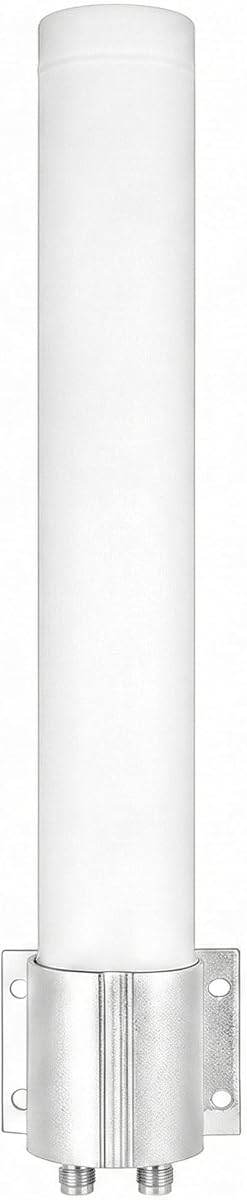
Eifagur 9dBi Long Range Dual Band Antenna
4.7Editor score
9dBi high gain design
Outdoor ready construction
Simple upgrade for existing routers
Discover the top marine WiFi antenna options for 2026. This guide compares rugged, high-gain, and versatile models designed for coastal connectivity and remote
Modern boaters need reliable internet access while on the water. A quality marine WiFi antenna extends signal range significantly. It ensures stable connections for navigation, entertainment, and safety communications during your voyages.
We analyzed ten distinct models based on durability, gain performance, and weather resistance. Each entry offers unique strengths for different boating scenarios. Our evaluation focuses on real-world usability in harsh saltwater environments.
Every pick highlights key specifications and ideal use cases for your vessel. Prices fluctuate frequently so check current listings before buying. We aim to help you select the right hardware for your specific connectivity demands.
4.7Editor score

5.0Editor score
4.8Editor score
This table provides a side-by-side view of all ten selected antennas. Compare their core capabilities and connectivity options to find the model that fits your vessel's requirements best.


The Poynting Omni-496 stands out as a top performer for boaters needing reliable internet. It boasts a perfect five star rating and exceptional durability features. This dual-band unit covers essential frequencies for modern WiFi systems.
We may earn a commission when you buy through this link, at no additional cost to you.
Its 8dBi gain ensures strong signal capture from distant hotspots. The IP68 rating means it withstands heavy rain and salt spray without degradation. Connectors are standard N-Type allowing easy integration with marine routers.
While the price is higher than budget models the build quality justifies it. The included brackets fit standard marine masts seamlessly. Installation requires basic tools and attention to cable sealing.
Choose this if you demand premium performance in harsh coastal environments. It excels for vessels frequently in remote areas or open water. The durability ensures long-term reliability without frequent replacements.
The IP68 rating guarantees protection against water and dust ingress.
Supports both 2.4GHz and 5GHz bands for maximum compatibility.
We may earn a commission when you buy through this link, at no additional cost to you.
This antenna targets users in remote or rural environments needing stable broadband. It supports high speed 4K streaming even in challenging signal conditions. The MIMO technology optimizes signal quality significantly for better data rates.
We may earn a commission when you buy through this link, at no additional cost to you.
The fiberglass housing resists UV degradation and extreme temperatures from minus forty to one fifty degrees Fahrenheit. Dual N-Female connectors maximize data throughput for enterprise routers. It handles many devices simultaneously without lag.
Installation requires specific low-loss cables for best performance. The guide suggests using silicone tape on connections for weatherproofing. It is a robust choice but demands proper setup to reach full potential.
Ideal for off-grid living or industrial field operations near water. It ensures connectivity stays stable during storms or high winds. The set-and-forget reliability makes it a standout for critical setups.
Delivers consistent speeds suitable for high-definition video calls.
Architectural fiberglass withstands extreme temperatures and UV rays.
We may earn a commission when you buy through this link, at no additional cost to you.
A specialized version of the Omni-496 for coastal and marine use. It offers similar durability to its sibling but targets specific marine standards. The 7.5 dBi gain provides strong reception for nearby WiFi sources.
We may earn a commission when you buy through this link, at no additional cost to you.
The antenna handles tempestuous weather conditions with ease. Its N-Type connector is standard for marine hardware. Installation is straightforward with the feed-through 1-inch marine standard mount option.
Note that cables and brackets may need separate purchase for full setup. This allows flexibility but adds cost to the total budget. Still the core unit is highly reliable for salt-heavy areas.
Perfect for yachts or sailboats needing consistent connectivity in port or near shore. The omni-directional pattern captures signals from all directions. Trust it for safety communications or leisure streaming.
Fits standard 1-inch marine mounts for easy deck integration.
Designed specifically to resist saltwater corrosion and UV damage.
We may earn a commission when you buy through this link, at no additional cost to you.
This antenna combines 4G, WiFi, and GPS in one compact unit. It simplifies installation for users needing multiple connections on one vessel. The through-hole design allows clean deck penetration without external clutter.
We may earn a commission when you buy through this link, at no additional cost to you.
The 24-inch leads make routing cables inside the cabin manageable. Weatherproof housing ensures it survives rain and splash zones. It suits smaller boats where space is at a premium.
Gains are modest compared to dedicated high-gain units. This makes it less ideal for very long range connectivity. It excels as a general purpose option for modern marine electronics.
Choose it if you need GPS plus WiFi on a tight budget. The integration reduces cable clutter significantly. Good for recreational vessels needing basic connectivity.
Combines three functions into one small waterproof puck.
Through-hole style minimizes visible hardware on deck.
We may earn a commission when you buy through this link, at no additional cost to you.
A solid outdoor option for marine WiFi setups. It delivers 9 dBi gain to boost weak signals effectively. The lightweight fiberglass construction makes mounting on masts simple without extra support.
We may earn a commission when you buy through this link, at no additional cost to you.
Integrated N-Female connectors allow quick cable attachment. This reduces installation time significantly for DIYers. Weatherproofing protects against rain and sun exposure for long life.
Requires purchase of separate coaxial cables for connection to routers. Ensure cables match the N-Female interface for best performance. It balances cost and performance well for general marine use.
Ideal for boats needing strong signal amplification without heavy hardware. The omni-directional pattern covers all directions. A reliable upgrade for existing weak connections.
9 dBi gain significantly boosts wireless signal strength.
Integrated N-Female connector simplifies setup steps.
We may earn a commission when you buy through this link, at no additional cost to you.
Engineered for demanding enterprise-level marine and IoT applications. It supports multiple carrier technologies ensuring flexibility across regions. The heavy-duty ABS housing protects internal components from vibration and impact.
We may earn a commission when you buy through this link, at no additional cost to you.
N Female connectors match most standard marine routers. It is approved by federal and local agencies nationwide for safety. This adds trust for commercial or safety-critical vessel operations.
L-bracket mounting ensures stability during high-speed travel. The design minimizes wind resistance while keeping signal clear. A rugged choice for professional fleets requiring consistent uptime.
Select this for commercial boats needing reliable multi-carrier data. It handles extreme weather and operational demands well. A trusted choice for critical communications.
Built to withstand demanding public safety and marine use.
Approved by federal agencies for trusted marine operations.
We may earn a commission when you buy through this link, at no additional cost to you.
A compact and affordable option for extending WiFi range. It supports 3dBi MIMO for better data rates on standard routers. The package includes two units for flexible placement on board.
We may earn a commission when you buy through this link, at no additional cost to you.
RP-SMA connectors match most consumer-grade WiFi adapters and routers. It is ideal for indoor marine use or sheltered decks. The size makes it easy to hide or mount discreetly.
Lacks heavy-duty weatherproofing for exposed decks. Use this inside cabins or near protected router locations. It is a budget-friendly way to boost signal without large hardware.
Best for small boats or RV setups needing basic WiFi extension. It handles general browsing and light streaming well. Choose this for cost-effective connectivity.
Budget-friendly bundle ideal for basic range extension.
Small size allows discreet mounting in cabins.
We may earn a commission when you buy through this link, at no additional cost to you.
Combines two 4G LTE and one WiFi antenna into one roof unit. It simplifies mounting for mobile routers needing both cellular and local WiFi. The IP67 waterproof rating ensures outdoor reliability.
We may earn a commission when you buy through this link, at no additional cost to you.
Works with most global 4G LTE routers and hotspots. Installation is straightforward with included SMA connectors. It fits well on RVs and marine vehicles needing integrated comms.
Cable lengths are fixed at 40cm so check reach needs first. May require extensions for deeper cabin router placement. Still a convenient solution for multi-antenna requirements.
Choose it for setups needing both cellular and WiFi boost. It reduces clutter and cabling significantly. Great for remote IoT devices and vehicles.
Handles 4G LTE and WiFi in a single roof unit.
Reliable operation in harsh outdoor environments.
We may earn a commission when you buy through this link, at no additional cost to you.
This model offers 9dBi gain at an accessible price point. It extends range significantly for WiFi routers and access points. Outdoor construction withstands typical weather conditions reasonably well.
We may earn a commission when you buy through this link, at no additional cost to you.
Supports both 2.4GHz and 5GHz for versatile use. Many devices work directly with its standard connectors. Installation is a simple replacement for existing stock antennas.
It lacks specific marine mounting hardware but works on poles with adapters. A great choice for budget-conscious sailors needing more range. The performance to cost ratio is excellent.
Ideal for small to medium vessels needing affordable range. It boosts signal without breaking the bank. Trust it for general leisure connectivity.
High gain performance at an affordable price.
Simple replacement for existing router antennas.
We may earn a commission when you buy through this link, at no additional cost to you.
While primarily for VHF radio this unit ensures safety communications. It covers Channel 16 and all NOAA weather alerts reliably. The 3dBi gain improves both receiving and transmitting signal.
We may earn a commission when you buy through this link, at no additional cost to you.
The ratchet mount allows quick folding for low bridges. PL259 connectors match standard marine radios. The premium 22.9ft cable reduces signal loss effectively.
Note this does not support WiFi data traffic. Use it alongside a dedicated WiFi antenna for internet access. It remains critical for safety and weather forecasts.
Essential for any vessel needing proper distress and safety comms. The fiberglass radome resists corrosion. A must-have for compliance and safety.
Covers Channel 16 and all marine safety channels.
Receives all seven NOAA weather radio channels.
We may earn a commission when you buy through this link, at no additional cost to you.
Selecting the right antenna involves evaluating several technical and environmental factors. This section breaks down what to prioritize for your specific boating needs.
Ensure the antenna supports 2.4GHz and 5GHz bands. Modern routers use both for speed and range. Dual-band ensures compatibility with most devices.
Always verify dual-band support before purchase.
Higher gain extends range but narrows the beam. Look for 5dBi to 9dBi for marine use. This balances coverage and signal strength.
Prioritize 6dBi to 9dBi for remote areas.
Match connectors to your router. Common types are N-Type, RP-SMA, or SMA. Mismatched adapters can cause signal loss.
Check router ports and get matching connectors.
Marine environments demand high IP ratings. Look for IP65 or IP68 for full waterproofing. UV resistance prevents housing degradation over time.
Choose IP67 or higher for exposed decks.
Secure mounting is vital on moving vessels. Ensure brackets fit your mast or rail. Ratchet mounts help with clearance needs.
Confirm brackets match your vessel structure.
Cables should be long enough to reach the router. Long runs may need coaxial extension. Keep leads short to reduce signal loss.
Measure run distances before buying.
Fiberglass radomes resist saltwater corrosion. Avoid plastic housings in salt zones. Stainless steel screws prevent rust.
Opt for fiberglass and stainless materials.
Multiple antennas boost data rates. Choose MIMO compatible setups for throughput. It is key for video calls or streaming.
Use MIMO for high-speed data needs.
Install the antenna as high as possible on your vessel. Mount it outside any metal structures blocking signals. Use a non-metallic pole for best reception.
Connect cables tightly using marine-grade tape. Secure all connectors against moisture ingress. Check for water damage after storms.
Clean the housing periodically with fresh water. Remove salt buildup to prevent corrosion. Ensure mounting hardware remains tight.
It extends the range of your onboard router to capture distant hotspots. This allows internet access far from shore or marinas.
Most require matching connectors like N-Type or SMA. Verify your router's port type before selecting a model.
Typically 6dBi to 9dBi suffices for most areas. Higher gain helps only in very remote zones.
It risks saltwater corrosion and poor durability. Marine-rated units offer essential weatherproofing and protection.
Use self-fusing silicone tape and waterproof boots. Tighten connections and avoid exposed pins.
Yes. MIMO setups use two antennas for speed. Ensure both have clear line of sight.
Height is critical. Higher placement reduces blockages from hull structures. Aim for maximum elevation.
Dedicated GPS antennas work better. Some combo units include GPS but check specs carefully.
Our top picks include the Poynting Omni-496 for premium use and the Eifagur 9dBi for value. Each offers distinct advantages for different boating needs.
Prioritize weatherproofing and gain when buying for saltwater. A sturdy model ensures long service life on deck.
Prices change frequently so review current listings before finalizing your order. Ensure compatibility with your existing gear to avoid extra costs.