
Mcbazel 3 in 1 Handheld Digital Anemometer
4.5Editor score
Measures wind speed and temp
Backlight for low light
Compact and portable design
Compare the top 10 marine anemometers for sailing and boating. This guide reviews handheld and mounted wind meters for accurate speed and direction data.
Marine anemometers are essential tools for sailors and boaters who need accurate wind data to navigate safely and efficiently. Whether you are racing a yacht or enjoying a leisurely cruise, understanding wind speed and direction can make the difference between a smooth voyage and a dangerous situation.
To help you find the right device, we have compared ten leading marine anemometers ranging from affordable handheld units to professional-grade masthead systems. Our analysis focuses on accuracy, durability, ease of use, and compatibility with existing marine instrumentation to ensure you make an informed decision.
Each pick in this guide highlights specific strengths such as budget friendliness, premium features, or specialized applications like HVAC and outdoor sports. Please note that product availability and pricing can change frequently, so verify the latest details before making your purchase decision.
4.5Editor score

4.4Editor score
4.4Editor score
This table provides a side by side comparison of all ten marine anemometers reviewed in this guide. Check the key specifications and features to quickly identify which model fits your specific boating or outdoor needs.



The BTMETER BT-100 is a versatile handheld anemometer that delivers reliable wind speed measurements for a variety of outdoor and indoor applications. With a rating of 4.5 stars, it stands out for its accuracy and multifunctional design that appeals to sailors, drone pilots, and HVAC technicians alike.
We may earn a commission when you buy through this link, at no additional cost to you.
Its ability to measure wind speed in five different units including knots and mph makes it highly adaptable for marine use. The inclusion of a tripod hole allows for hands free monitoring which is crucial when you need to focus on steering or other tasks while tracking wind conditions.
While the plastic construction feels sturdy enough for general use, it may not be as rugged as premium marine instruments exposed to constant salt spray. The battery life is decent but users should keep spare AAA batteries on hand for extended trips.
This model is an excellent choice for sailors who need a portable backup device without breaking the bank. Its ease of use and clear display make it a reliable companion for casual boating and windsurfing activities.
The device supports m/s, km/h, ft/min, knots, and mph, allowing users to switch between metrics based on their preference or regional standards.
A metal threaded hole on the bottom enables secure attachment to tripods for continuous wind gauging during sailing or drone flights.
We may earn a commission when you buy through this link, at no additional cost to you.
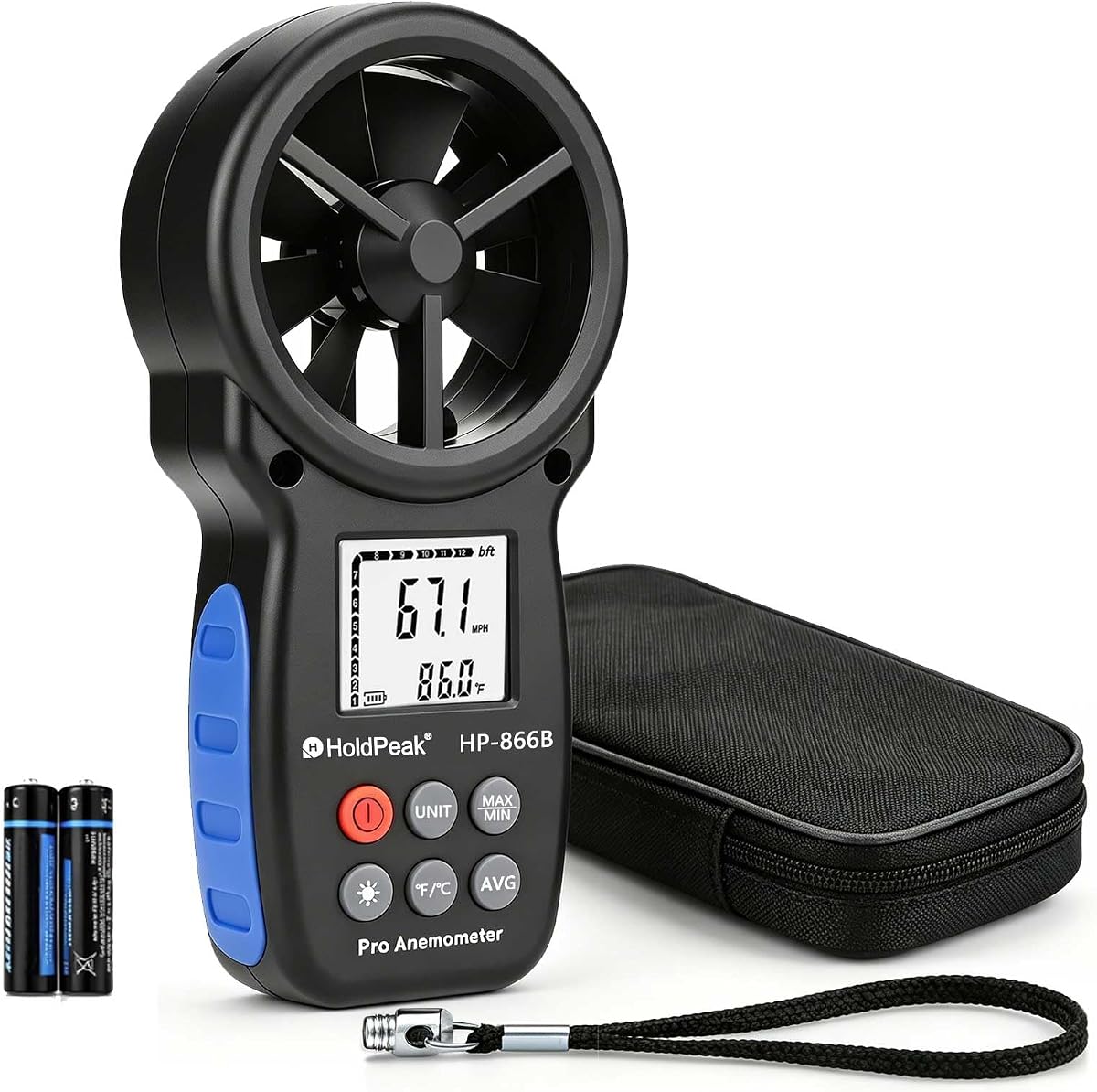
The HoldPeak 866B is another strong contender in the handheld anemometer category, offering professional features at a competitive price point. It is particularly noted for its sensitive dual temp sensors and smooth fan shaft which ensure consistent readings even in low wind conditions.
We may earn a commission when you buy through this link, at no additional cost to you.
For sailors, the ability to track max, min, and average wind speeds provides valuable insights into gust patterns that can affect boat handling. The included hand strap adds a layer of safety preventing accidental drops overboard which is a common risk on deck.
The waterproof carrying pouch is a thoughtful addition that protects the device during transport. However, the buttons can feel a bit stiff which might be challenging for users wearing gloves in cold weather sailing scenarios.
If you need a durable and feature rich device for both marine and HVAC use, this model offers excellent value. It balances performance and portability well making it suitable for weekend sailors and professionals.
Users can monitor peak gusts and average winds which helps in assessing sudden changes in weather during sailing trips.
The waterproof carrying pouch ensures the device stays safe from moisture and scratches when not in active use.
We may earn a commission when you buy through this link, at no additional cost to you.
The Inspeed Magnetic Mount Anemometer offers a unique solution for sailors who want a permanent or semi permanent wind sensor without complex wiring. Its high rating of 4.7 stars reflects its reliability and ease of installation on various metal surfaces.
We may earn a commission when you buy through this link, at no additional cost to you.
The calibrated accuracy ensures that the data you receive is trustworthy for navigation decisions. The magnetic base allows you to place the device on the cabin roof or other suitable metal areas quickly without drilling holes.
While it is excellent for calm conditions and small boats, it may not withstand the force of heavy seas or strong gusts if not secured properly. The compact design is great for storage but might be harder to read from a distance.
This device is ideal for smaller craft where installing a full masthead system is impractical. It provides a good balance of convenience and performance for casual boaters.
The strong magnetic base allows for quick attachment to metal surfaces without the need for screws or drilling.
Factory calibration ensures that wind speed readings are accurate right out of the box reducing the need for manual adjustment.
We may earn a commission when you buy through this link, at no additional cost to you.
The Raymarine Instrument Wind I60 is a display unit designed to integrate with existing Raymarine instrumentation systems. It serves as a replacement or addition for boats that already have the necessary transducers but need a clear and readable display.
We may earn a commission when you buy through this link, at no additional cost to you.
Its black and grey finish blends well with modern marine dashboards. The high contrast display ensures readability even in bright sunlight which is critical for safety on the water.
However, this is not a standalone device and requires a compatible wind transducer to function. This limits its use to those who already have Raymarine gear or are willing to invest in the full system.
For upgrading an older boat with Raymarine systems, this unit provides a reliable interface for wind data. It is best suited for owners who prioritize brand compatibility over standalone functionality.
Designed specifically for Raymarine networks this display integrates seamlessly with existing ST series instruments.
The display includes a night backlight ensuring you can read wind data clearly during night watches.
We may earn a commission when you buy through this link, at no additional cost to you.
The TopTes TS-301 stands out with its large 2.26 inch LCD screen making it one of the most readable handheld anemometers available. This feature is particularly useful on boats where sunlight glare can make smaller screens difficult to read.
We may earn a commission when you buy through this link, at no additional cost to you.
It also includes humidity and temperature sensors providing a more comprehensive weather picture which is valuable for sailors monitoring conditions. The six measuring units cover all common standards ensuring compatibility with any regional preferences.
While it is lightweight and easy to use, it lacks waterproofing which means it should be stored safely during rain. The absence of a tripod mount limits some hands free applications compared to other models.
This model is perfect for users who prioritize display clarity and comprehensive data collection. It is a strong choice for sailing and outdoor activities where quick reading is essential.
The 2.26 inch backlit screen ensures clear visibility in all lighting conditions reducing eye strain during use.
Built in humidity and temperature sensors allow for detailed weather tracking beyond just wind speed.
We may earn a commission when you buy through this link, at no additional cost to you.
The Raymarine E28081 is a replacement kit for the cups and vanes of older ST50 and ST60 wind instruments. When wind sensors degrade over time due to salt and sun this kit allows you to restore accuracy without replacing the whole system.
We may earn a commission when you buy through this link, at no additional cost to you.
It includes the necessary fixing screws and an allen key for installation making it user friendly for boat owners. This extends the life of your existing instrumentation saving money on new equipment.
While effective for maintenance, it is not a standalone anemometer and requires a working base unit. If your electronics are also failing this might not be the right solution.
This kit is essential for maintaining older Raymarine systems. It is a cost effective way to keep your boat's navigation data reliable and accurate.
Replacing worn bowls and vanes brings older wind instruments back to their original accuracy levels.
Includes all necessary hardware including an allen key to simplify the replacement process.
We may earn a commission when you buy through this link, at no additional cost to you.
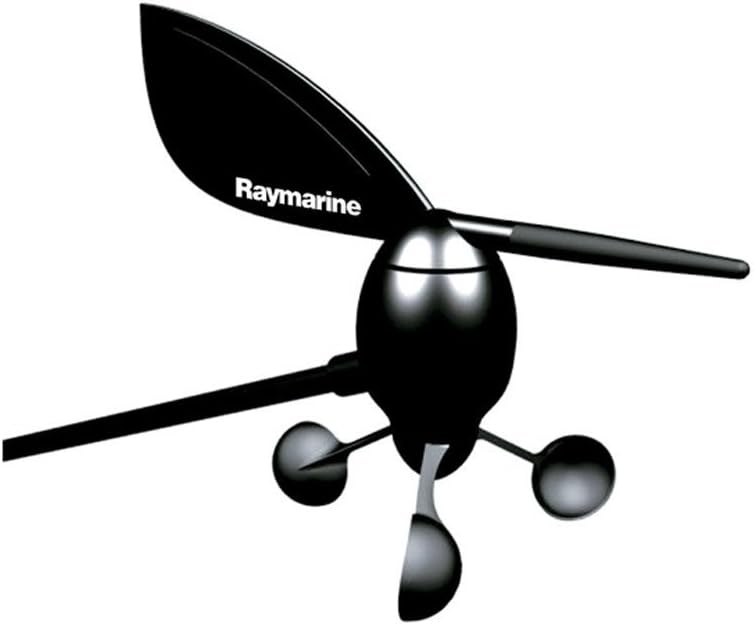
This latest version of the Raymarine masthead wind transducer is designed to provide accurate wind data with improved durability against seawater. It is an essential component for any sailing vessel relying on digital wind displays for navigation.
We may earn a commission when you buy through this link, at no additional cost to you.
The arm and vane assembly are engineered to withstand harsh conditions while maintaining precise alignment. Upgrading to this version ensures that your wind data remains consistent even after prolonged exposure to salt and sun.
Installation requires some mechanical skill and may involve running new cables. While it is more expensive than replacement bowls it offers better long term reliability for serious sailors.
For those looking to upgrade their wind system this masthead unit is a solid choice. It guarantees compatibility with Raymarine displays and provides years of trouble free operation.
The components are designed to resist corrosion from saltwater ensuring longevity in marine environments.
Updated design improvements offer better performance and reliability compared to older models.
We may earn a commission when you buy through this link, at no additional cost to you.
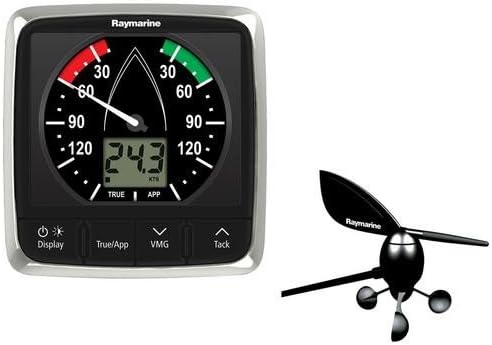
The Raymarine i60 Wind System comes as a complete package with the masthead transducer and a display unit. It offers a traditional analog dial interface that many sailors find intuitive and easy to read at a glance.
We may earn a commission when you buy through this link, at no additional cost to you.
Features like VMG and tack display help optimize sailing performance by showing wind angles clearly. The red night backlight ensures visibility during night watches without blinding the user.
While the analog style is great for quick reading, it lacks the detailed data screens of digital units. Installation requires connecting cables which can be complex on smaller boats.
This system is ideal for sailors who prefer traditional instrumentation and want a reliable wind package. It combines functionality with ease of use for daily sailing.
Shows velocity made good and tack data to help optimize sailing angles and speed.
Designed to use minimal power from your boat battery allowing long term use without drain.
We may earn a commission when you buy through this link, at no additional cost to you.
This premium system from Raymarine offers the most comprehensive wind data available including true wind angle and apparent wind angle. The robust design ensures years of reliable operation even in the harshest weather conditions.
We may earn a commission when you buy through this link, at no additional cost to you.
The display allows customization of data fields so you can focus on the most important metrics. This level of detail is invaluable for competitive sailors who need precise information for decision making.
The cost is high and installation requires professional help or significant mechanical skill. However the accuracy and reliability justify the investment for serious sailors.
For those who need top tier performance this system is unmatched. It transforms your boat into a precision instrument with accurate real time wind updates.
Calculates true wind data which helps in understanding actual weather conditions beyond boat speed effects.
Users can choose specific data fields to view ensuring critical information is always accessible.
We may earn a commission when you buy through this link, at no additional cost to you.
The Mcbazel 3 in 1 is an incredibly affordable handheld anemometer that still offers essential features like Beaufort scale and wind temperature. Its high rating indicates satisfaction among users who need a reliable tool without high cost.
We may earn a commission when you buy through this link, at no additional cost to you.
The dual line LCD allows simultaneous viewing of wind speed and temperature. This makes it useful for casual sailing and fishing trips where detailed data is less critical.
While it is not built to professional marine standards it is sufficient for short term use. The auto off function helps preserve battery life during infrequent use.
For budget conscious sailors or those needing a spare device this is a great option. It balances cost and functionality well for light marine use.
Provides wind level classification which helps in quick assessment of sea state and weather conditions.
Automatically shuts off after a period of inactivity to save battery power for future use.
We may earn a commission when you buy through this link, at no additional cost to you.
Selecting the right marine anemometer involves balancing accuracy, durability, and cost. Here are the key factors to consider before making a purchase.
Accuracy is critical when wind data influences navigation decisions. Look for devices with certified calibration and low margin of error. Professional units often offer higher precision than budget models.
Prioritize devices with tested accuracy especially if you sail in unpredictable waters where small wind shifts matter.
Marine environments are harsh with salt, sun, and moisture. Choose anemometers with corrosion resistant materials like stainless steel or high grade plastics. Sealed electronics help prevent water damage.
Always select devices built to withstand salt spray and UV exposure to ensure long term reliability on the water.
The display must be readable in bright sunlight and low light conditions. Backlit screens with high contrast are essential for night sailing. Large digits reduce eye strain during use.
Ensure the display has adjustable backlighting and clear markings for easy reading during day and night watches.
Different regions use different wind speed units. Choose a device that offers multiple options like knots, mph, and m/s. This flexibility prevents calculation errors when using charts.
Select anemometers that allow easy switching between units to match your navigation tools and regional standards.
Long battery life is essential for extended trips. Check if the device uses common battery types that are easy to replace. Some models offer auto off features to save power.
Prioritize models with low power consumption and easy access to battery compartments for field replacement.
Consider whether you need a handheld unit or a fixed mount. Tripod holes or magnetic bases provide versatility. Fixed systems require more installation but offer hands free monitoring.
Choose mounting options that fit your boat layout and usage habits to maximize convenience and safety.
Extra features like wind chill, humidity, and max min tracking add value. However they can complicate the interface. Decide which data points are actually useful for your sailing style.
Look for features that enhance usability like data hold or wind direction indicators if they fit your needs.
If you have existing marine instrumentation ensure compatibility with data networks like NMEA 0183. This allows integration with GPS or chart plotters for comprehensive navigation.
Verify that the device can interface with other boat electronics if you plan a fully integrated system.
To get accurate readings hold the anemometer away from your body and other structures that might block wind. Ensure the sensor is facing directly into the wind direction without obstruction for the most reliable data.
Rinse the device with fresh water after each use to remove salt residue. Store it in a dry place with the battery compartment closed to prevent corrosion and moisture damage.
Regularly calibrate the device according to manufacturer instructions. Check battery levels before trips and replace worn parts like blades or screws promptly to maintain precision.
Handheld units are portable and easy to carry but require manual operation. Fixed systems are mounted on the mast and provide continuous wind data without effort. Fixed systems are better for serious sailing while handhelds suit casual use.
Compare readings with known sources or weather stations when possible. Devices with calibration certificates are more trustworthy. Over time sensors may drift so periodic checks are recommended to maintain precision.
Yes handheld models are useful for quick checks before casting off. However they require holding the device which may distract from steering. They are best used as backups or during short stationary periods.
The Beaufort scale classifies wind force from calm to hurricane based on speed and sea conditions. It helps sailors quickly assess weather intensity without interpreting raw speed numbers for decision making.
Yes regular calibration ensures accurate readings over time. Environmental factors like salt and sun can degrade sensors. Follow manufacturer guidelines to recalibrate periodically for consistent performance.
Look for models covering 0 to 60 mph or higher to capture both light breezes and storms. Wider ranges ensure you can measure conditions during all types of sailing trips safely.
Choosing the right marine anemometer depends on your sailing style and budget. Top picks like the Raymarine i60 systems offer premium features for serious sailors while handheld models provide affordability for casual use.
Prioritize durability and readability to ensure the device performs reliably in all conditions. Consider how the device integrates with your existing gear before making a final decision.
Prices and availability change so check current listings for the latest deals. Invest in a quality device that keeps you safe and informed on the water.